
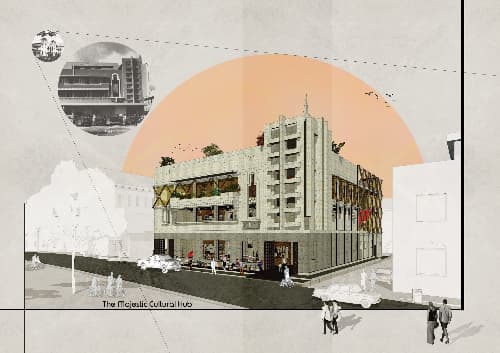
The Majestic cultural Hub, Zanzibar
Student Award winning project, World Architecture Community Awards . Team: (Academic Project) Ronald Businge Design philosophy; Window of dimensions This proposal is a result of the need for a Hub for film and music festivals by the Majestic trust members, which is comprised of the following intended user groups and project partners: Hifadhi Zanzibar, Busara Promotions, Reclaim Women Space, and Zanzibar International Film Festival. Cinema, or motion picture, is a visual medium that tells stories and exposes different realities. This was and is still a fundamental role of the Majestic Cinema to the people of Stone Town. A place visited to experience a window or windows of different dimensions and realities. The presented adaptive re-use design takes precedent from this so as to have a centre that manifests diverse realities and possibilities to its visitors. The goal is to anchor the old ruin elements of the building with a bold modern borne. This maintains the authenticity of these elements while creating monument which exhibits a merge between the old and new dimensions.
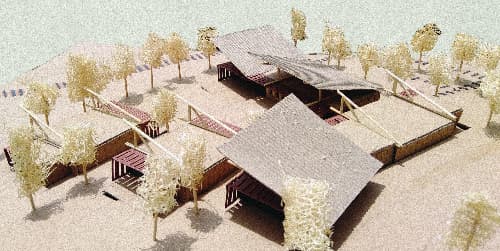
Student Centre, Uganda
Team: (Academic Project) Ronald Businge Design philosophy; A Learning Ecology in a Student centre The design of the student centre follows from Peter Radloff’s notion of a ‘learning ecology’ to encompass the dimensions of students’ on-campus existence which directly affect their learning experience.The activities in which students mainly engage and express themselves include; online social media platforms, designed works, sports, leadership, religion, music and small scale business ventures. The goal is to use these identities and dimensions as platforms to start spontaneous interactions between different students about their own creativity and potentialities. This will be done through a program of platforms or terraces that foster a self-regulated flow of knowledge and ideas from an ideologist to a concerned audience in an environment where there is access to information.
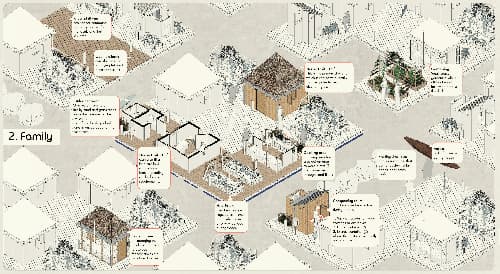
Amphibious Eco Village, Kenya
Team: (Personal Project) Ronald Businge Design Intention; Amphibious Eco Village Water bodies are a source of life, energy and inspiration to the communities in the Tana river delta, Kenya. The delta is a place of residence whose locals are being forced to abandon because of floods and lack of enough fresh water, as the ocean’s saline water slowly makes its way to the inland. All this is attributed to climate change and this design proposal looks at how the locals can adapt to its effects so that they can keep their homes. By re-interpreting the easy to build local pastoralist’s architecture, this proposal looks at amphibious designs for the communities to deal with the fluctuating water levels. Here buildings locally constructed out of light weight materials are fitted with recycled buoyant plastic so that they can rise and descend to their original state after a flood. The proposal looks at Macro, Family and Micro scales
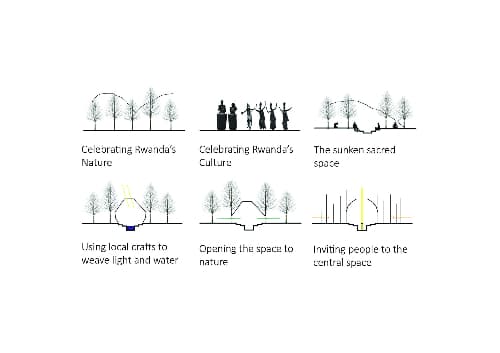
Rwanda Chapel, Rwanda -2019
Team: (Personal Project) Ronald Businge - Design and presentation Elizabeth Nabagerekka - Culture in Rwanda Angeline Alimo Nyadoi - Materials Cynthia Kabami - Energy and water Design philosophy; Healing in Sacred Architecture The chapel design seeks to strengthen communal healing of the people of Rukomo from the effects of past conflicts. Rukomo is a remote village in Nothern Rwanda rich in rolling Hills and tranquil forests. The design idea is to use inspiration from these natural features to create a communal and healing prayer space. The transformational process of healing is realised through the inclusive use and engagement of locals and local materials in crafting a sacred space for gathering, sharing, introspection and conciliation. Situated in the forested site on a flat top of a hill, the design borrows the vertical tree language with rhythmical pinewood posts, which invite people to the centre where there is a circular sunken space. This sunken space is sheltered with a crafted basket-like roof. Like a hill, the roof frames the interior chapel rituals with light and also acts as a surface for collecting rainwater to be used in and around the chapel.
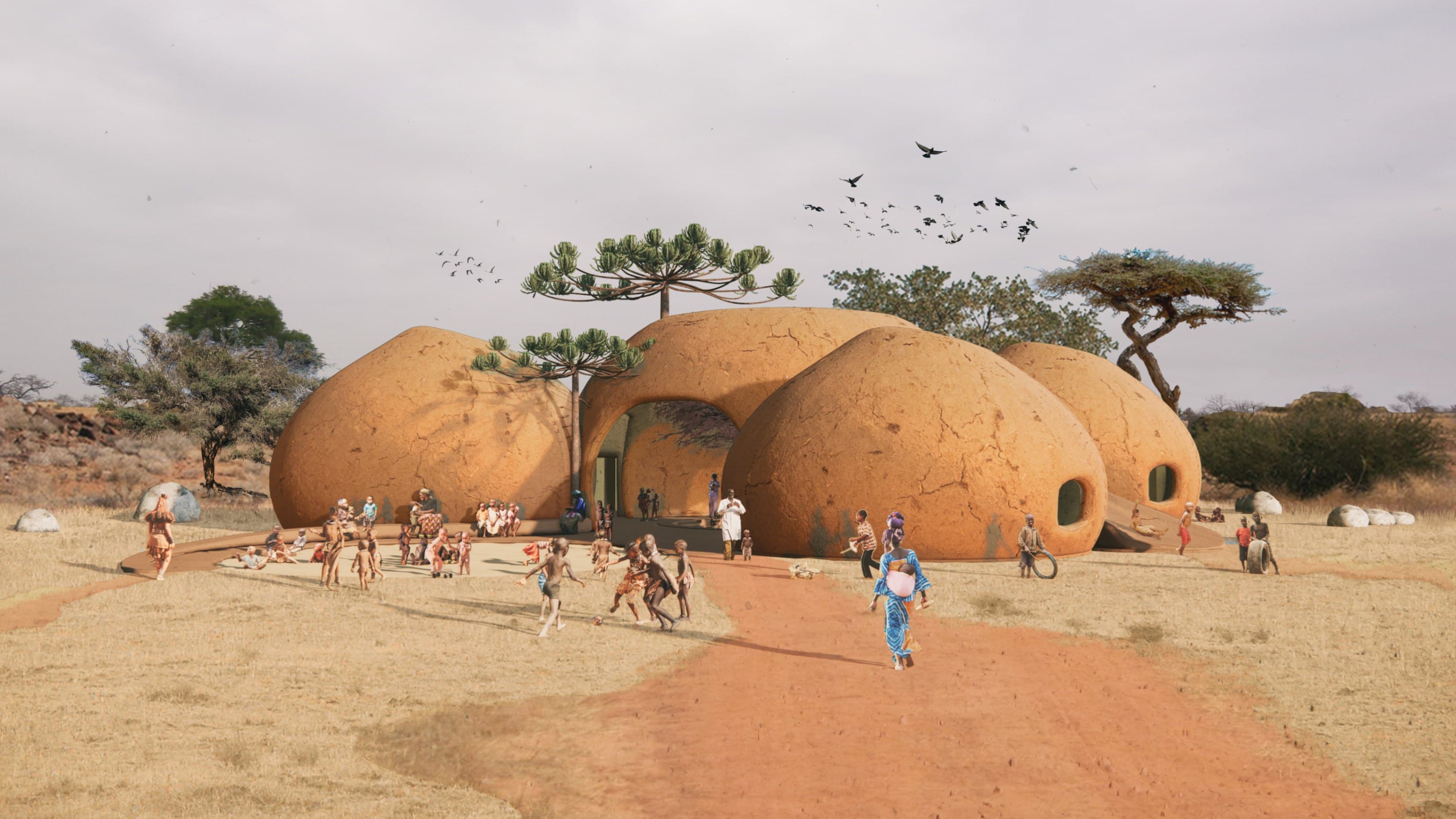
Children's House, Senegal - 2022
Team: (Personal Project) Ronald Businge - Design and presentation Cynthia Mukyala - Research, feedback Ann Murungi - Research team Social Womb Architecture The idea is to model a social womb out of the earth for the children. The social womb’s notion of space is inspired by a womb’s emotional and physical nourishment to a child. In the social womb, the young children are introduced to a warm and safe environment where they can develop reliable bonds among themselves and the people that look after them. Traditional or local healing and nourishment comes from the elements of nature; earth, fire, water and wind. The goal is to engage the local community to mold a localized social womb architecture that speaks for these elements. Fire is the warm spirit of togetherness around which the children gather. Water is a nourishing and cleansing feature in the womb. Wind highlights the flow of spaces into a central social core and through out to spaces like the garden. The earth’s sand and soil provides the shelter and protected womb environment.
 Arch Hive