Back
The Quarry Club: Golf Course Design for a Sustainable Future
Year: 2025
Category: Sports Architecture
Skills: Photoshop, Illustrator, AutoCAD, InDesign, Lumion, PGA2k25
Golf courses are often criticized for their environmental impacts such as excessive water use, habitat loss, and chemical runoff. The Quarry Club looks to change that. Many courses are undergoing a shift toward sustainability, driven by initiatives like the USGA’s Turfgrass and Environmental Research Program (TERP), which has invested over $41 million in eco-conscious innovation. While the industry has adopted best management practices, a gap remains between sustainability goals and results. This project reimagines a golf course’s role by revitalizing an abandoned quarry in Bloomington, Indiana, into a regenerative landscape that prioritizes ecological health and community value. Drawing inspiration from golf’s origins, in natural Scottish terrain, and modern heavily engineered designs of the 20th century, the design embraces low-impact strategies, native biodiversity, and integrated stormwater management. The Quarry Club bridges recreation and environmental stewardship to create a project that demonstrates how golf courses can evolve into multifunctional landscapes that benefit both people and the planet. Class LA 404: Comprehensive Project Design 2025 Thesis Advisors: Taylor Metz & Sara Mess
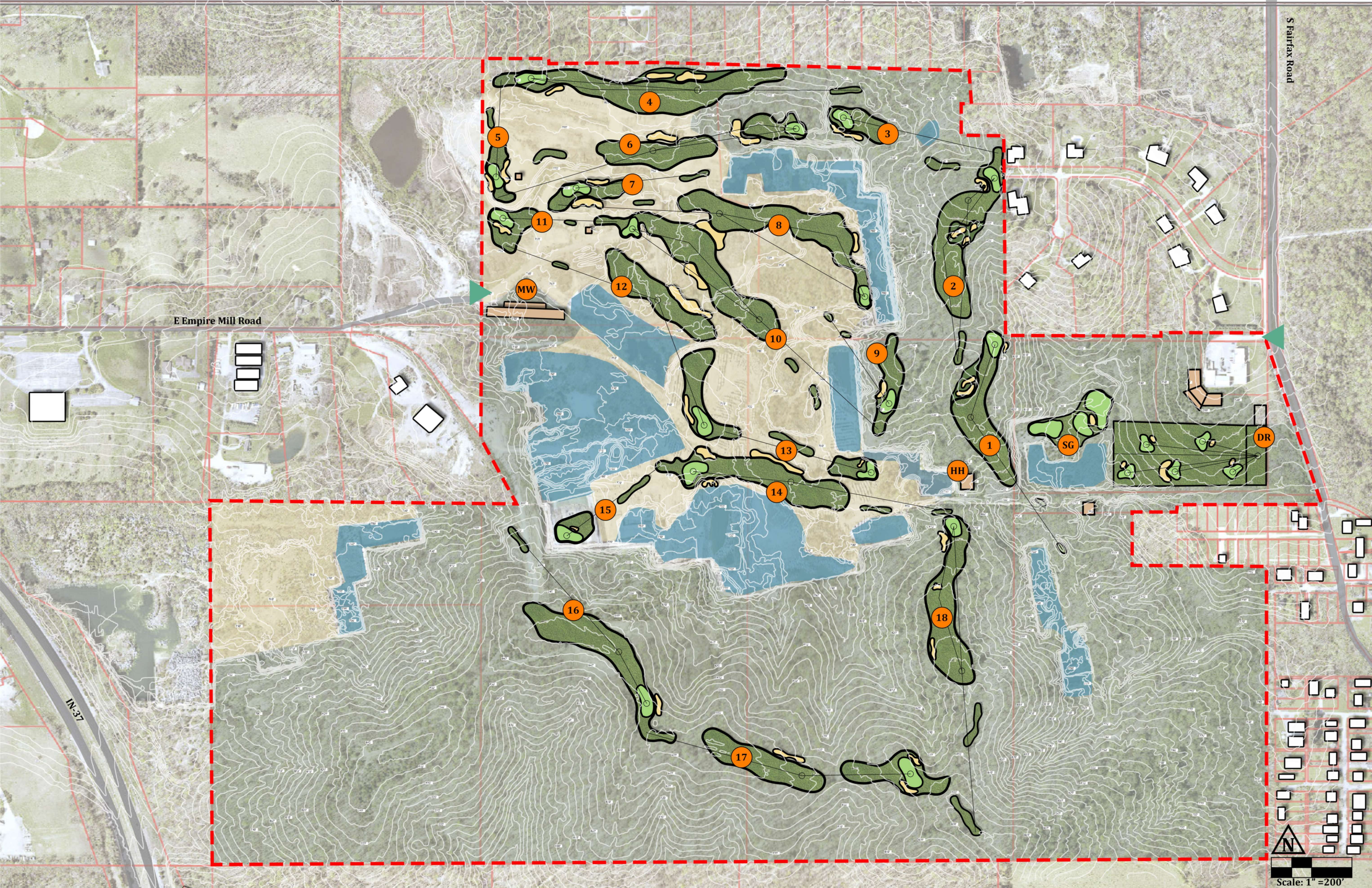
Masterplan: A Layered Landscape-Weaving Through Woodland and Quarry
Area: About 380 Acres, Existing Wetland: 27.2 Acres, Quarry: 124 Acres, Other Land: 256 Acres
Principal 1: Course Design
1. Multi-tee design, for all skill sets and ages.
2. Minimized disruptive grading practices.
3. Green and Tee connection.
Principal 2 & 3: Sustainability & Environmental Basis
4. Specific cart and trail path for enhanced circulation.
5. Developed habitat spaces within the central meadow design.
6. Wetland areas with bioretention ponds for storing and filtering stormwater on site.
7. Densely retained forested areas providing habitat.
Principal 4: Community Focus
8. 163 total parking spots. Provides enough for vendors, events, non-golfers, golfers, and spectators.
9. Clubhouse and proshop, casual dining style restaurant, outdoor patio with seating and event center.
10. Lookout Points and Seating areas specifically for trail users.
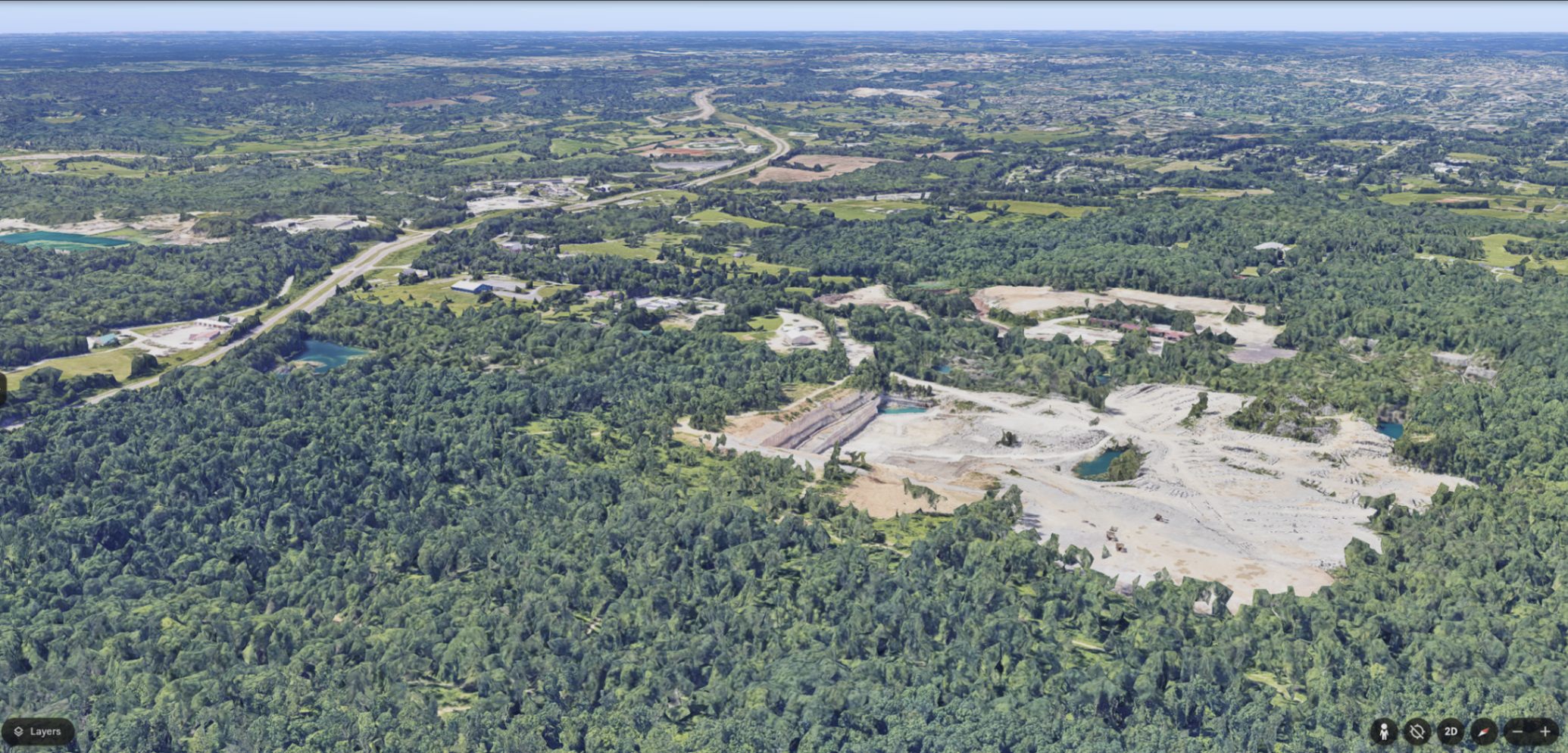
Adam’s Quarry Aerial
Project Goals
Contemporary Golf Course Design
Integrate contemporary golf course design principles that enhance playability and aesthetics while working with the topography of the land.
• Design bunkers, greens, and fairways that minimizes disruptive grading and preserving the site’s natural contours and ecosystems.
• Design for all skills sets and abilities
Sustainable Integration
Design a golf course that will integrate sustainable practices and habitat restoration without compromising play or aesthetics.
• Native forests and plantings preserved & introduce pollinators and native fescues.
• Designated wildlife habitat zones
Environmental Stewardship
Develop a site that enhances local and native biodiversity and minimizes the environmental impact of the golf course.
• Plan circulation routes that balance player experience with maintenance efficiency.
Community Engagement
Engage the community by creating an inclusive environment that promotes many recreational and educational opportunities.
• Include non-golf recreational opportunities such as family spaces, trails, and spaces to work on sustainability.
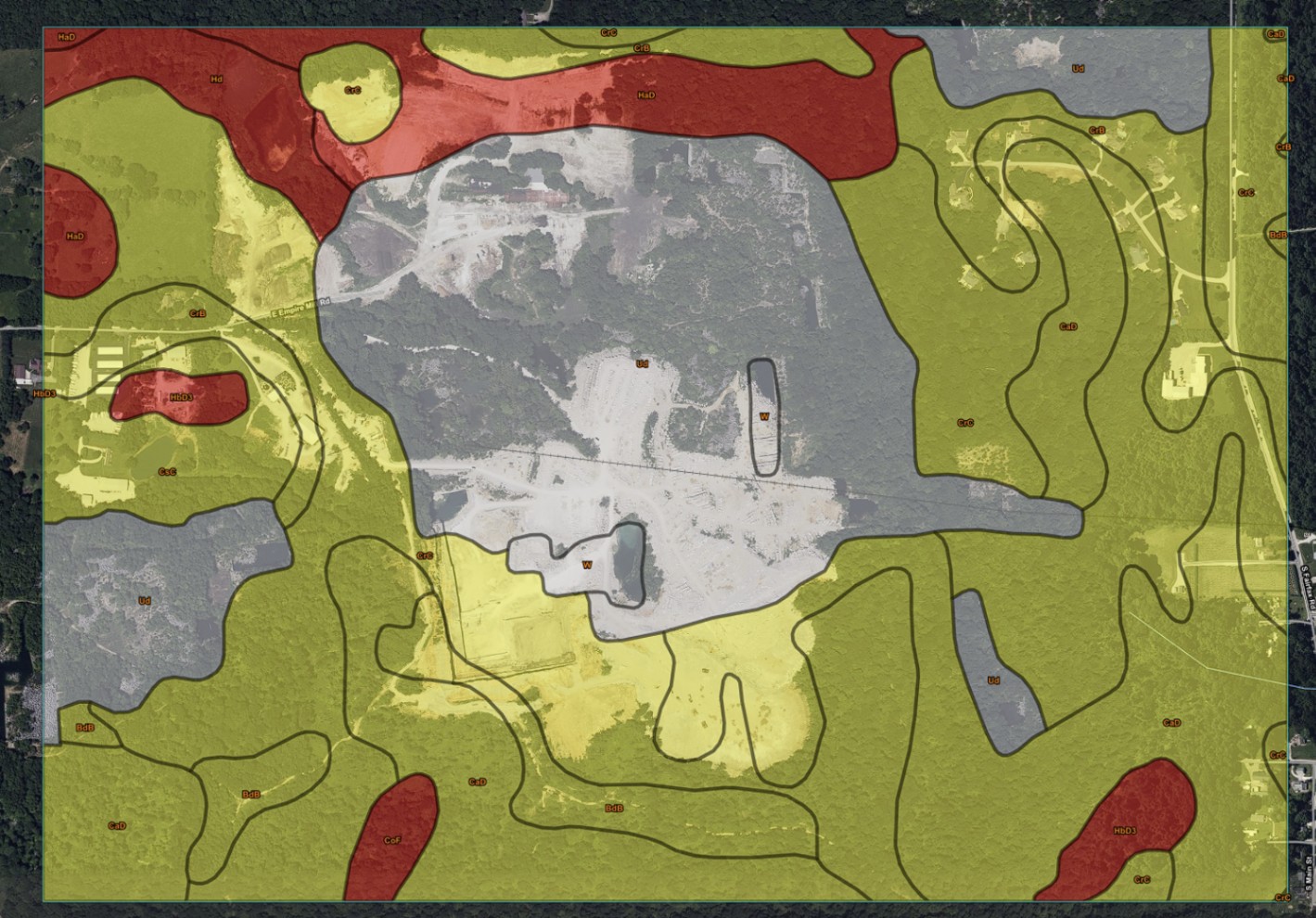
Site Soil Map
1. 12-22% slopes and severe erosion, found in valley floors and adjacent hills, developed from weathered gray limestone.
2. The quarry’s natural karst geology (porous limestone) helps filter and recharge groundwater, reducing artificial irrigation.
3. 2-12 percent slope considered statewide important farmland, well drained, and suitable for engineering, and recreation.
Ud (Udorthents-Pits complex): areas where the original soils have been cut away or covered with loamy fill, often graded to a smooth surface.
Somewhat limited: indicates that the soil has features that are moderately favorable for the specified use. The limitations can be overcome by special planning, design, or installation.
Very Limited: 12-20 percent slope, eroded, and floods. The soil has one or more features that are unfavorable for the specified use. Poor performance and high maintenance can be expected.
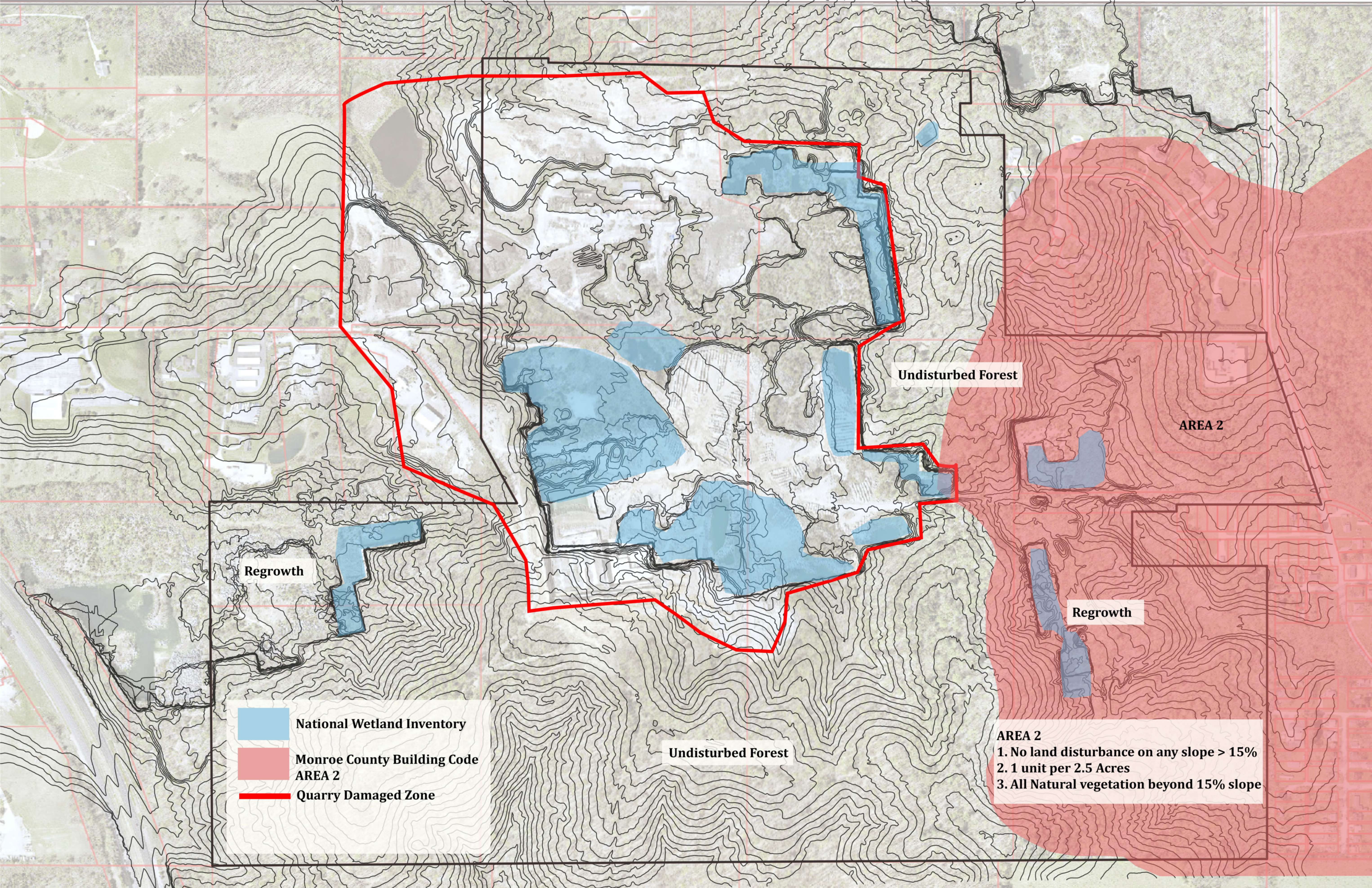
Site Analysis
1. This is an existing steel/metal structure on site, it is currently in a dilapidated state. This Infrastructure will be repaired for a new maintenance wearhouse and staging location.
2. Labeled wetland by the National Wetland Inventory, these spaces are developed when quarries fill with groundwater and rainwater after mining. With rich biodiversity it provides a opportunity to build and restore these developed wetlands.
3. Current undisturbed forest on site, these spaces should be maintained and remain protected.
4. Regrowth of forest from previous quarrying in these locations.
5. Area 2, Monroe County Building Code for disturbance on slopes greater than 15%.
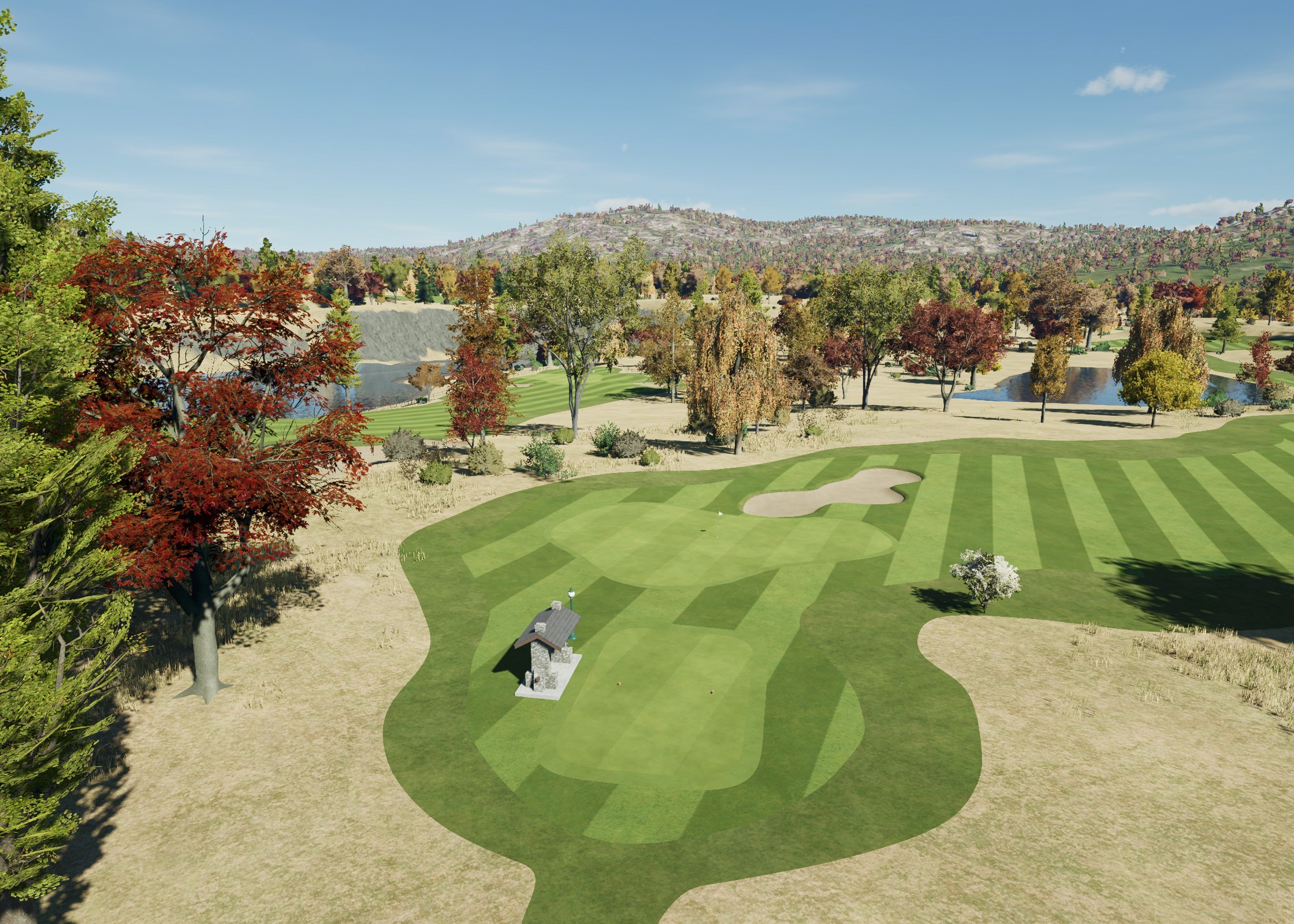
Aerial over 12 Green & 13 Tee
Design Renders
To effectively communicate the scale, topographic complexity, and core design principles of the project, I developed a detailed 3D model. This approach was instrumental in visualizing the significant grade changes and spatial relationships that two-dimensional drawings could not fully capture.
The supporting graphics were generated using PGA 2k25, a tool selected for its sophisticated terrain-editing engine. This software provided the precision necessary to accurately model the specific landforms, from tee to green, with a high degree of topographical realism. The resulting model closely approximates the finished character of a fully constructed course.
The primary objective of this visualization was not merely to illustrate the golf course layout, but to vividly convey its harmonious integration within the reclaimed quarry landscape. The model serves to emphasize how the design respectfully emulates and enhances the site's existing geological features, showcasing a true restoration of the land rather than just the construction of a golf course.
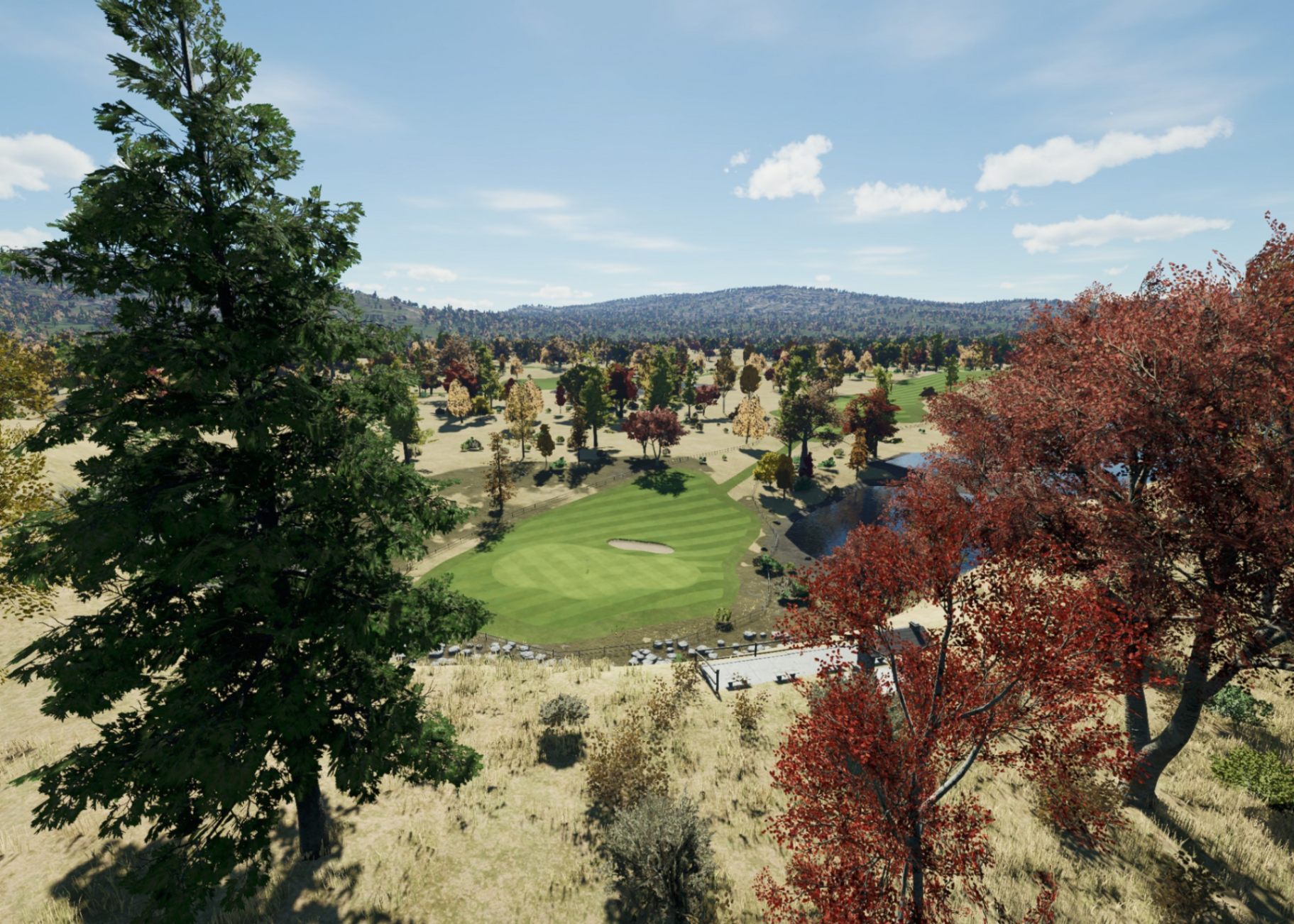
Birds-Eye View over 15 Green
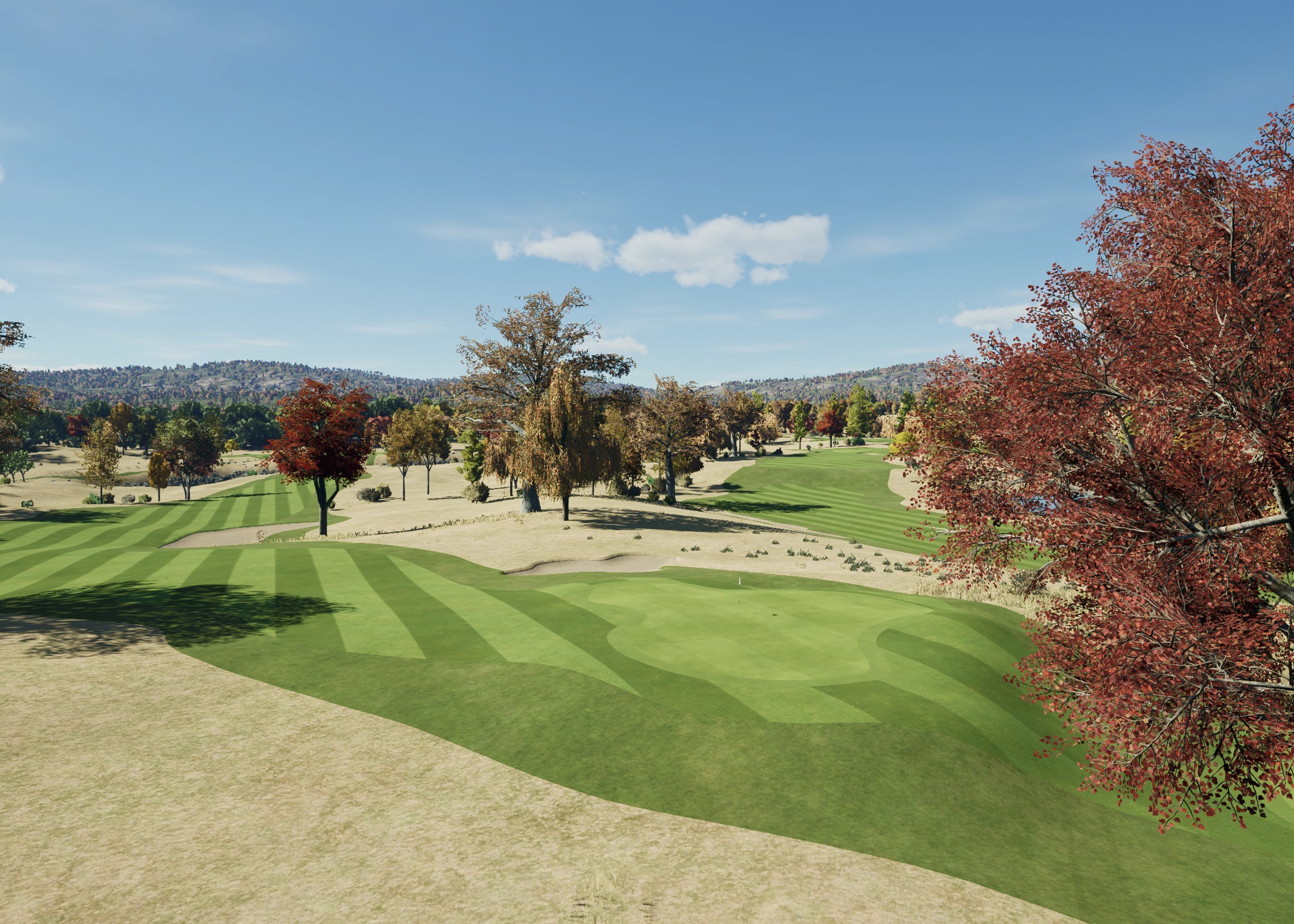
Perspective Photo of Hole 10
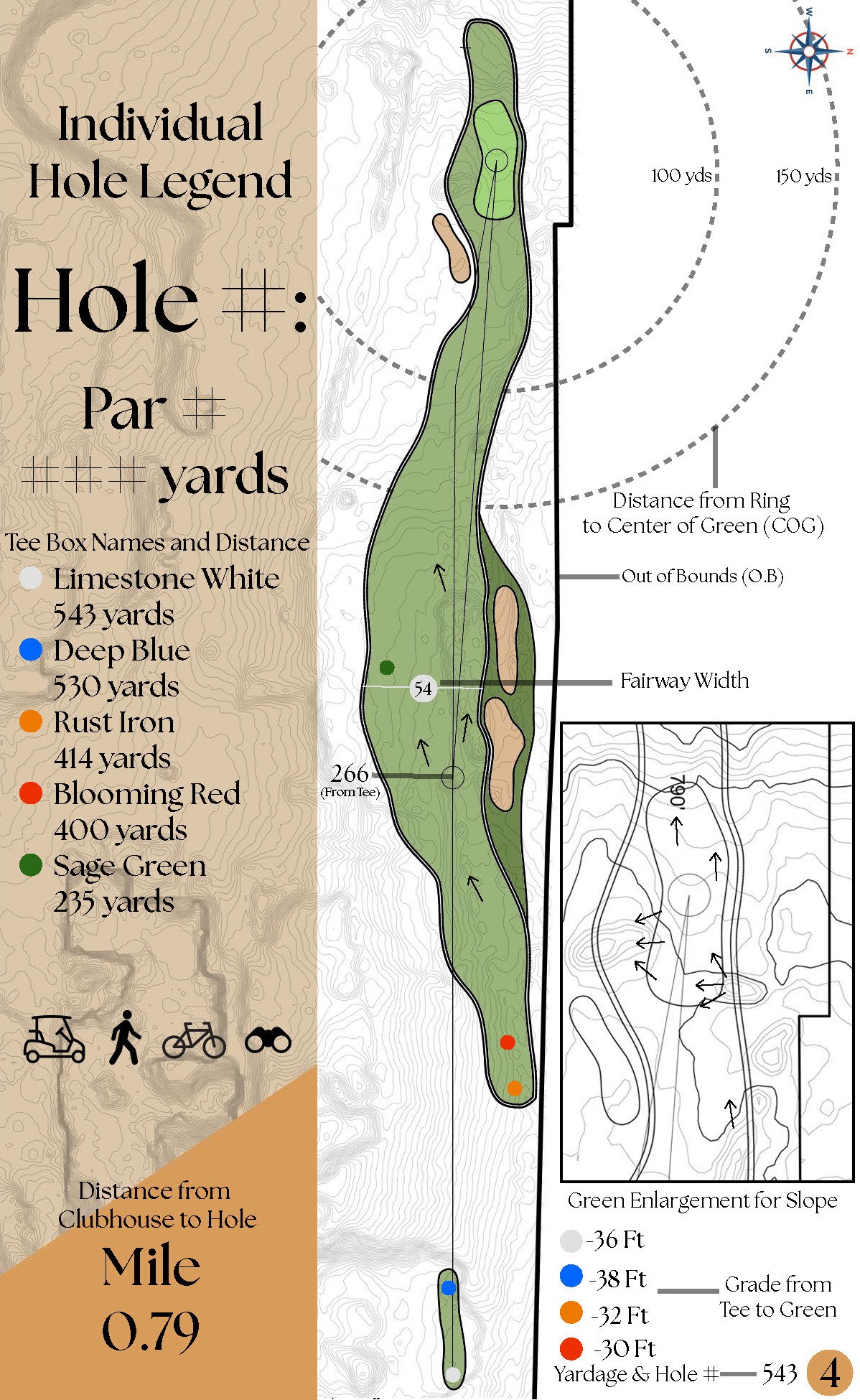
Yardage Book Legend Example
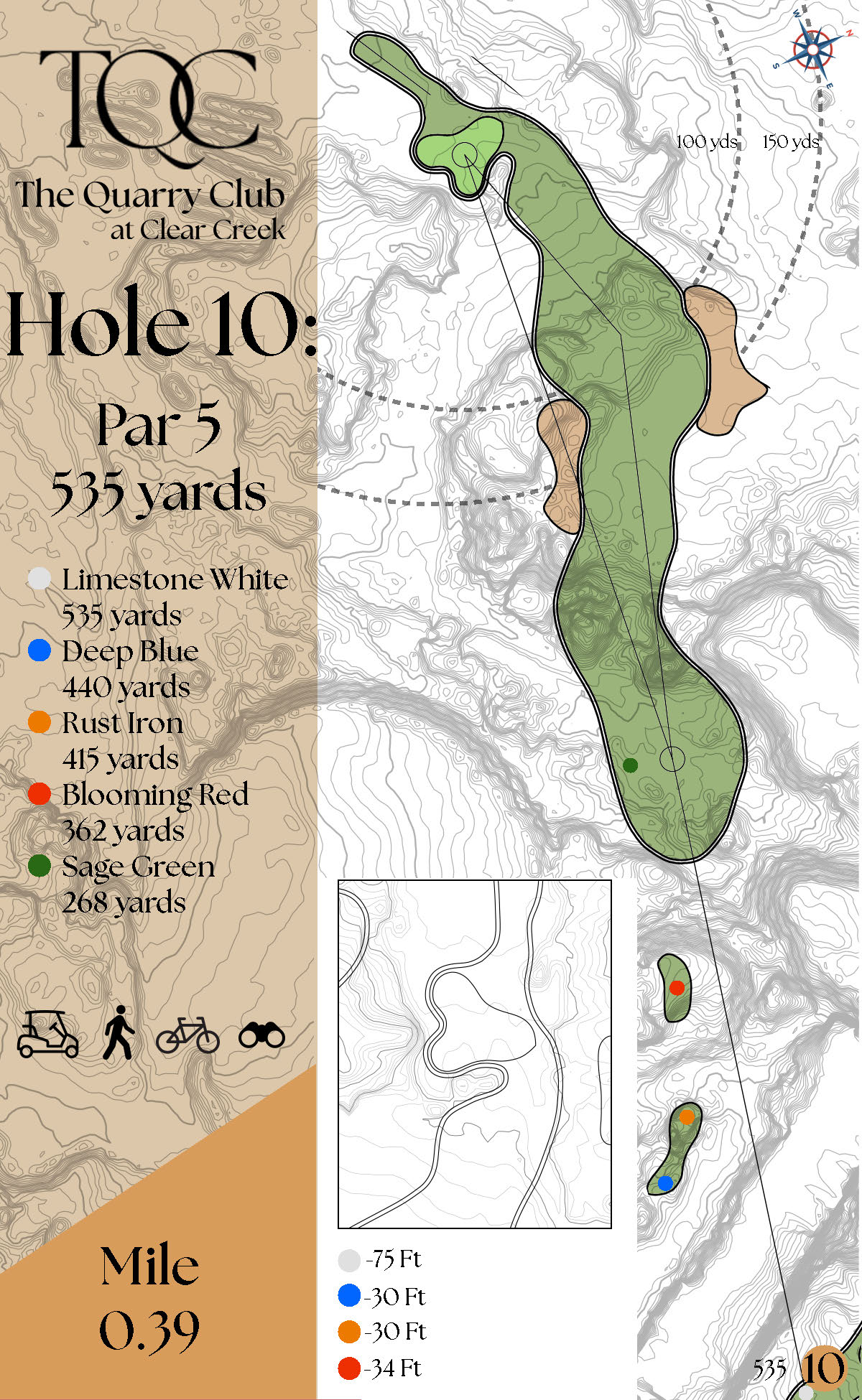
Hole 10 Yardage Book Example
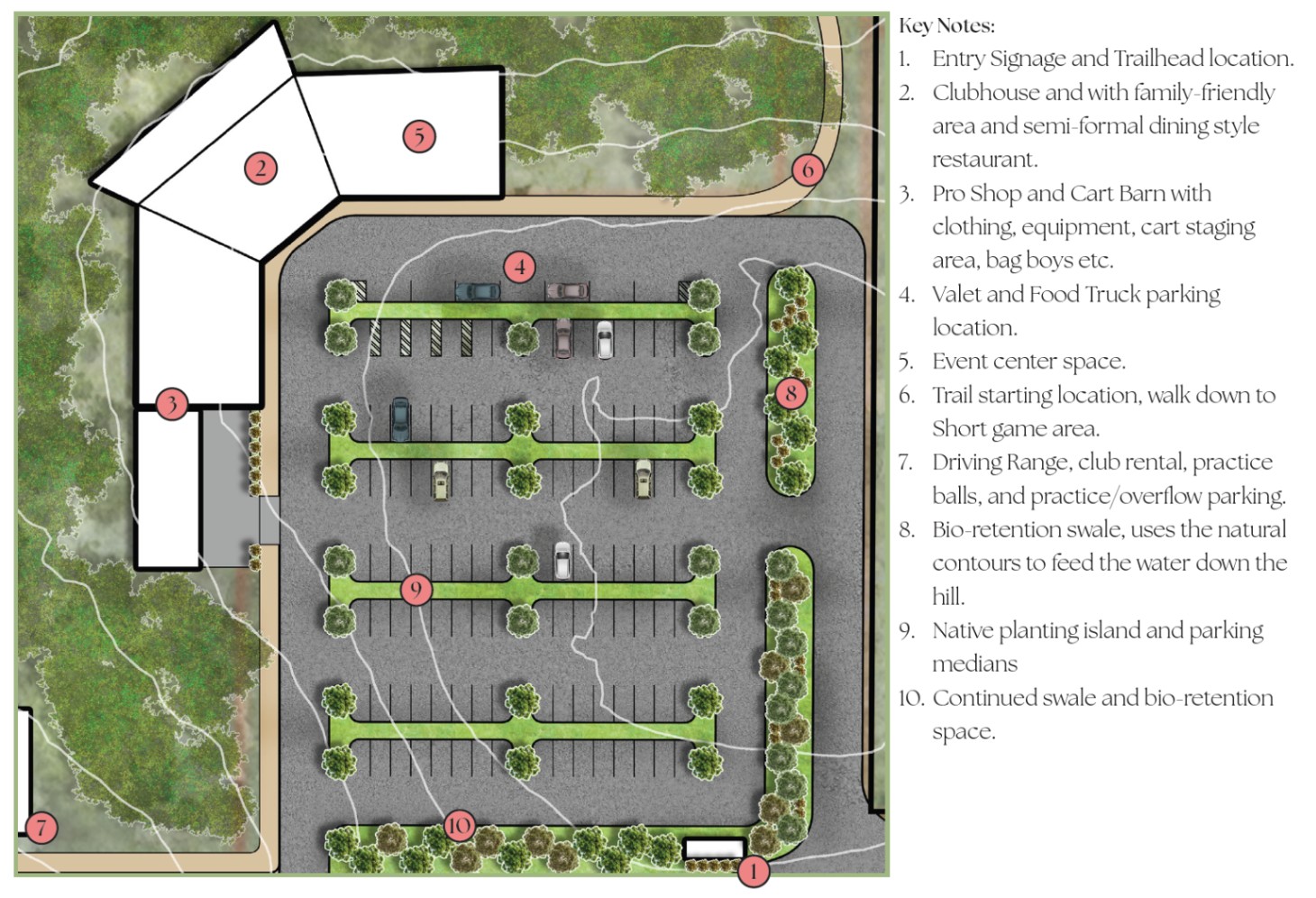
Clubhouse Enlargement
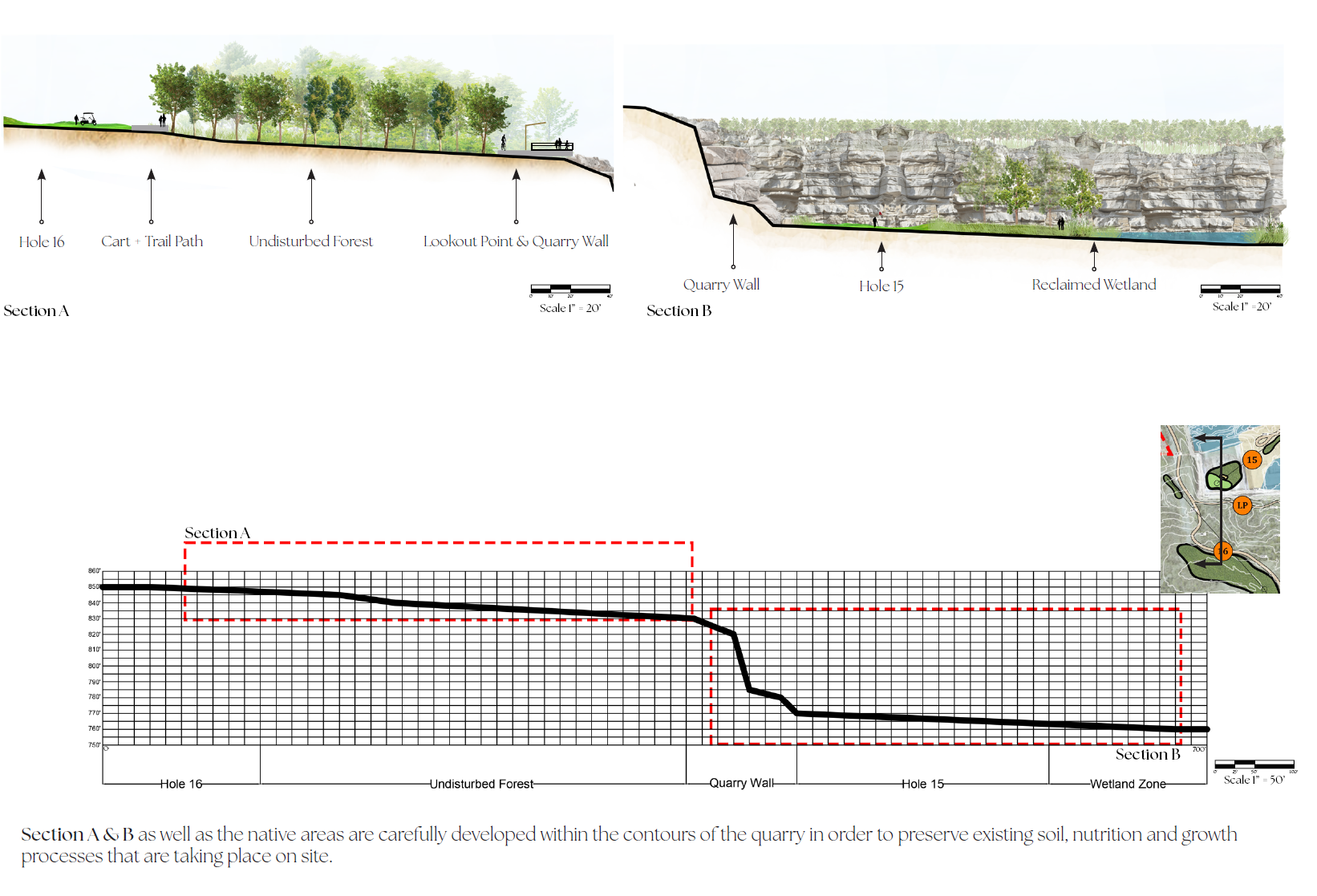
Topographic Graphics
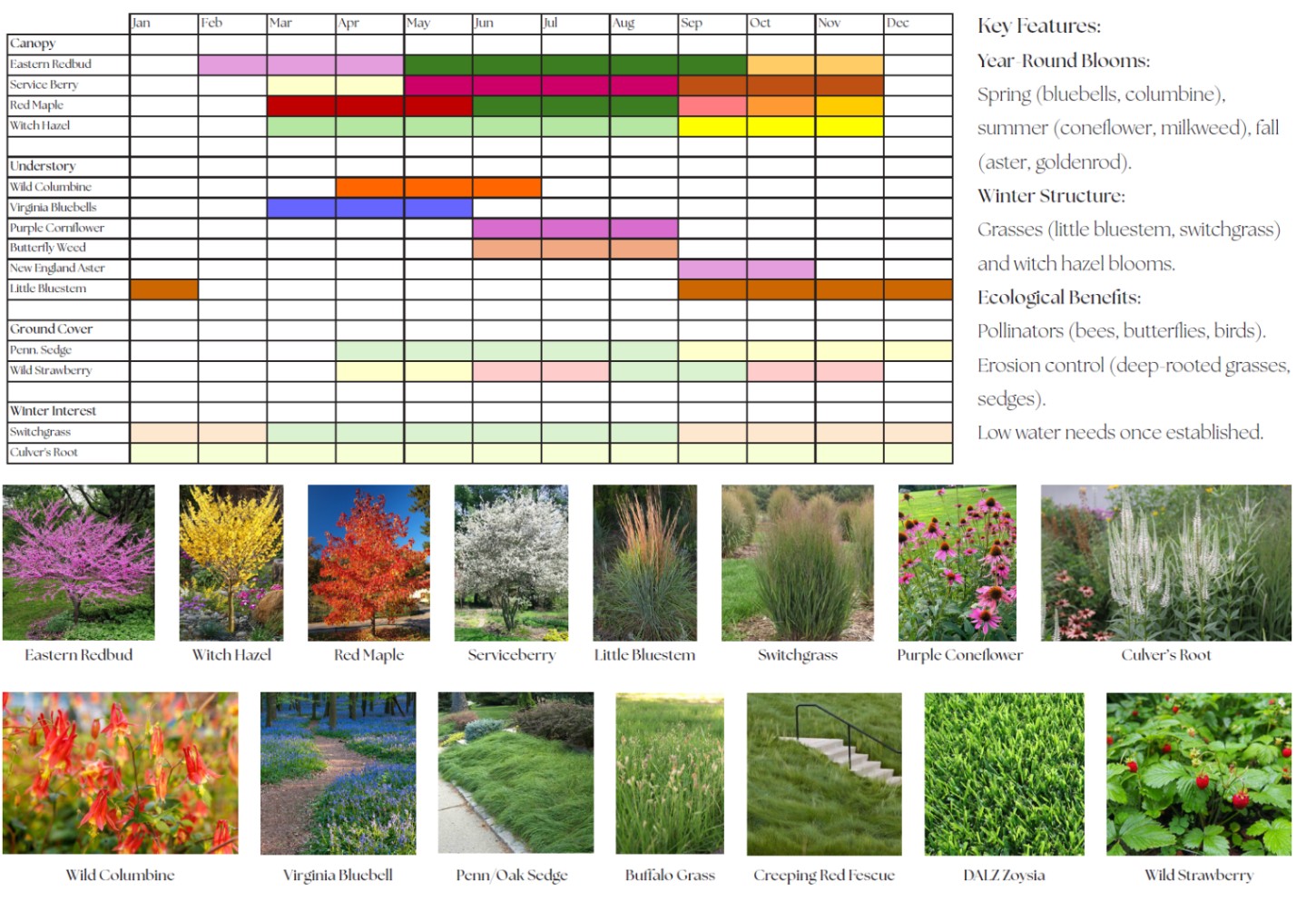
Plant List & Bloom Chart
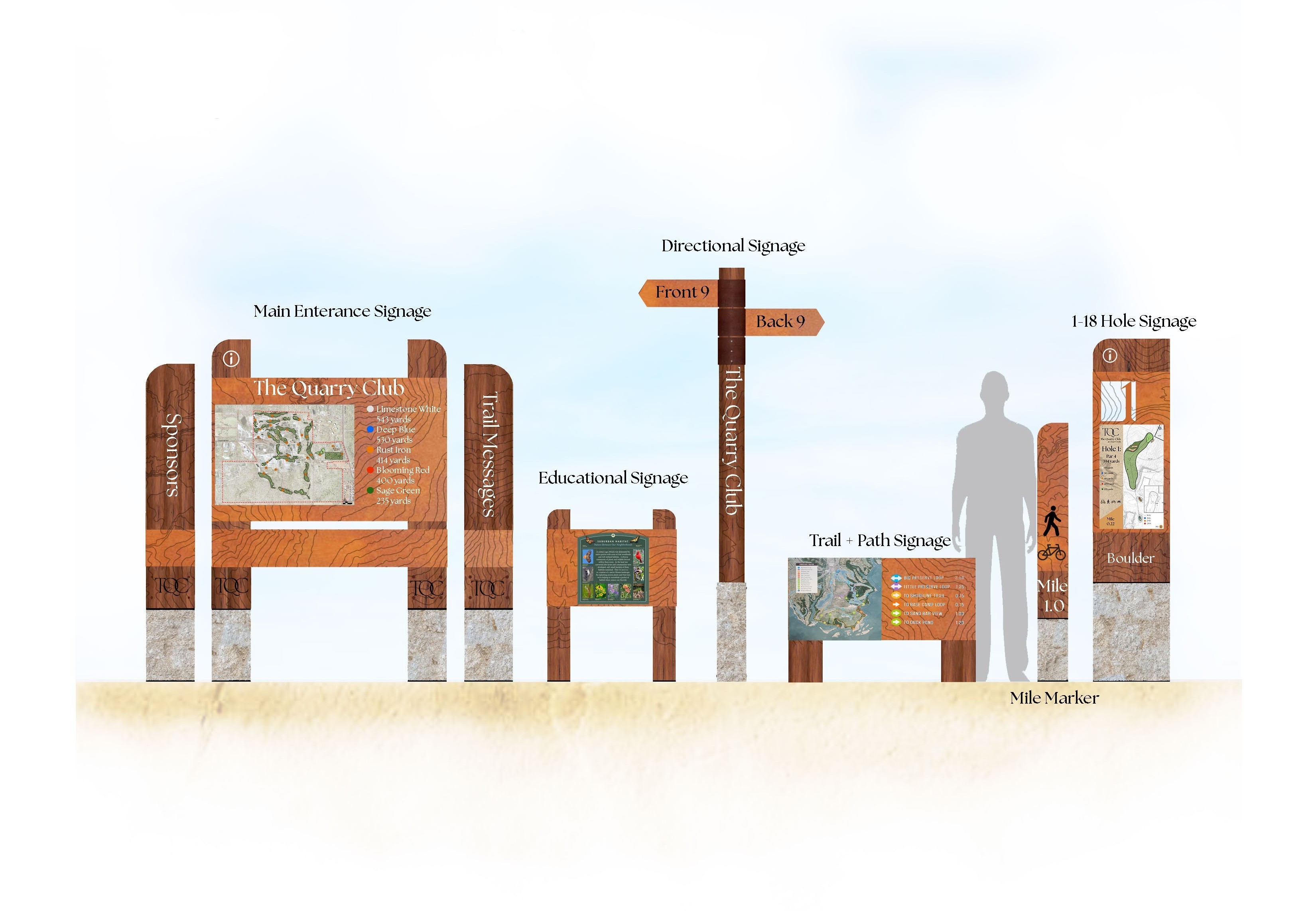
Wayfinding & Educational Signage

Why The Quarry Club?
The Quarry Club will provide the community with recreational space where families and local residents
can enjoy a nature-based golf experience within a reclaimed quarry. This multi-use site just south of
Bloomington provides a standard of design and restoration that can be implemented at brownfields and
quarries around the world.

Ali Khan
More by Ali Khan
View profile Arch Hive