Back
Rome Study Abroad Case Study
Year: 2023
Category: Landscape & Urbanism
Skills: Procreate
During our Architectural History of Rome course, students were tasked with creating a case study that focused on a specific area/piazza/monument in Rome. My assigned case study was Piazza Navona. Resources Used: Procreate (Apple Products), Canva
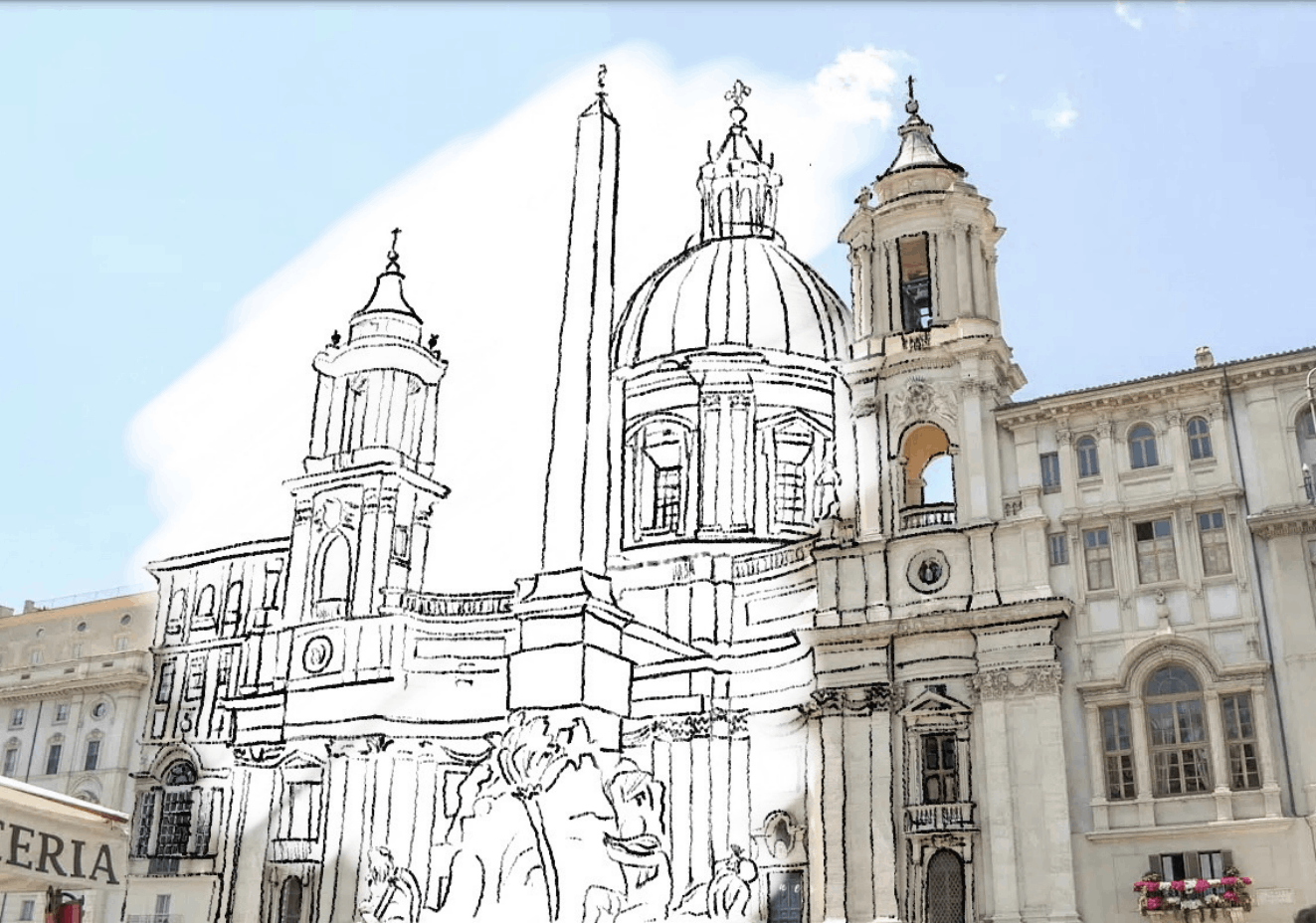
The piazza's original purpose was as a stadium of Domitian, built during the reign of Domitianus (80 AD). The stadium acted as a gift to Roman people, used for athletic contests. The games hosted here were styled after Greek athletic events, however the Roman’s disliked the games as they considered them unmanly. The stadium acted as the 1st permenant venue for athletic competition in Rome and even celebrated Capitoline games Sadly the stadium fell into ruins after fall of western empire. The ruins can still be seen and visited underground today. Today, Piazza Navona have became a center for commerce and entertainment.
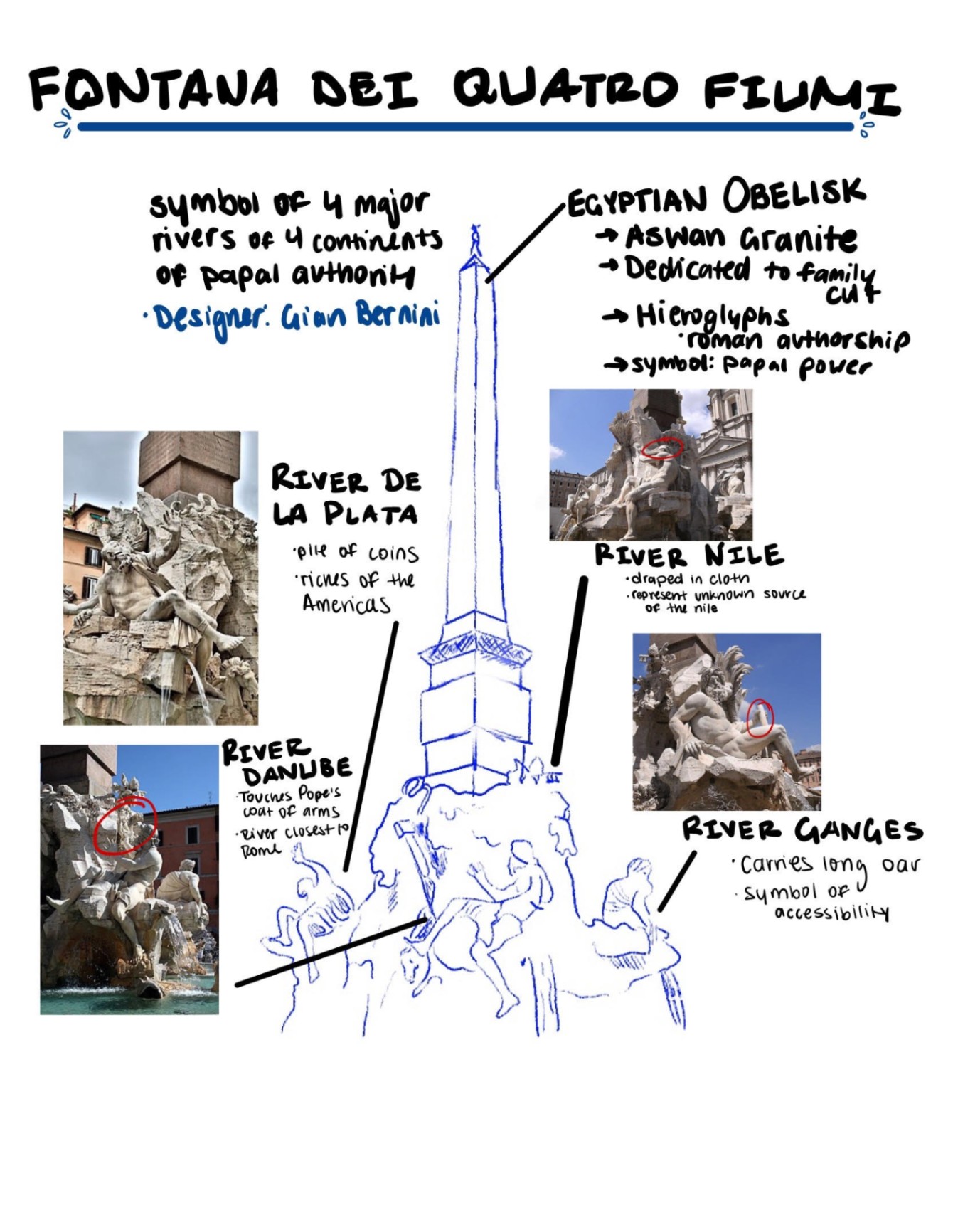
The site and surrounding areas host a variety of water features as well as a multitude of public spaces which aid in the area being used for commerce. In the center stands Fontana die Quattro Fiumi, it's notably topped by a Egyptian obelisk. This fountain showcases 4 river gods and an obelisk. The river gods represent the four major rivers of the four continents that papal authority had spread when the fountain was erected. These are the Nile, Danube, Ganges, and Rio de la Plata. The obelisk is connected to the emperor and dedicated to his family cult, including hieroglyphs about Roman authorship and offering a hym to Domitian. There are also two fountains on both ends of the plaza: Fontana del Moro, which represents a moor, surrounded by 4 tritons, and Fountain of Neptune, created within a restorative project to improve symmetry and improve infrastructure developments. Overall the piazza is a fusion of baroque architecture and sculptures with pieces that demonstrate elaborate motifs and combine functionality with art.
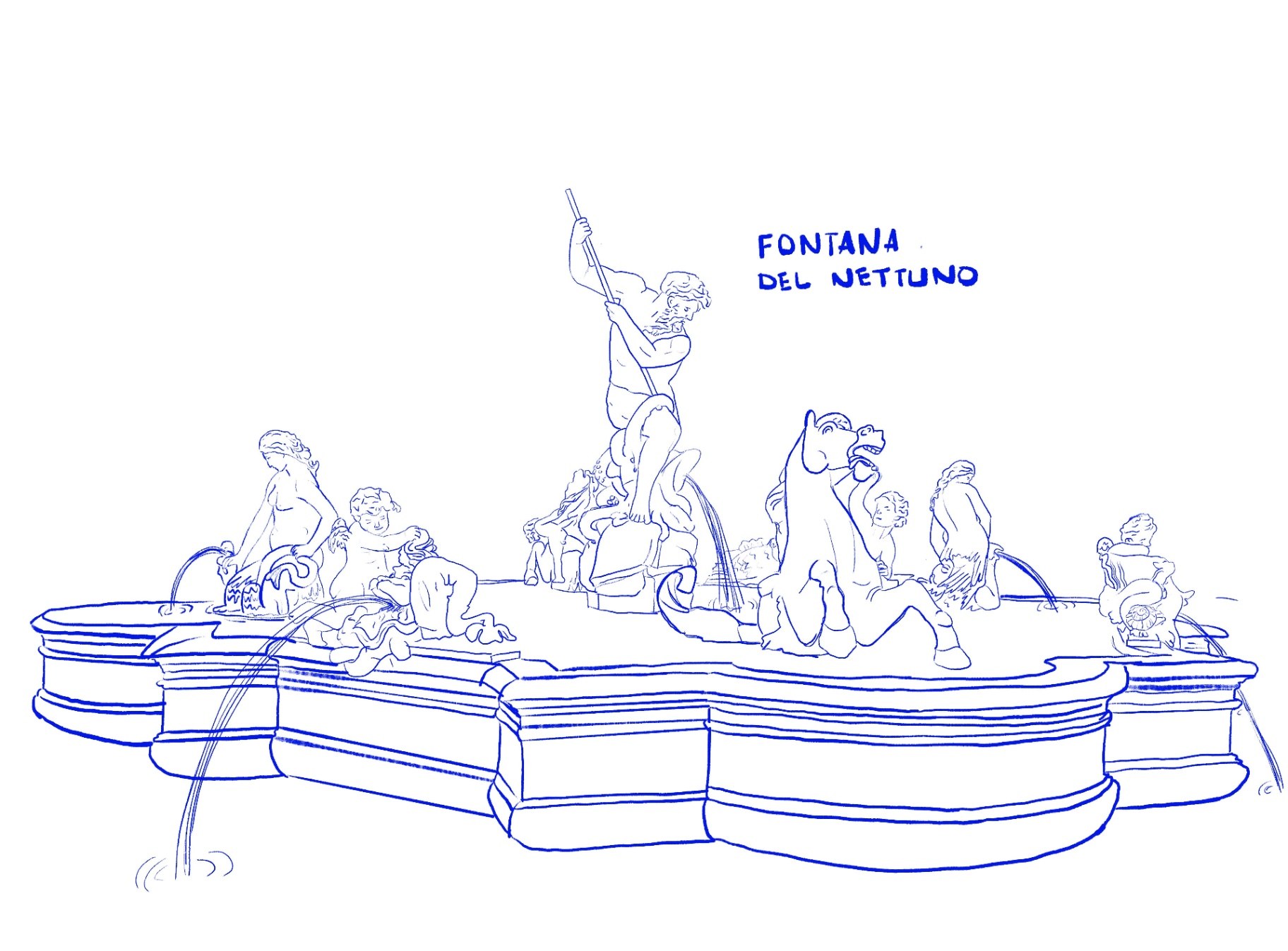
To start, many of the surrounding buildings and fountains contain sculptures of river gods, religious martyrs, tritons, angels, animals, and more. The sculptures within the fountains work to advance the iconography related to water. The water features are a feature of urban planning that is most often found around the piazza. As the water features surround statues of water gods, it enhances the storytelling related to the statues. Water also serves as an area of refuge to support the commerce nearby. Finally, iconography is heavily related to religious figures. This includes the Muslim moor in the fountain of the moor, the pagan gods within the fountain of the 4 rivers, the Christian church of Saint Agnes, and the statue of the martyr Saint Agnes on top of the church. It’s very interesting to see a melting pot of religions, with all of them coexisting in one place.
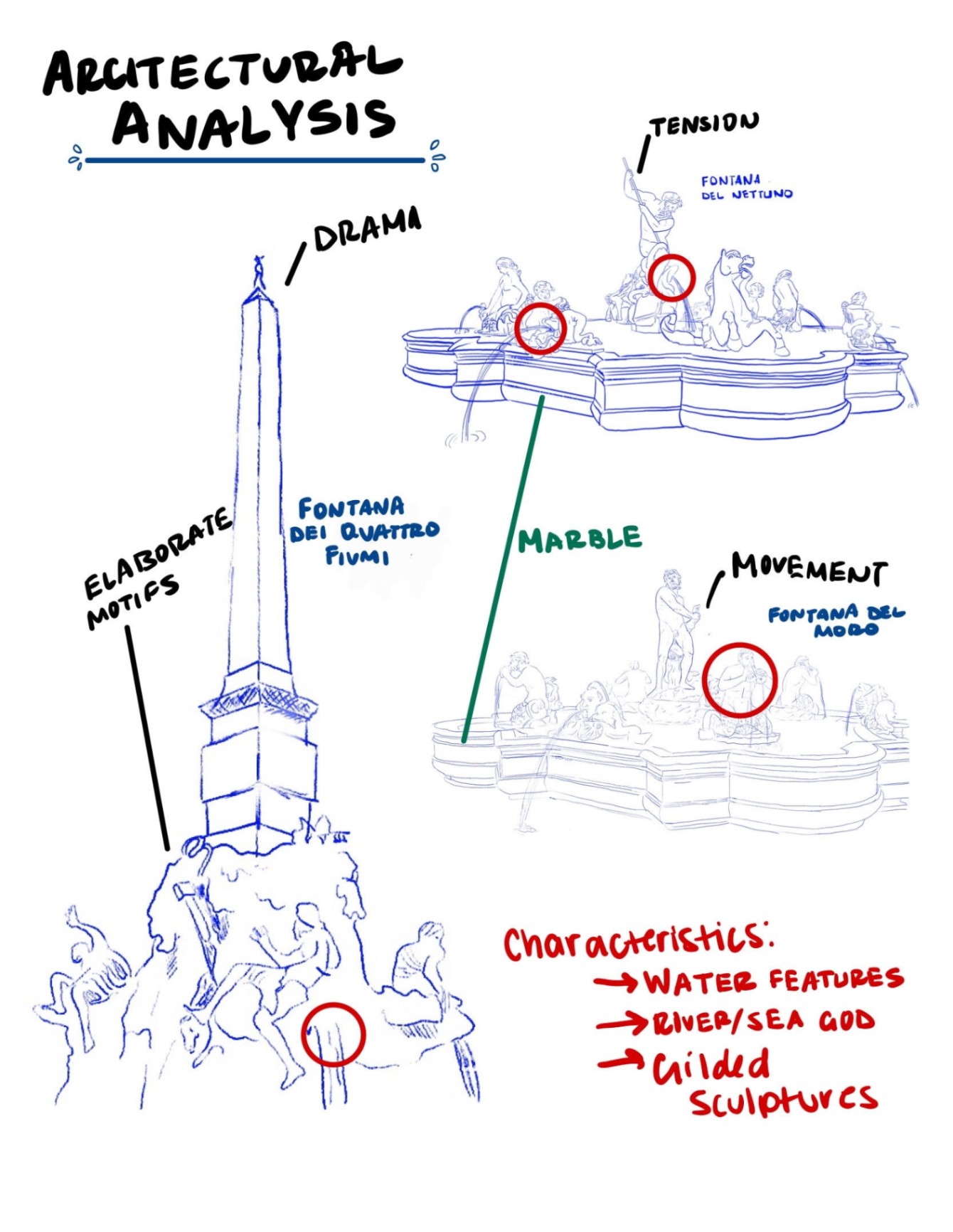
Piazza is characterized by its designs based on baroque architecture. The square's inclusion of ornate decoration and grandiose fountains is the reason it is a must-see destination for any tourist. The square around the piazza Navona dates back into antiquity, which adds more to its allure. As it rests on the former site of the stadium of Domitian, guests can revisit an area transformed by the course of history. It adds to the many layers of architectural history that define Rome. With changes in history comes the prevalence of new religions and religious iconography. Piazza Navona demonstrates this change as there is a myriad of religious symbolism represented inside and around the piazza. Pagan symbolism lies in all 3 of the fountains, while Christianity is represented in the church of Saint Agnes. Even the representation of a moor figure can be seen, representing the Islamic religion in some form. All in all, Piazza Navona has been able to flourish through the use of public events and its ties to baroque architecture and religious iconography

Mollie Smith
More by Mollie Smith
View profile Arch Hive