Back
Hikers Shelter
Year: 2023
Category: Hospitality Architecture
Skills: SketchUp, Photoshop, Illustrator
The group was tasked with the responsibility of designing a series of shelters on the Laugavegur Trek in Iceland, to serve as refuges/reflection/relaxation for day trippers and backpackers, all while respecting the trekking ethos. Each shelter will need to be unique within itself, while also being recognizable as being part of the whole series of shelters. Resources Used: SketchUp, Photoshop, Illustrator, Canva, Sketching Paper
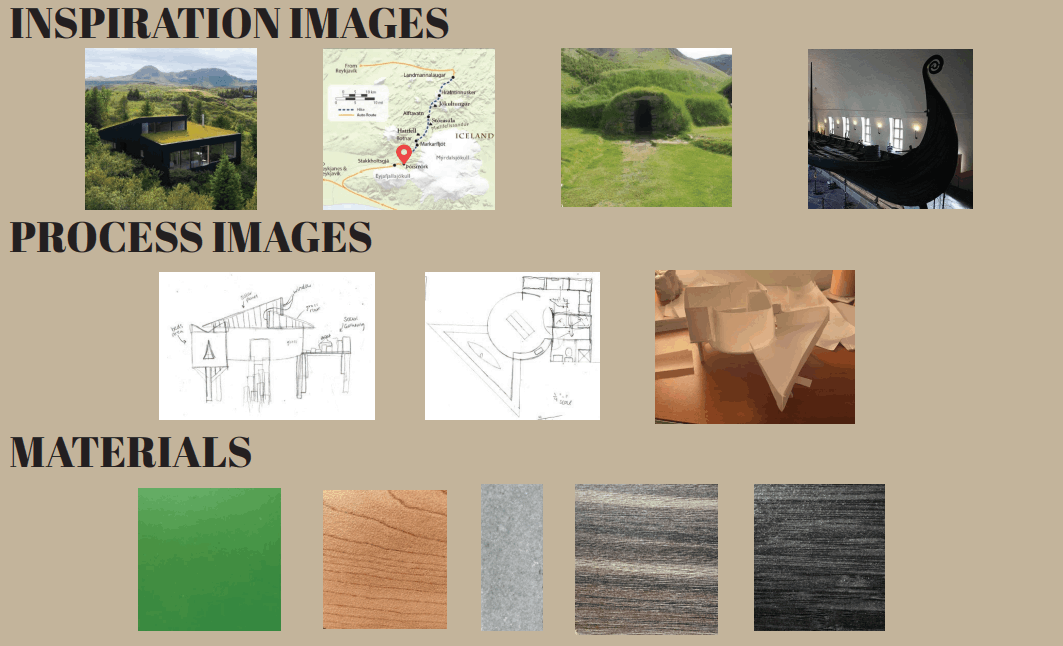
To start, designs must reference local Icelandic design aesthetics, provide association with cultural folklore, and exist within the context of the native landscape (fjords, lava fields, glaciers, mountains). In addition to providing shelter from the elements, the structures must create a sense of place, encourage a sense of community, and foster interaction between groups of unrelated hikers.
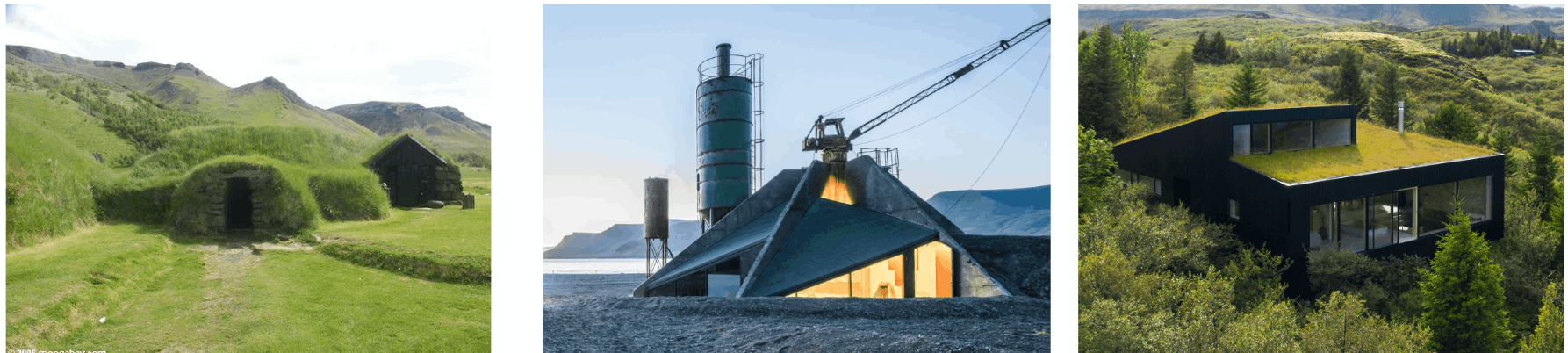
Research/Inspiration
Within the group’s research, we learned that Icelandic architecture is mainly low-rise, with smaller buildings being traditionally wooden framed. One of the most recognizable architectural features in a town near the trail, Reykjavik, pertains to building designs pulling inspiration from the country’s landscape. This includes inspiration from the forms/shapes most closely related to rocks, mountains, and glaciers. Modern Icelandic buildings (in response to a wave of new, foreign influences) tend to be taller with large windows. Concrete also began to be used as a new, economical building material that can easily reference the more traditional building styles within early Icelandic architecture.
OUR TEAM CONCEPT: The Laugavegur Trek is home to many beautiful mountain ranges and if full of many natural features like rivers, valleys, waterfalls, and more. For the design concepts used to connect the shelters together, it was necessary to hone in on the journey that an individual experiences while hiking along the scenic trail. To accomplish this, the word “rising” was first considered as to incorporate the rising altitudes of many trail locations. Each shelter within the trail represents the increase in altitude through the use of height. Along with shelters representing their location on the trail, they also incorporate natural and local materials, helping hikers feel more “anchored” into their environment. From this, the group devised the central conceptual statement to connect the three structures and aid in the emotional connections tied to the shelters. This was “rising into the landscape while remaining anchored to the natural elements.” Hikers can feel secure within the location, while also enjoying and taking in everything that the shelter location has to offer. Regardless of which shelter a hiker is visiting, they can feel as though they are immersed within the surrounding landscape and the various natural features that surround them. To provide a sense of community, a large social gathering area will need to be incorporated into the design. Within this social gathering area, references related to local folklore can be included to not only peak hiker’s interest but serve as a storytelling focal point (and encourage interaction amongst hikers). To help the series of shelters correlate with one another, common shapes, materials, and design principles will be incorporated within the individual shelters. Shelters will need to coexist within the surrounding natural landscape, while also proving to be a sustainable resource for hikers. To accomplish this, the design can include natural, local materials while also using sustainable resources like solar panels, grey water sinks, and more.
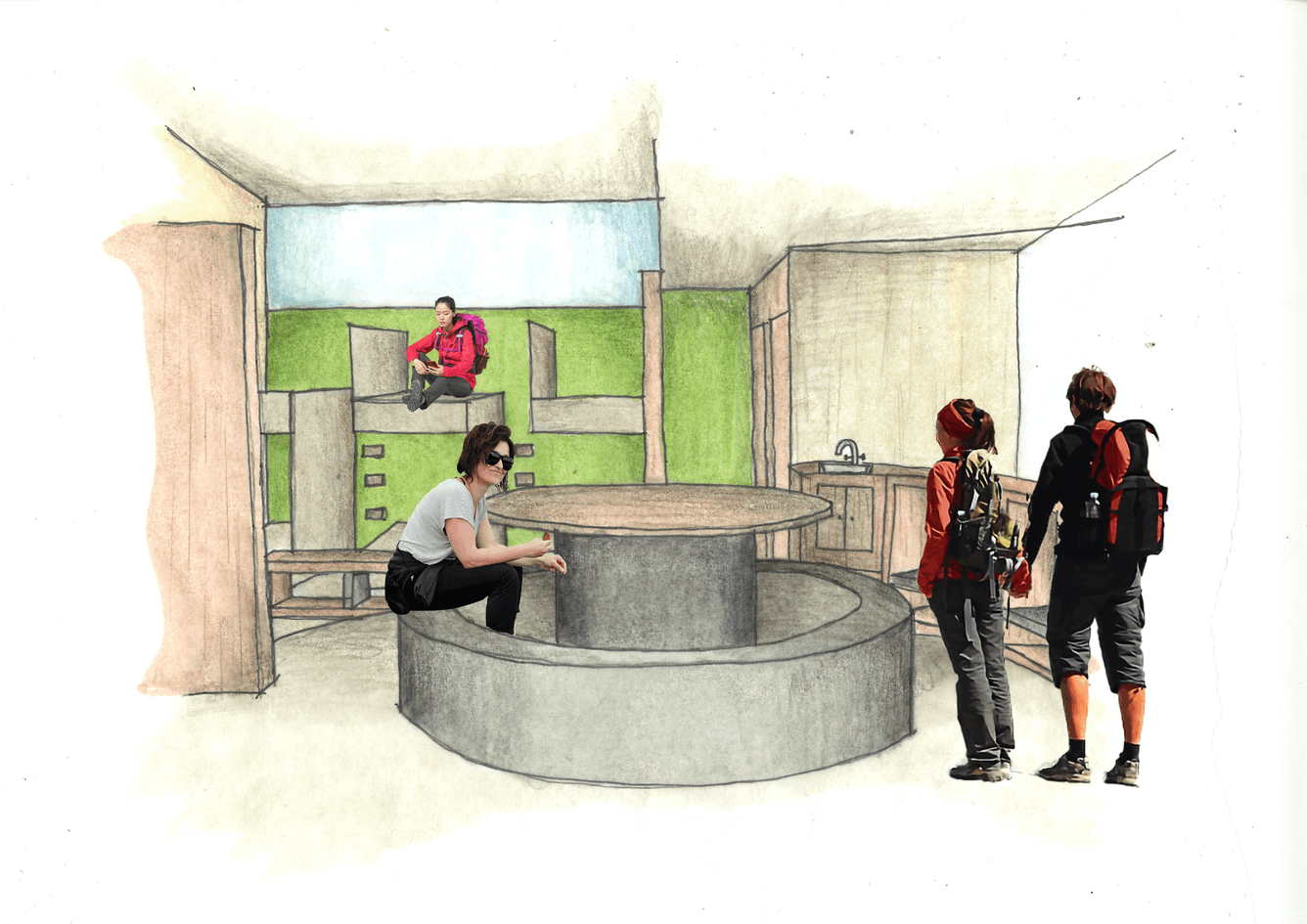
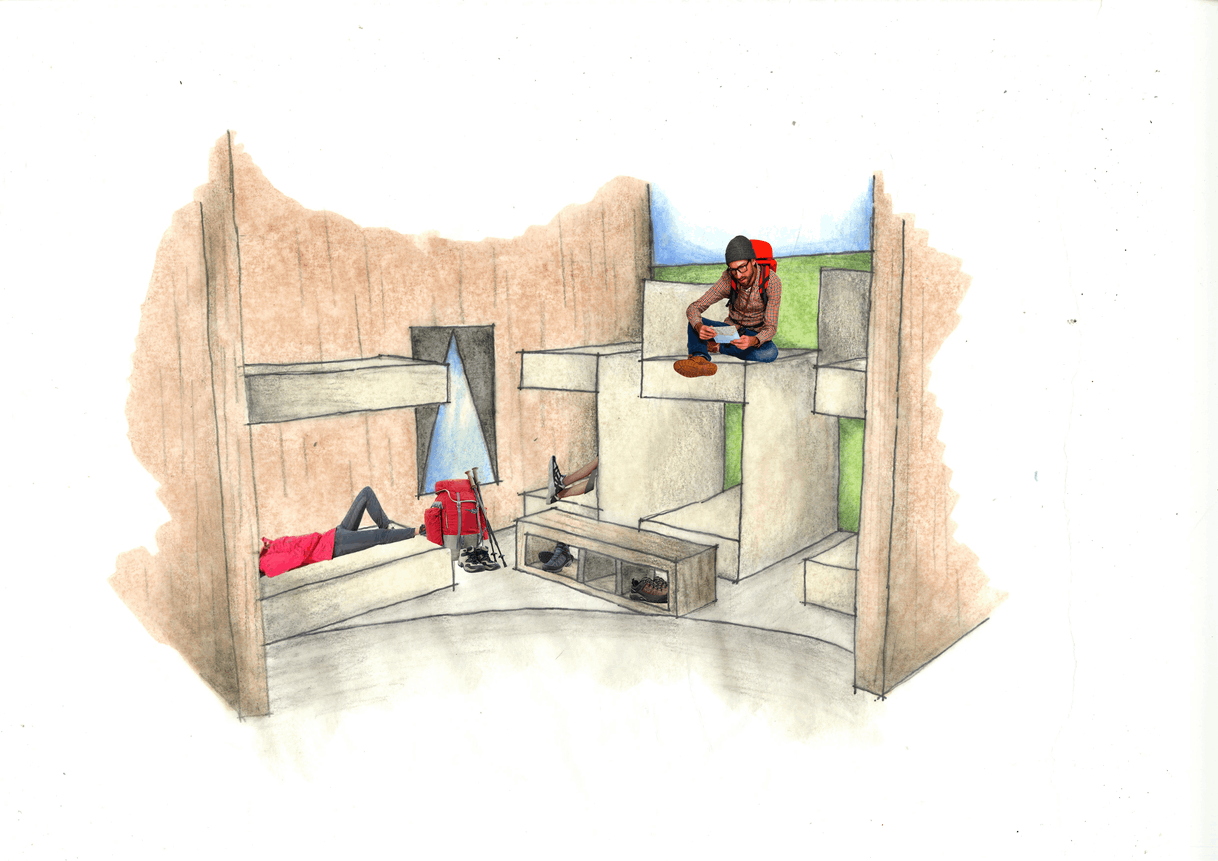
MY SOLUTION (MY SHELTER) To begin, the basic shapes and forms of the shelters were taken into consideration. The group wanted to use the same basic shapes to categorize the various spaces in the shelter. Ultimately, it was decided that all three would include some form of triangle shapes for an exterior social area, a circle within the food prep/eating area, and finally a rectangle for the sleeping areas/restrooms. Not only did this help the shelters share common elements, but it also provided unity and made them appear recognizable as being part of the whole series of shelters. The group also wanted to incorporate the same Icelandic folklore/traditions within the shelter designs. We ended up choosing to hone in on the story of afterlife, more specifically the traditions represented around it and the Norse gods. This tradition involved setting a sailing boat on fire with the deceased individual on board. In tune with the group’s concept surrounding, one’s journey, this tradition symbolized a safe passage as well, one that aids someone into the afterlife on the same vessel that aided their travels in life. Both myself and Corey, used the boat as a fire pit to represent the fire set onto the boat. To create variety within this story, Nancy used the element of water to represent the water the boat is on during the ceremony. Both water and fire elements introduce the regions mythology and folklore while also creating an area for hikers to gather around and interact with one another. Because the series of shelters represent the journey an individual experiences while traveling on the trail, it was important to consider the element of time. This way, the shelters can be placed in the location correlated with the way hikers travel along the trail. At the start of the trail, Corey’s design remains completely on the ground. Individuals are able to take in the views of the mountains from his shelter and prepare for the journey ahead. Nancy’s design represents the “halfway” point on the trail where its somewhat in-between altitudes (neither on top of a mountain nor at its base). To signify this change, to enter into Nancy’s shelter, a hiker must step up from the outside area. Finally, my design’s location is at the top of a mountain (at Þórsmörk). To demonstrate the risen altitude of the shelter, the entire structure is above ground and can only be entered through using a staircase. Local materials were also considered during the design process. From the various inspiration pictures and background knowledge, grass roofs seemed to be the most common/sustainable element that can be pulled as a local material. Not only does this help with sustainability, but it also adds a new texture and creates an emphasis to bring focus to the roof. The color of roofing, stone, and wood materials aid in creating a balance between the shelter and the natural environment.
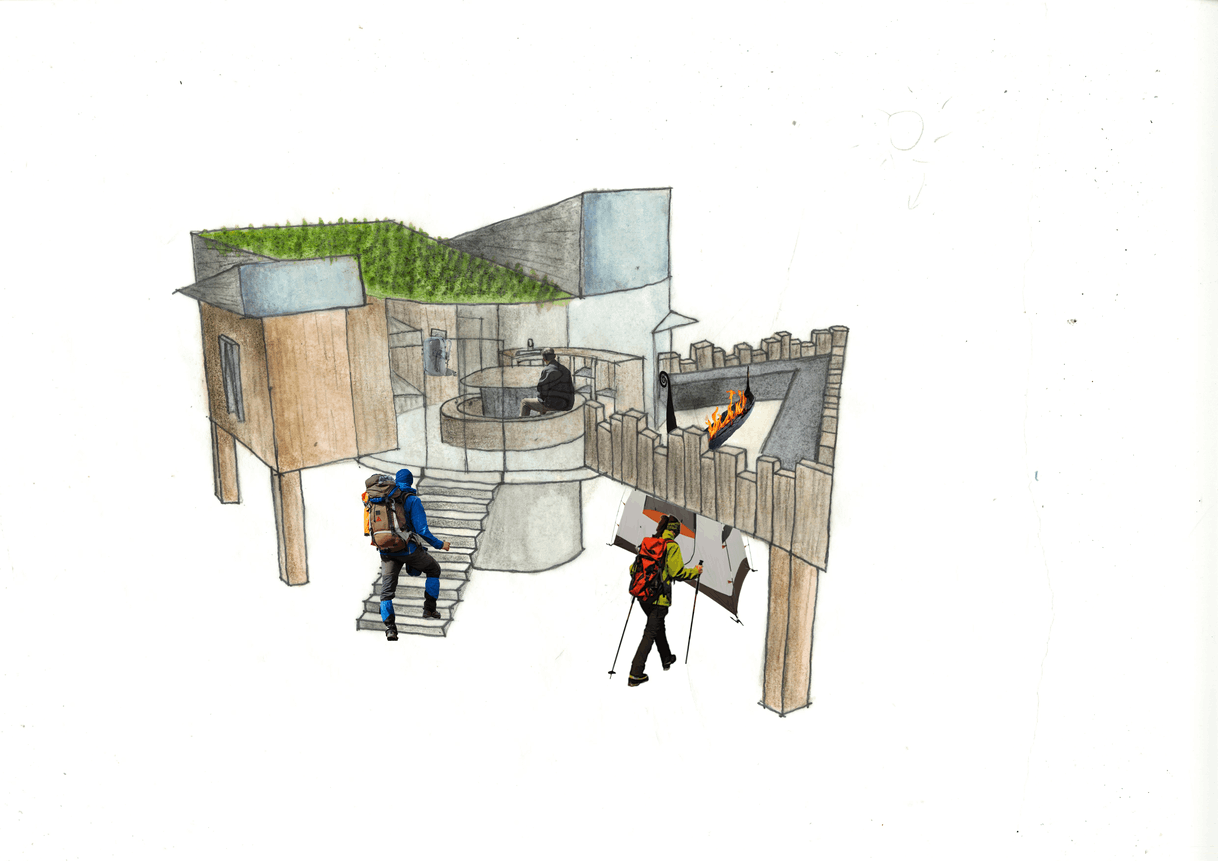
To reflect, this project served as an excellent way to connect Icelandic architecture within the landscape of the popular Laugavegur Trek. While working with a group aiding in simplifying the process, it would have been more proactive to have additional group meetings, so everyone was on the same page with how the concept was going to be represented. Because the group did not communicate at first, we had to restart the design process, which made a time constraint on the front end. However, the group saw more success once everybody began communicating with one another and asked more questions.

Mollie Smith
More by Mollie Smith
View profile Arch Hive