Back
Rebuild, Reuse, Restored
The Skytop Quarry was once a beautiful piece of land, but after being destroyed by aggregate mining it has been left barren. This project aims to restore the land’s biodiversity by designing an ecological research station that will support its rehabilitation through the building’s systems. This project reimagines the typical field station because this one has a set life span that is dedicated to the process of making the land self-sustaining again. As the land begins to replenish, the building will slowly degrade and be taken over by nature. This restoration process is divided into four phases: Testing, Implementing, Flourishing, and Rewilding. The material palette is entirely biodegradable so when the building degrades, all the materials will add to the biodiversity. The main materials used are timber, mycelium, and limestone which are all manipulated in various ways so they can function differently throughout the building. Once the building is successfully taken over by nature, the quarry will be restored. It is with hope that once the project is completed, humans can re-think about the relationship between man and building and how it can be improved to better help our earth rather than destroy it. Done in collaboration with Charlotte Bascombe
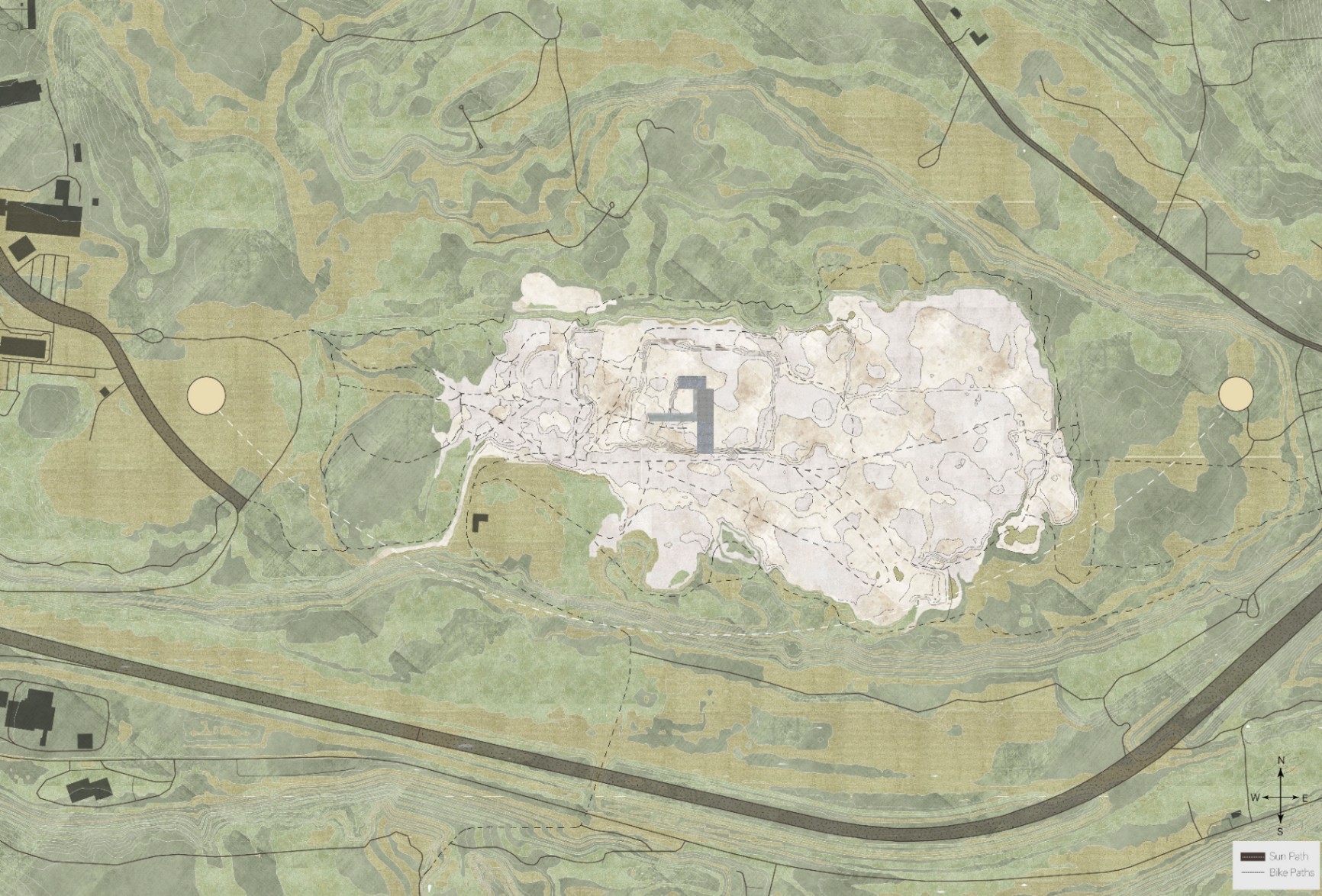
Site Plan
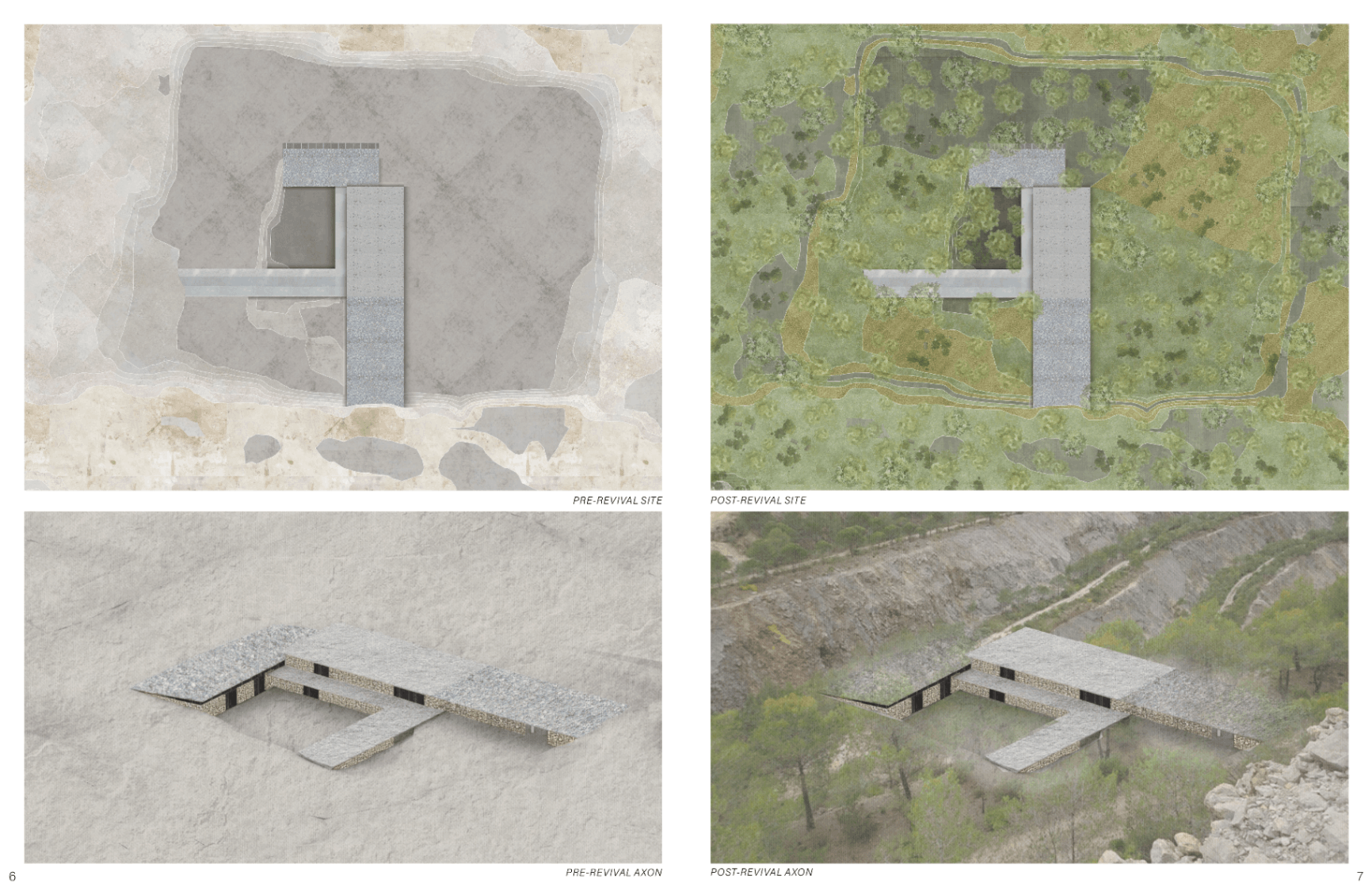
Pre and Post Site Conditions
Site plans and axons before and after the land is restored and the building is taken over by nature.
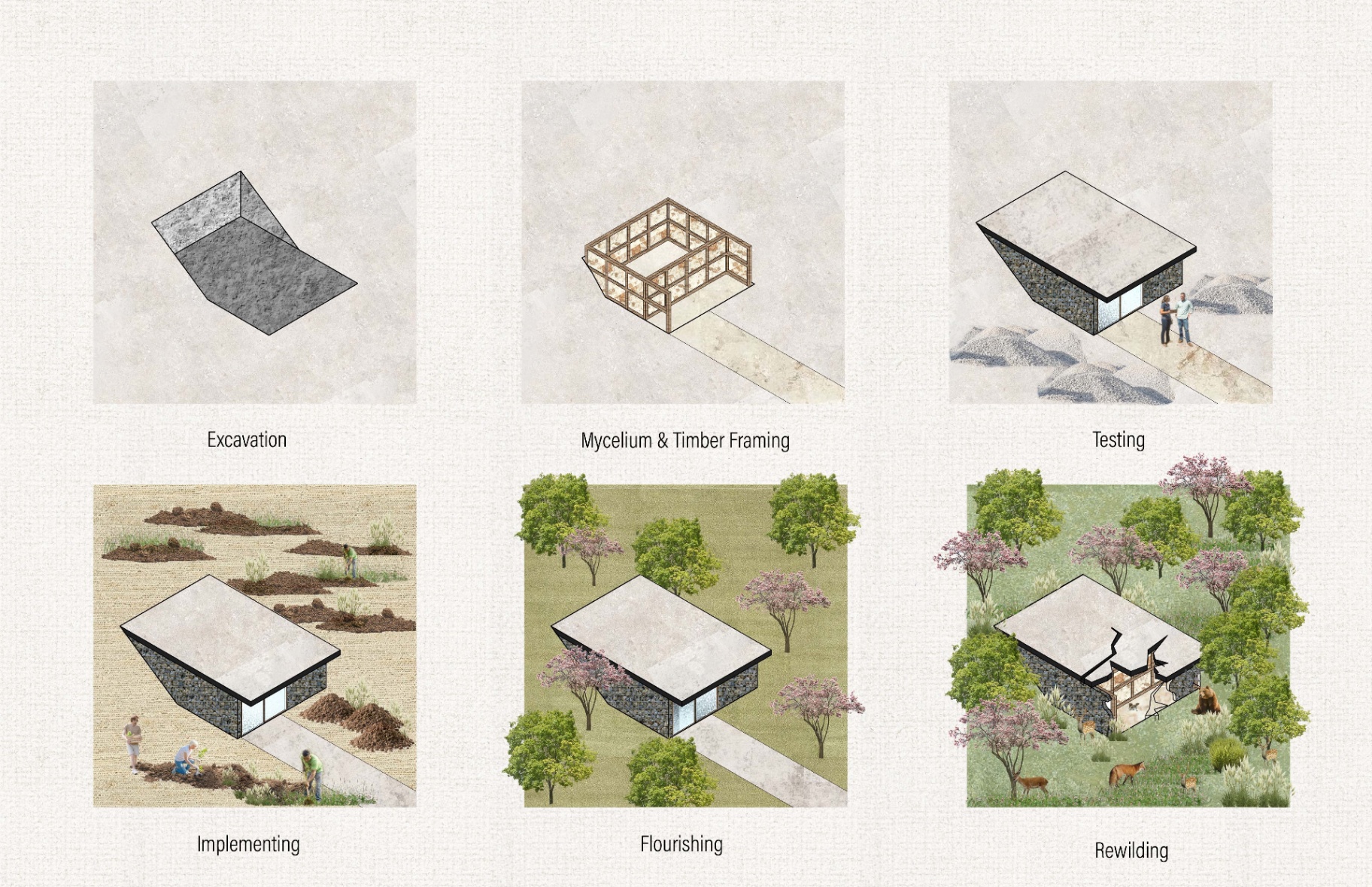
Lifecycle Diagram
As the land begins to replenish, the building will slowly degrade and be taken over by nature in a healthy and sustainable way. To do this, we separated this process into four phases: Testing, Implementing, Flourishing, and Rewilding.
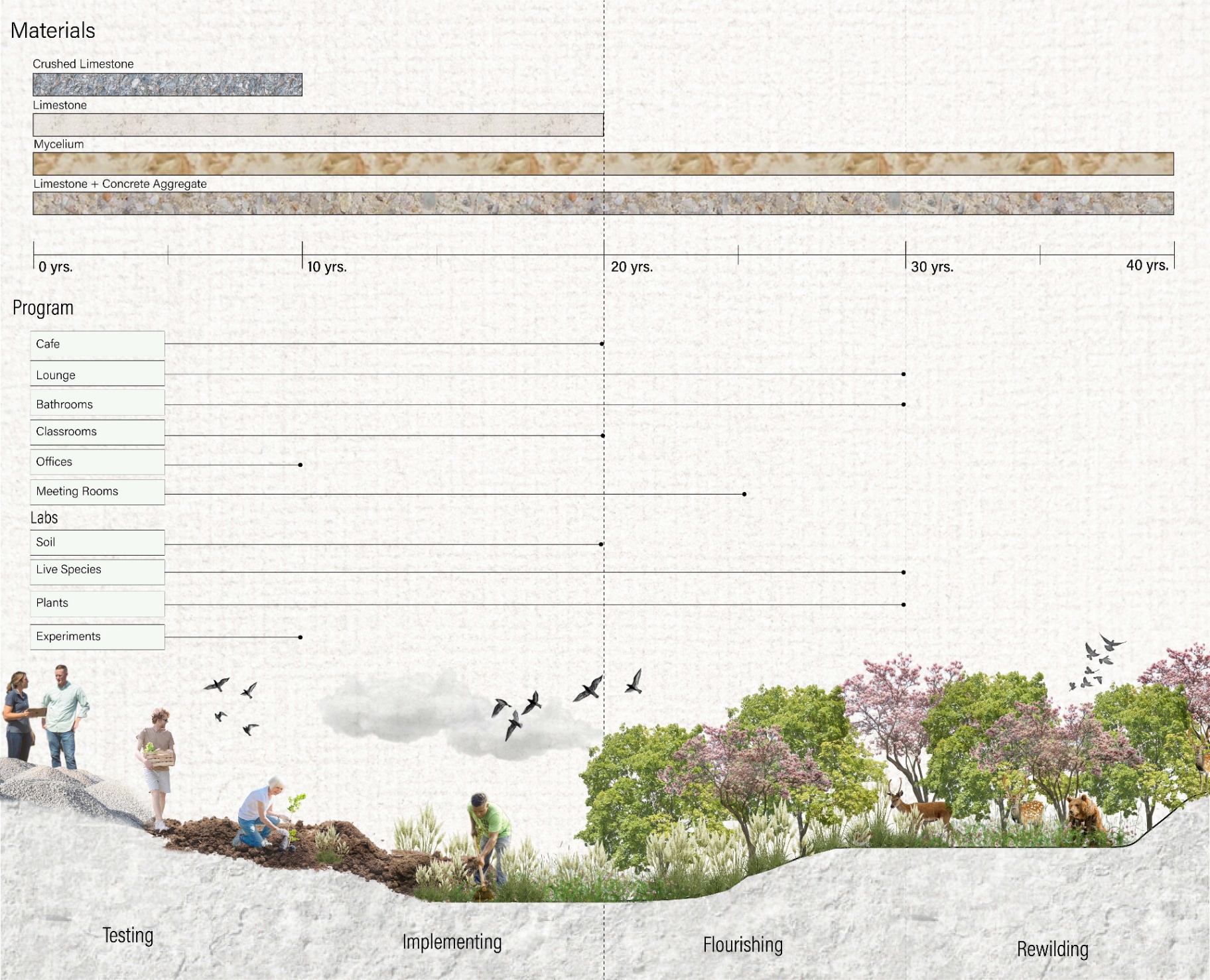
Material Lifecycle Diagram
As these phases come to their respective end, the materials and programs associated with them will begin to slowly deteriorate. For example, as seen in our Material Life Cycle Diagram, the offices and experimental spaces will deteriorate after 10 years at the completion of the Testing phase. These spaces have the crushed limestone roofs above them, a roof structure that is not long lasting. The planting and live species labs, on the other hand, are covered by the limestone and concrete aggregate roof, a structure that will still last until the end of the Flourishing phase. These programs were chosen to stay longer because unlike the offices, they will be actively needed in the replenishing of the quarry.
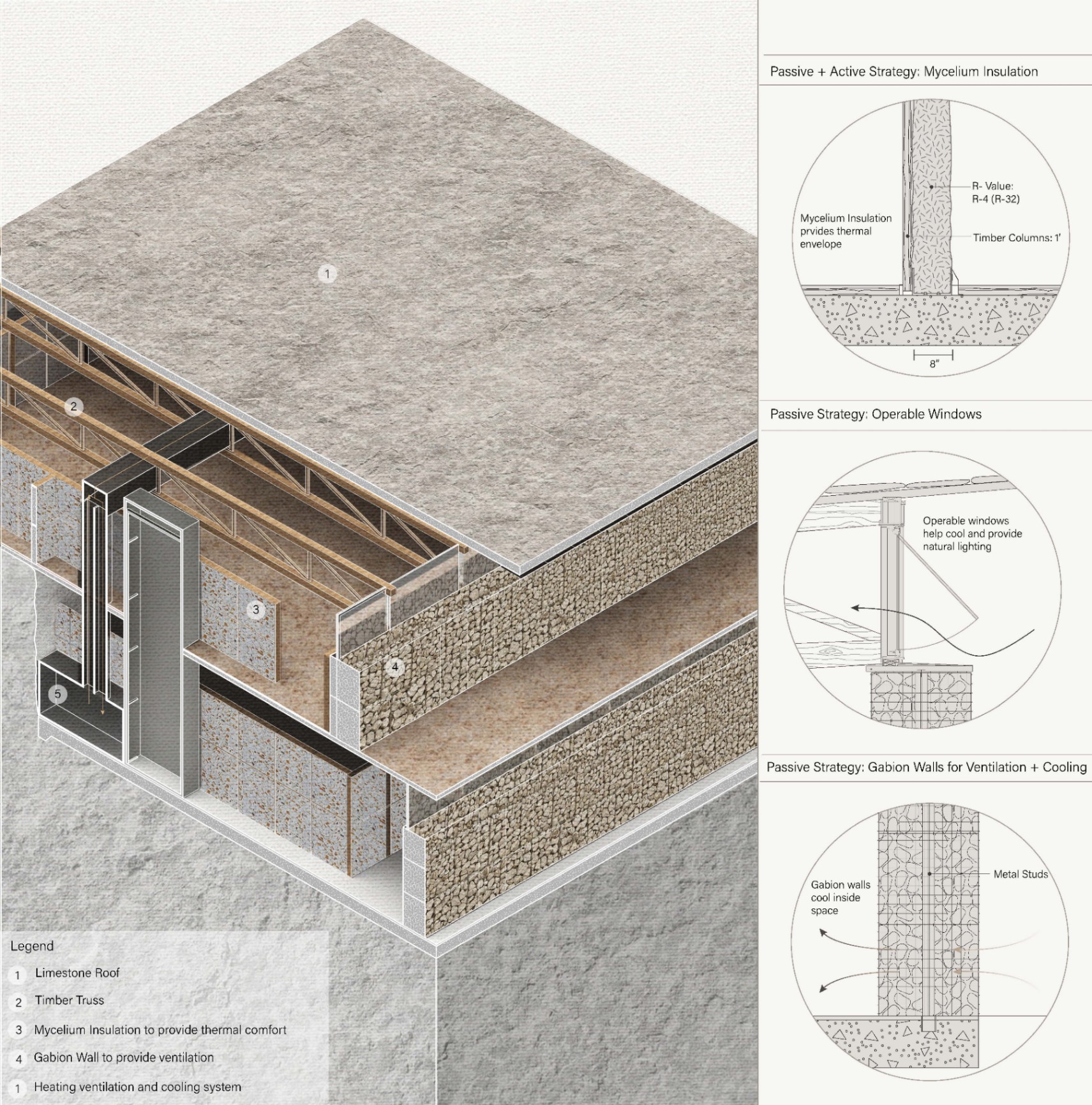
Systems Axon
We chose to keep our material palette simple and biodegradable because we wanted them to become a part of nature in a healthy and sustainable manner at the end of the building’s life cycle. We used timber, mycelium, and limestone, but we manipulated the materials in various ways so that they can be applied to different elements of the building’s structure. For example, we took advantage of the quarry’s natural material, limestone, and used it to carve out the building’s walls, create various roof structures, and incorporate gabion walls as a source of natural ventilation.
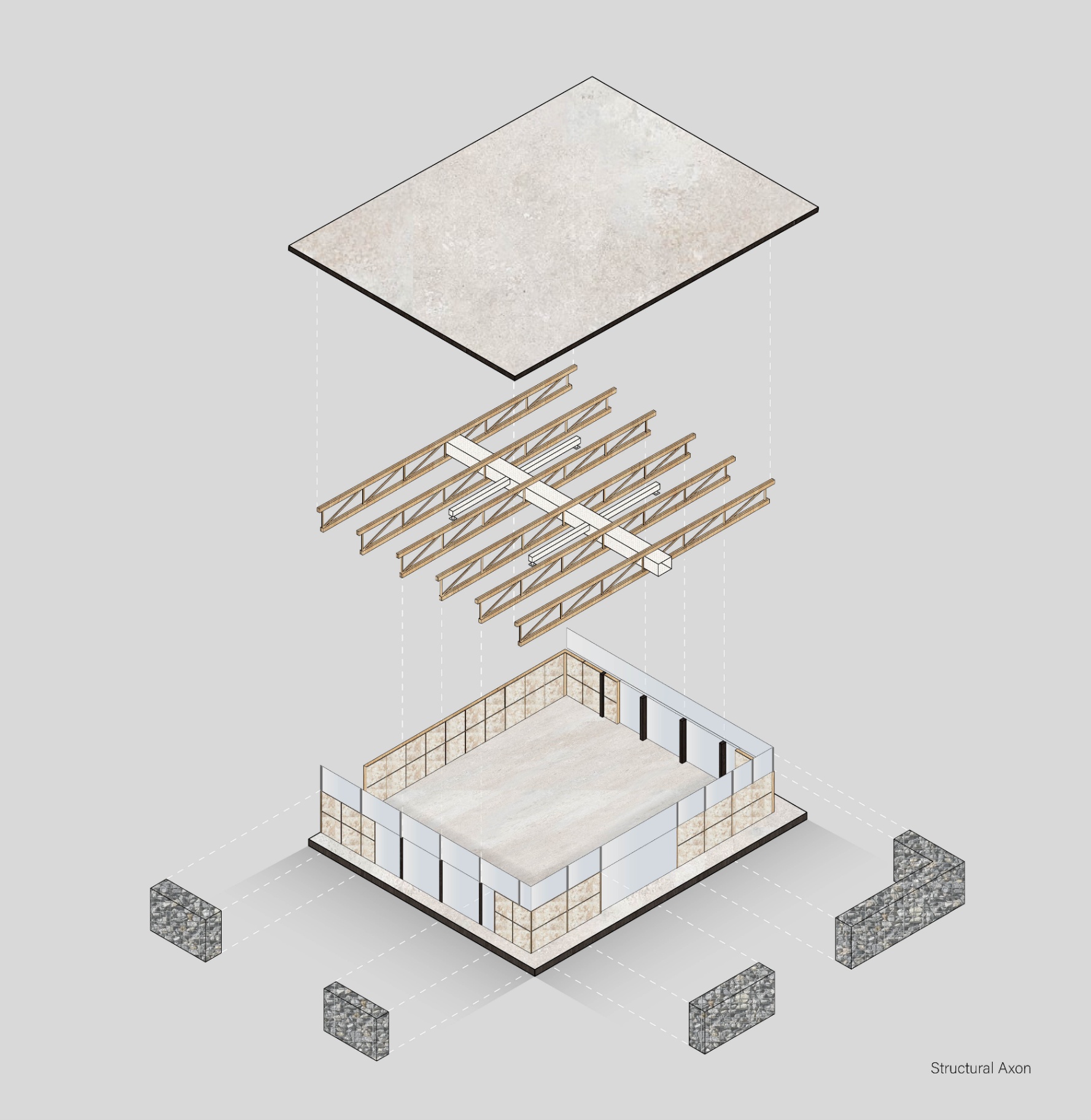
Structural Axon
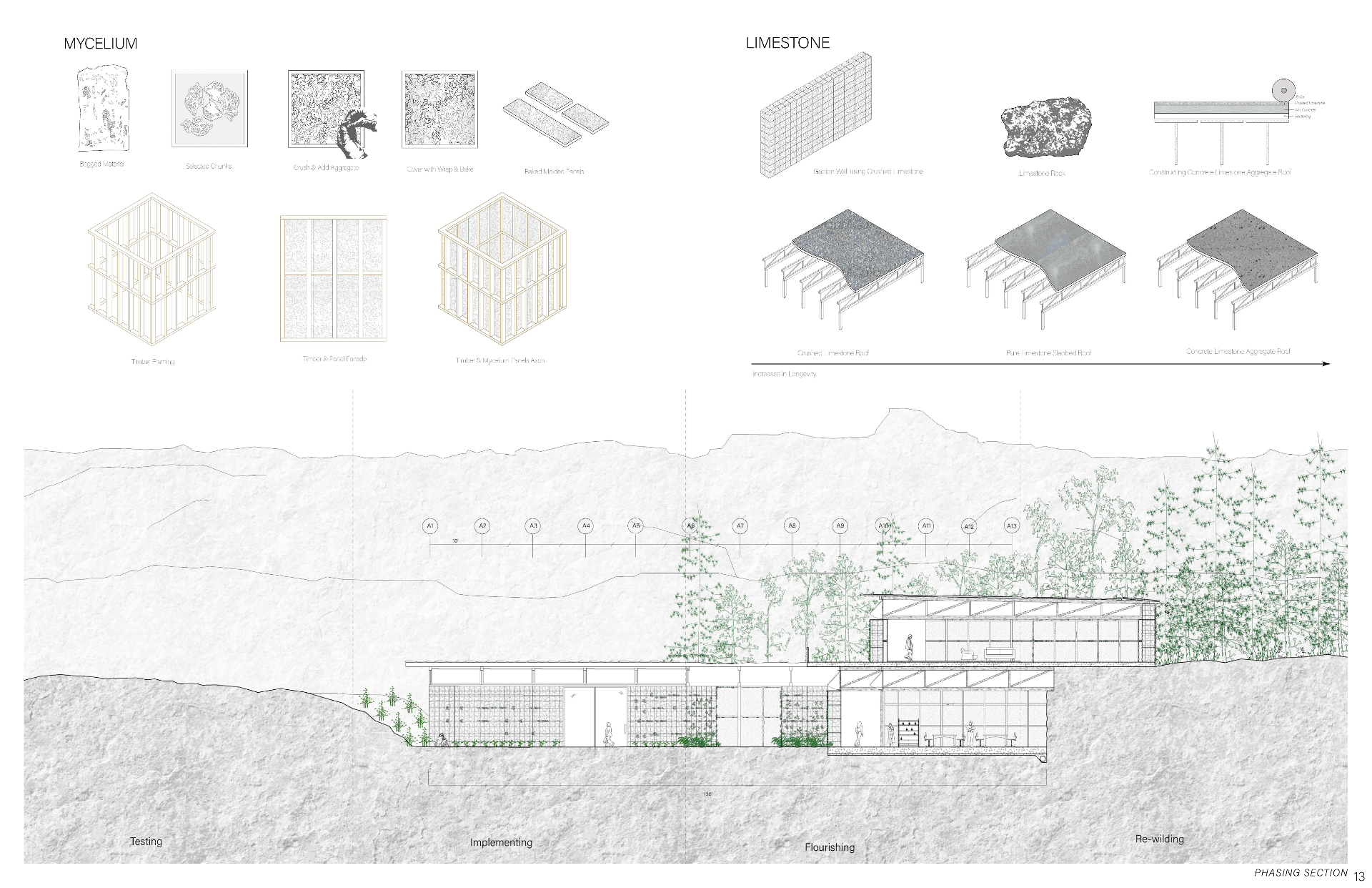
Mycelium & Limestone Diagrams and Phasing Section
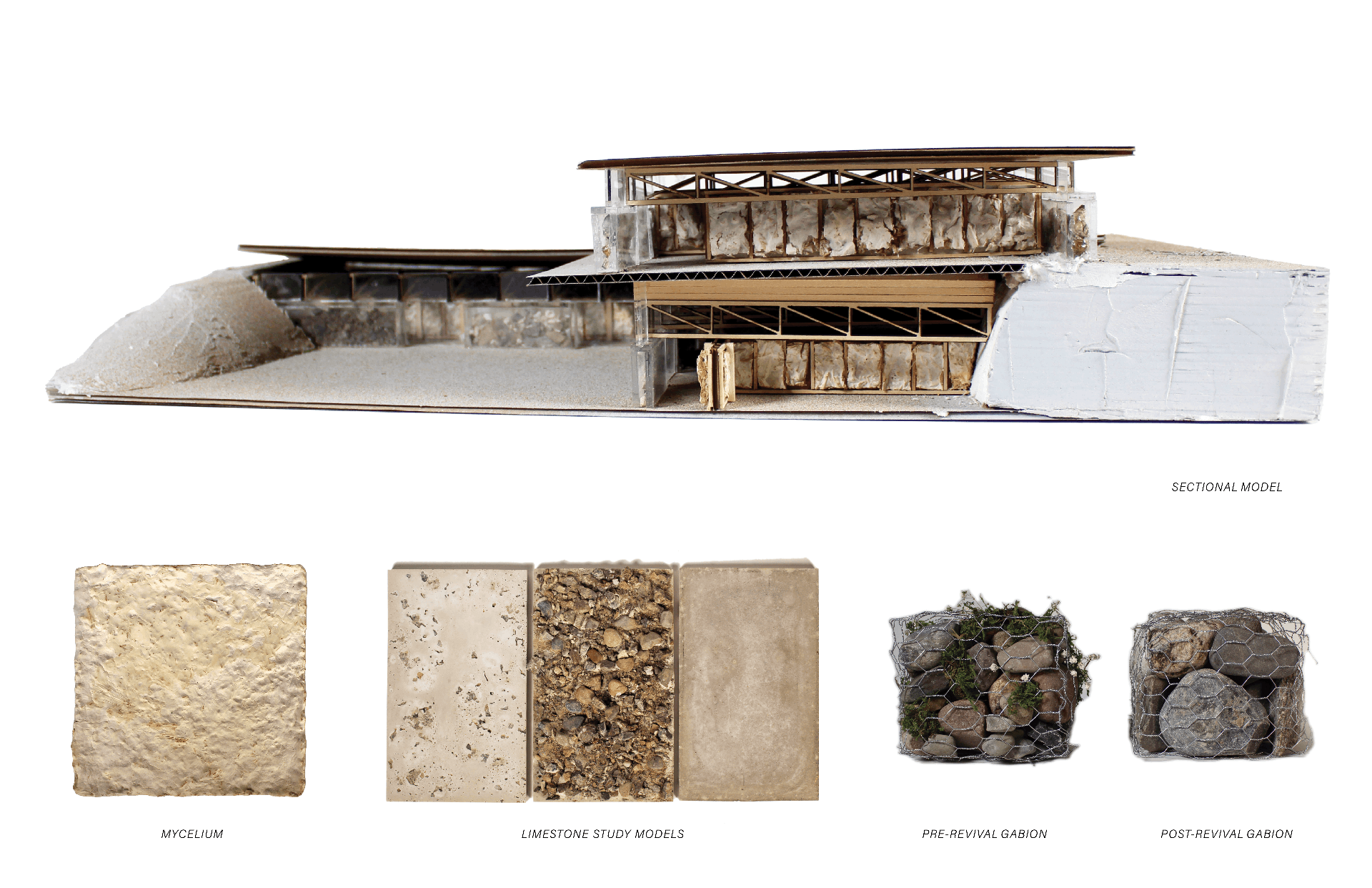
Study Models & Sectional Model
We made a mycelium panel by feeding mycelium roots a hemp substrate, allowing it to grow and strengthen within a panel we shaped. A limestone, crushed limestone, and concrete aggregate panel show the 3 separate roof conditions we are using. A pre and post site renewal gabion wall chunk. A large scale sectional model that shows the gabion walls, timber framing, and mycelium insulation.
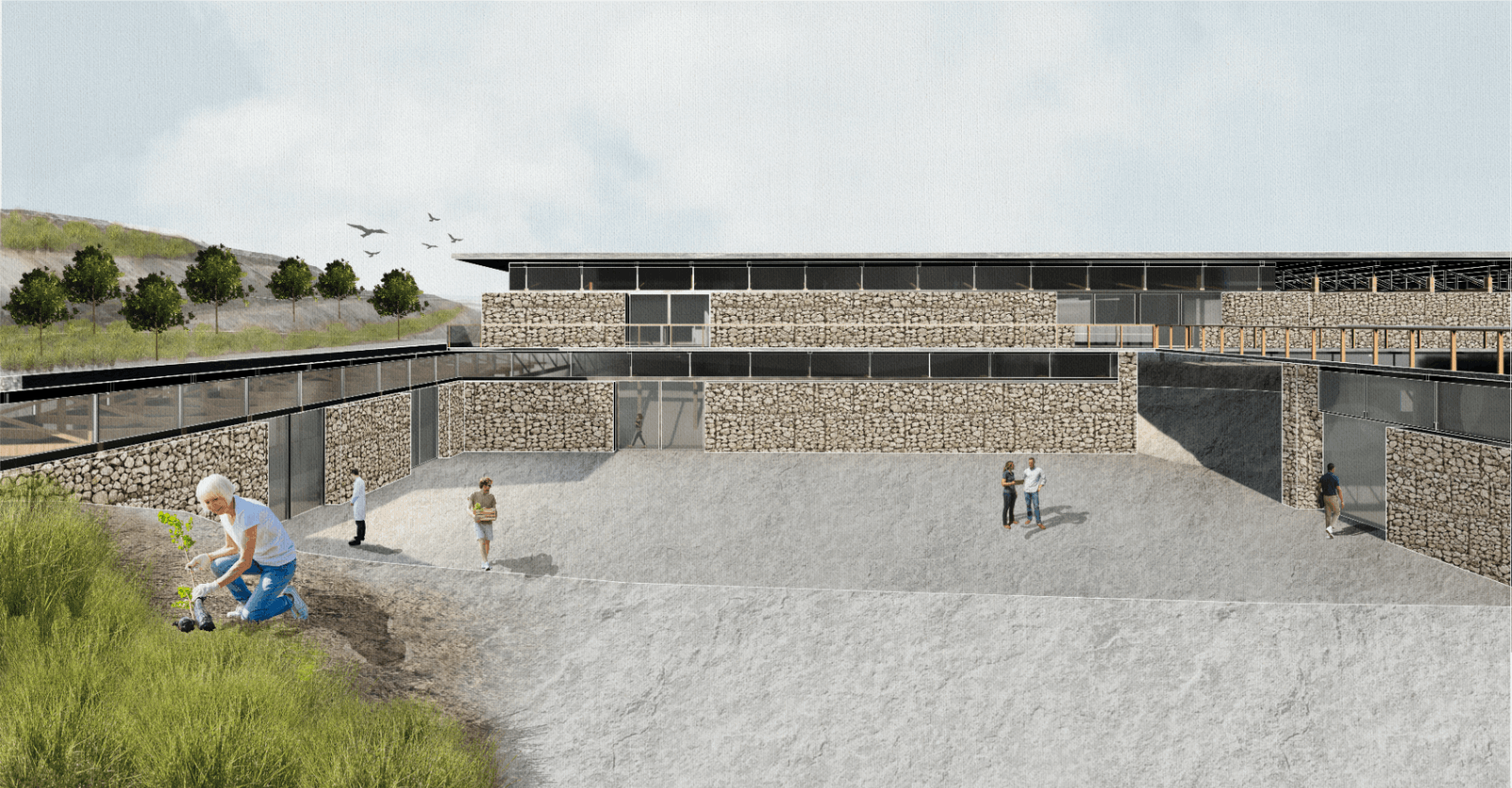
Exterior Perspective
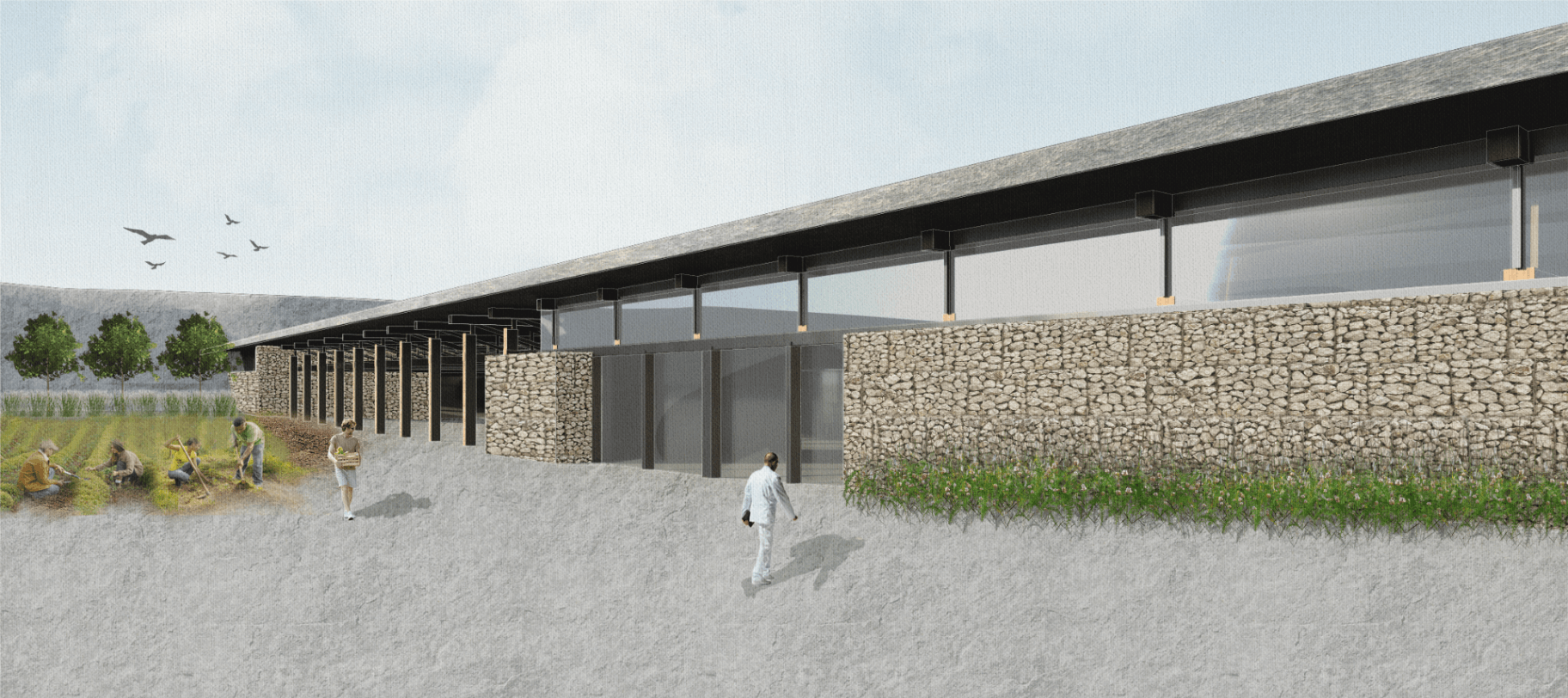
Exterior Perspective
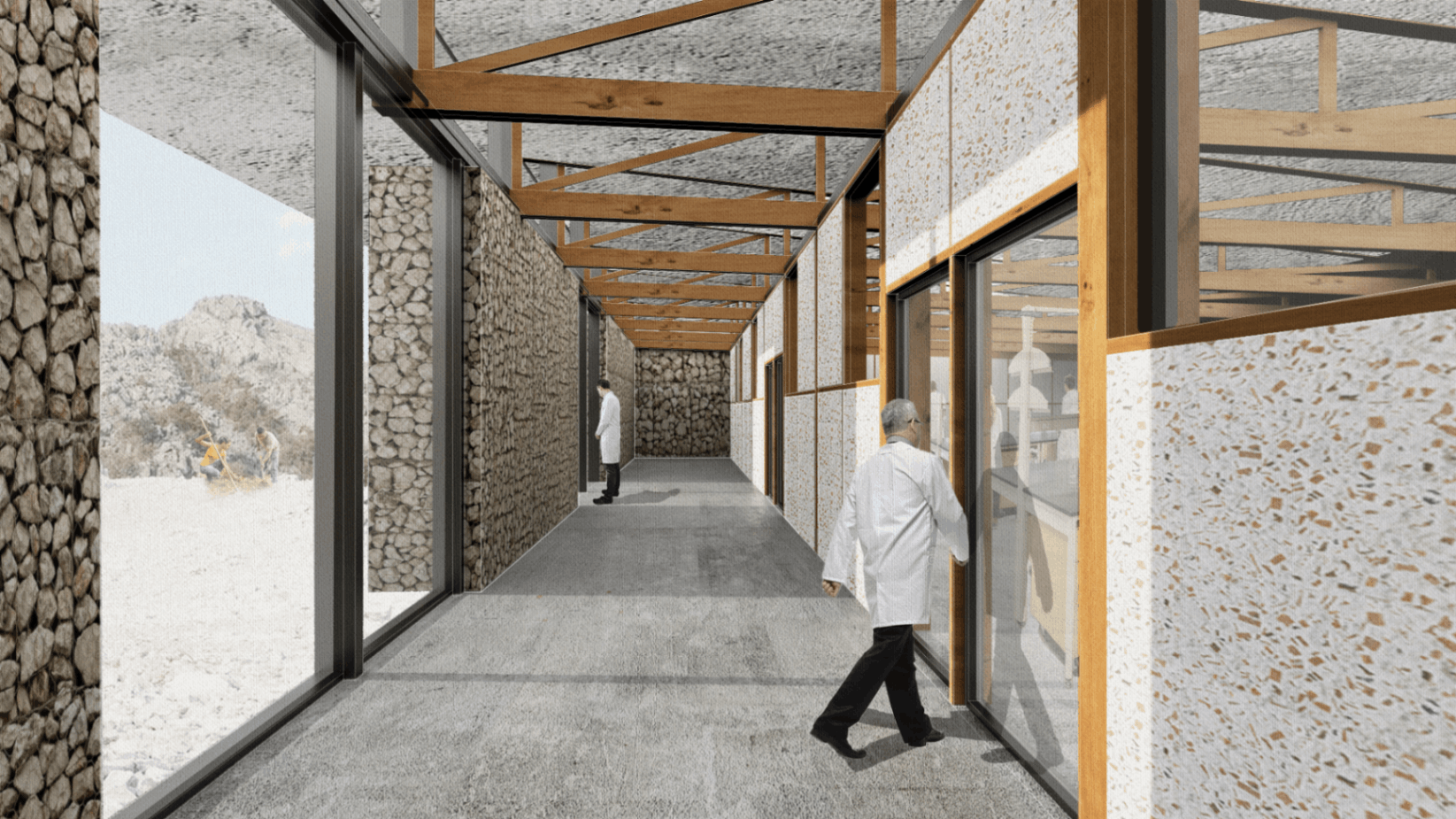
Interior Perspective
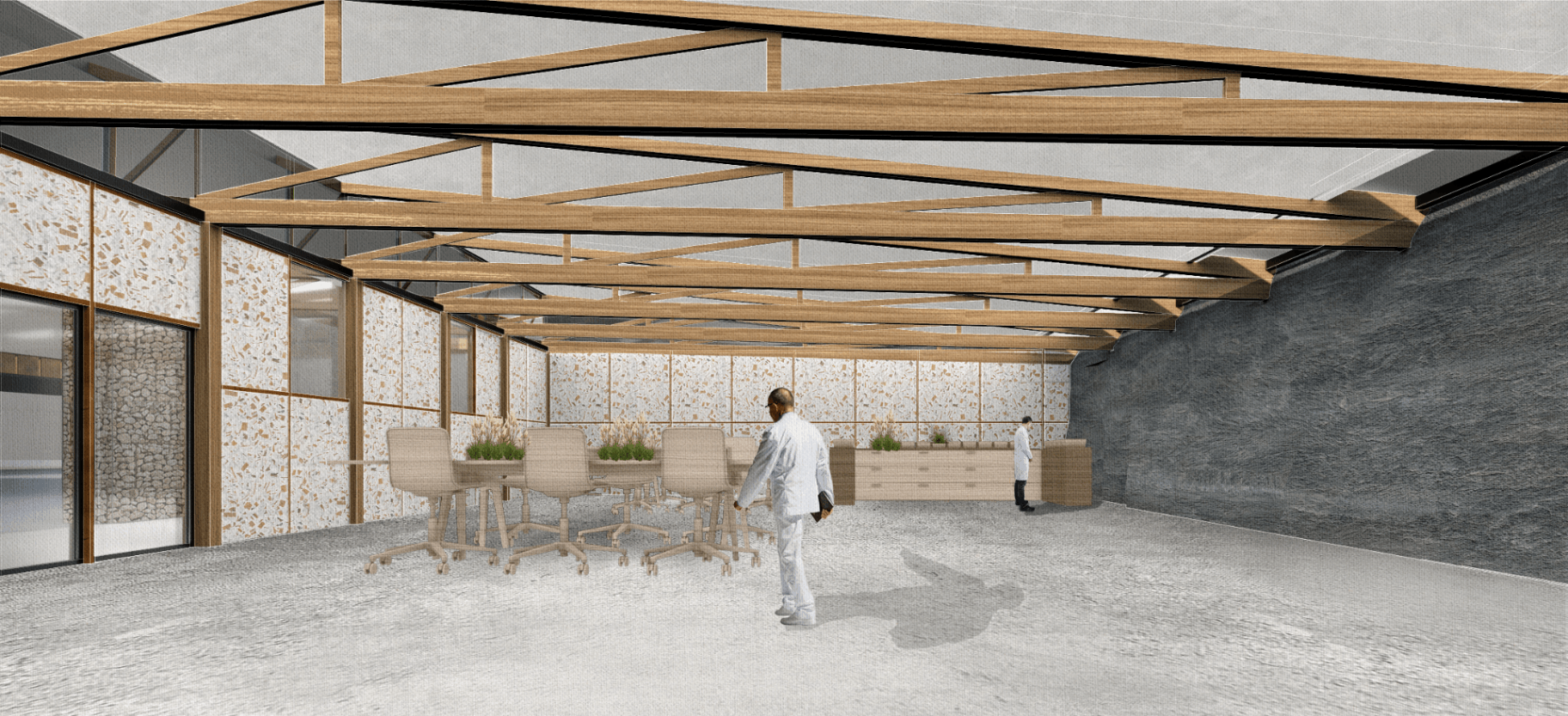
Interior Perspective
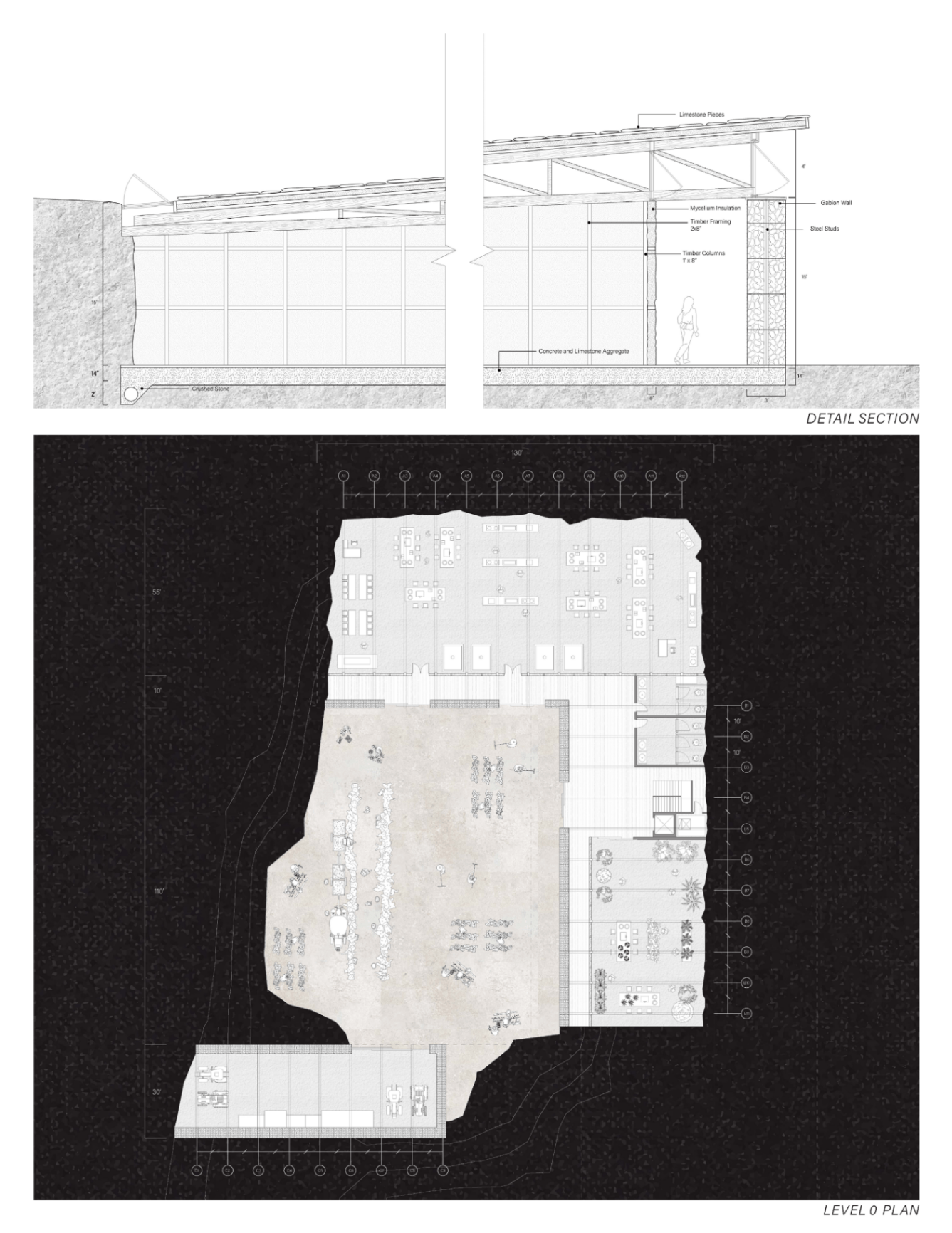
Detail Section and Level 0 Plan
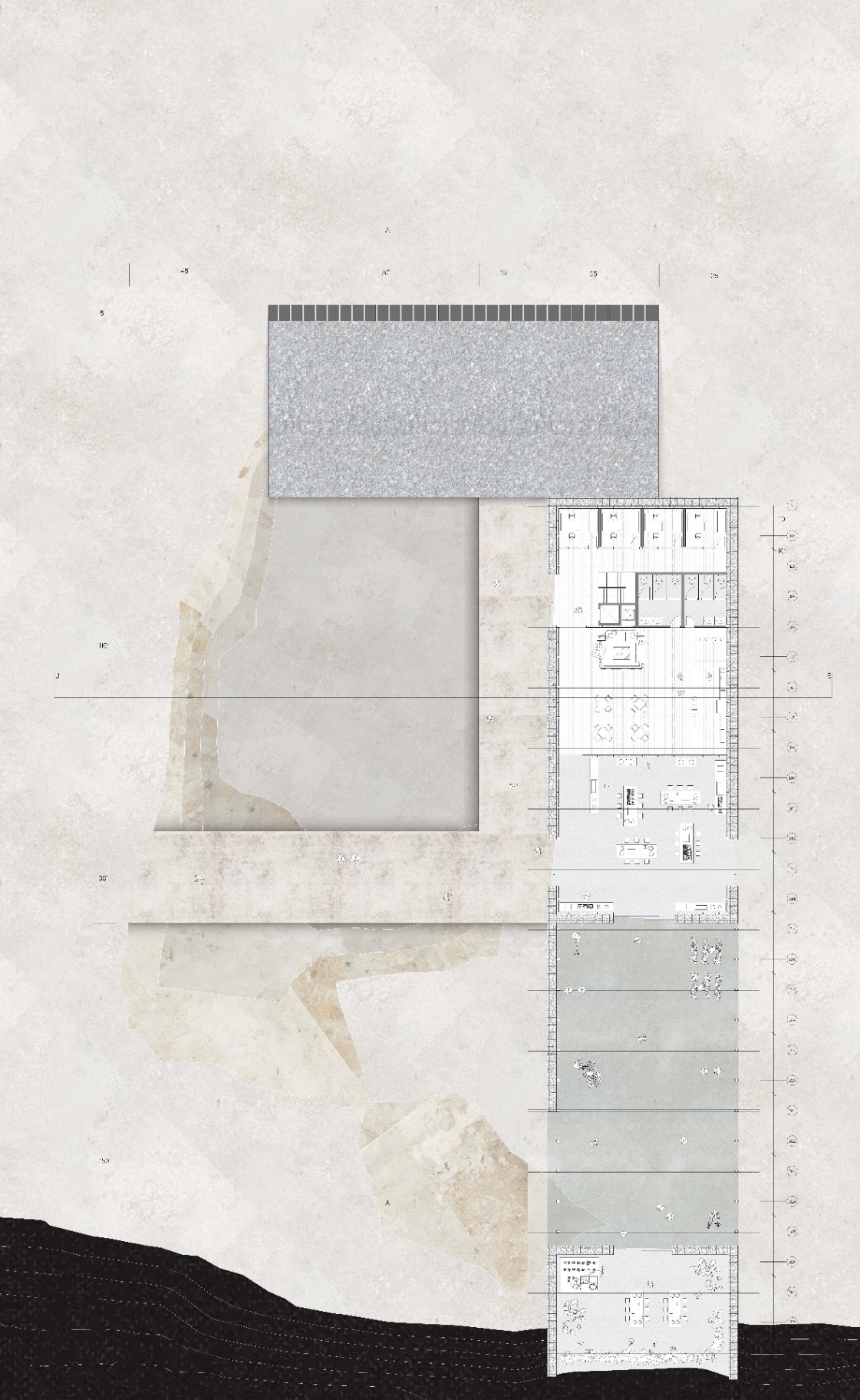
Level 1 Plan

Chloe DeMarco
More by Chloe DeMarco
View profile Arch Hive