Back
Moka Roastery
Year: 2025
Category: Hospitality Architecture
Skills: Illustrator, SketchUp, AutoCAD, InDesign
The brief based on ‘Manuals’ highlights the concept of addressing the throwaway Generation, which replaces items with new ones rather than repairing them, contributing to unnecessary waste. The objective is to revive the practice of valuing and studying Manuals instead of discarding them. The project is in hackney wicks, it is a creative and vibrant area in East London, known for its artistic vibe and mixes of old industrial buildings and new developments. It has a growing reputation for street art, galleries, and independent cafes and bars. The canal side is popular for walking, used heavily by the public and to hold events, and the area is home to many artists and creatives. While gentrifying, it still retains a laid-back, community feel and is close to Hackney, Stratford, and the Olympic Park.
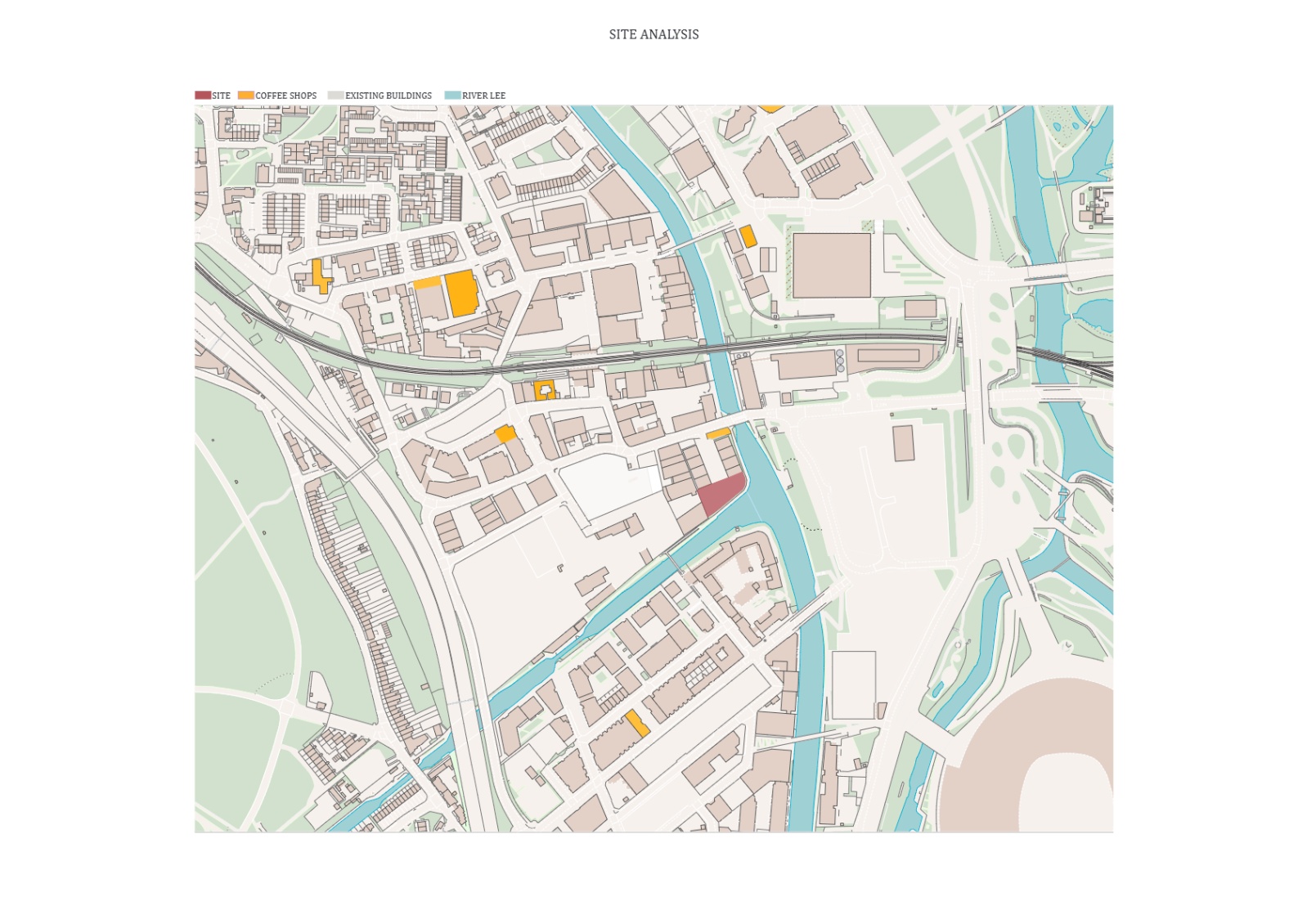
Site location
My site is in hackney wick, in London borough, England, on the east boundary of the borough close to the Olympic Park. My site is along the river lea and close by to the overground station. Hackney Wick and Fish Island, located along the Lee Navigation and Hackney Cut, are transitioning from their industrial past into vibrant mixed-use communities. The area is undergoing significant development, particularly post-2012 Games, with new homes, schools, community spaces, and Businesses being built, especially around East Wick and Sweet water. The Olympic press and broadcast facilities have been re-purposed into "Here East", a major hub for employment and education.
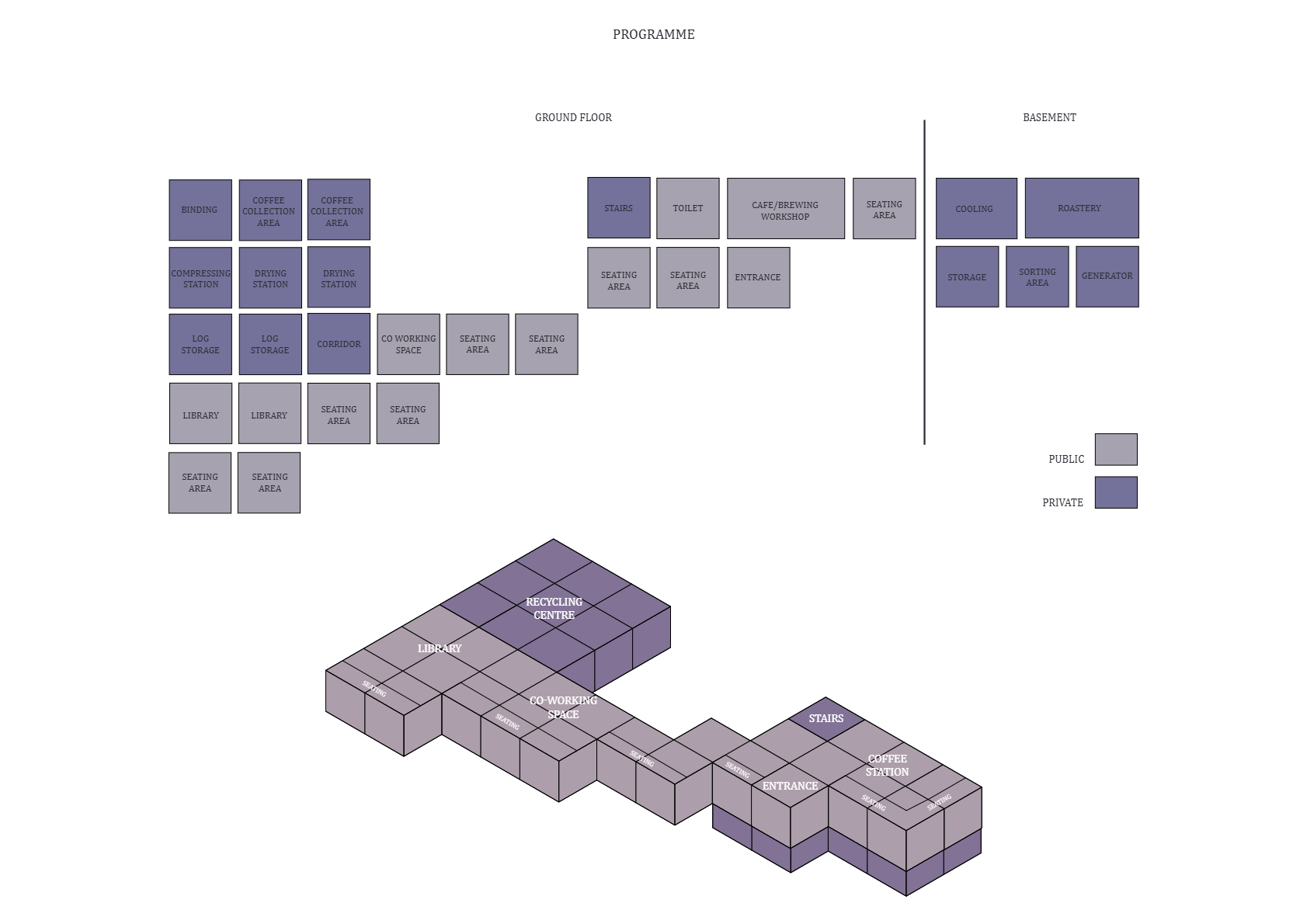
Programme
The object I chose to take apart and base my design around, was the Bialetti Moka express. Made out of cast aluminium and plastic and rubber components. My building will be a coffee roasting studio which holds a café and brewing workshops. I create my own cast pewter pieces using shapes and elements taken from the Moka which can be put together through threaded rods and bolts. Contributing to the manual brief, allowing my building to be taken apart and put back together in the same or different configurations and recycling the waste coffee grounds to minimise waste.
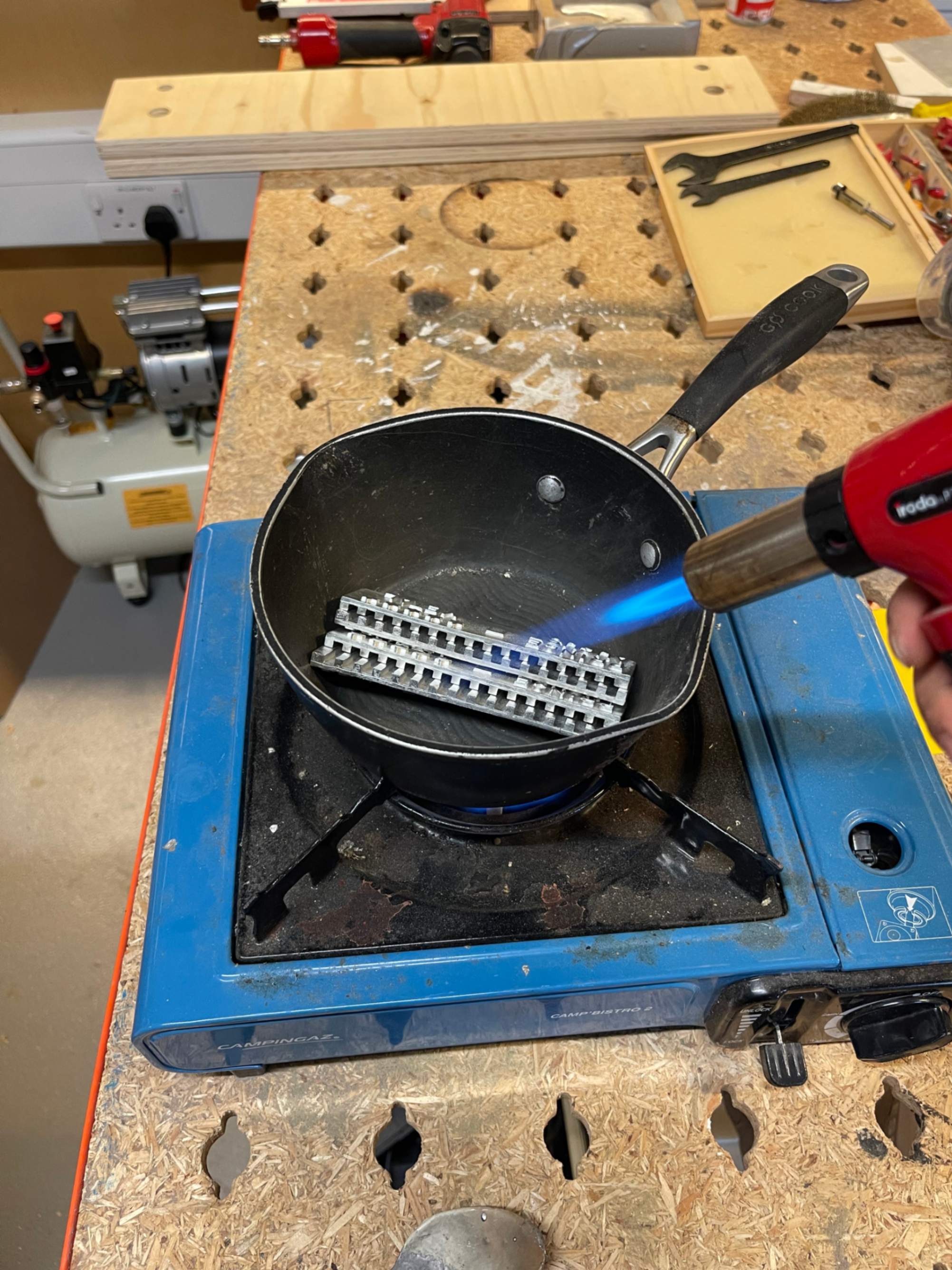
Working with pewter metal and melting it down to cast with.
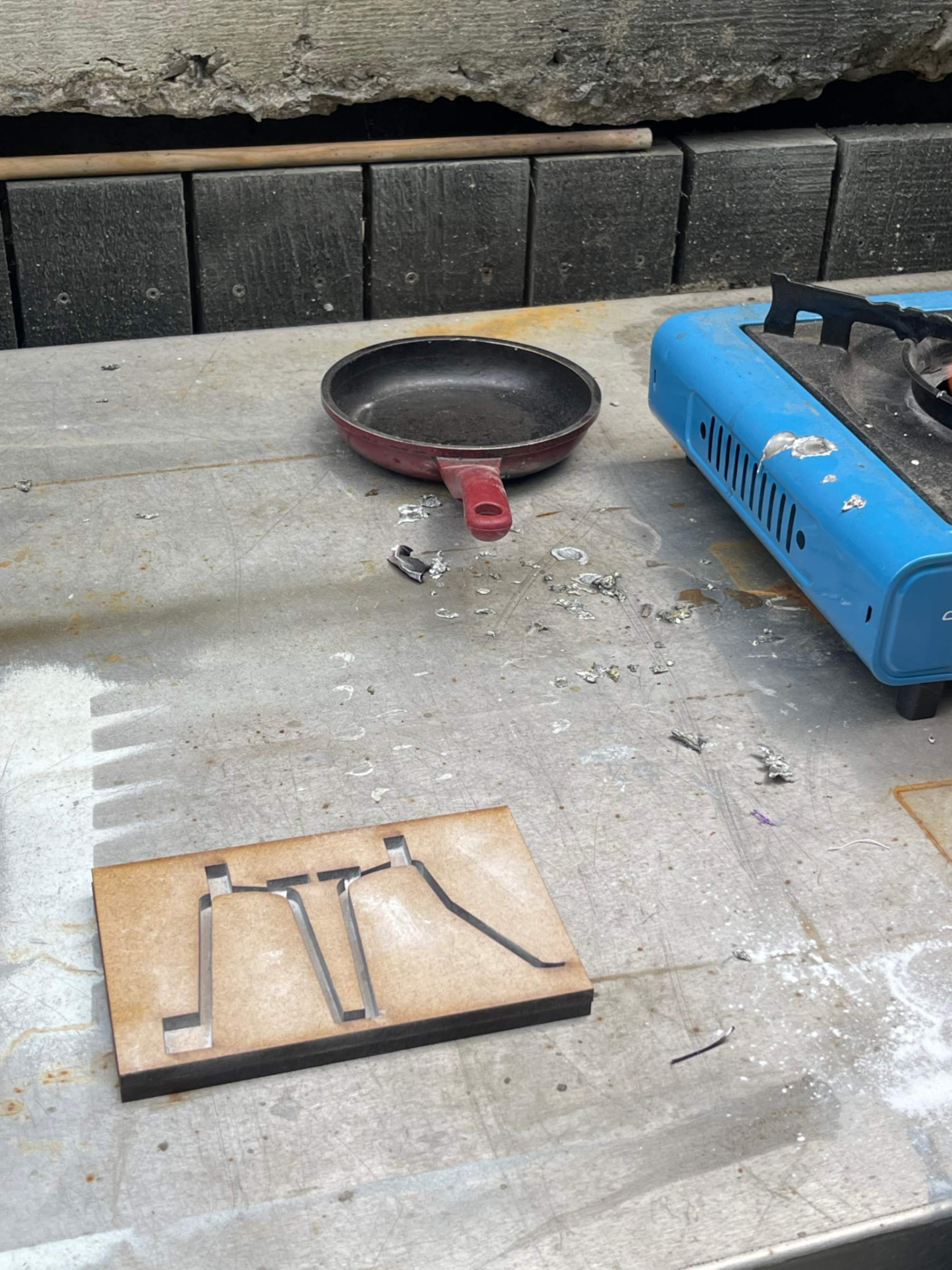
Casted with pewter using shapes/sections taken for the Bialetti Moka.
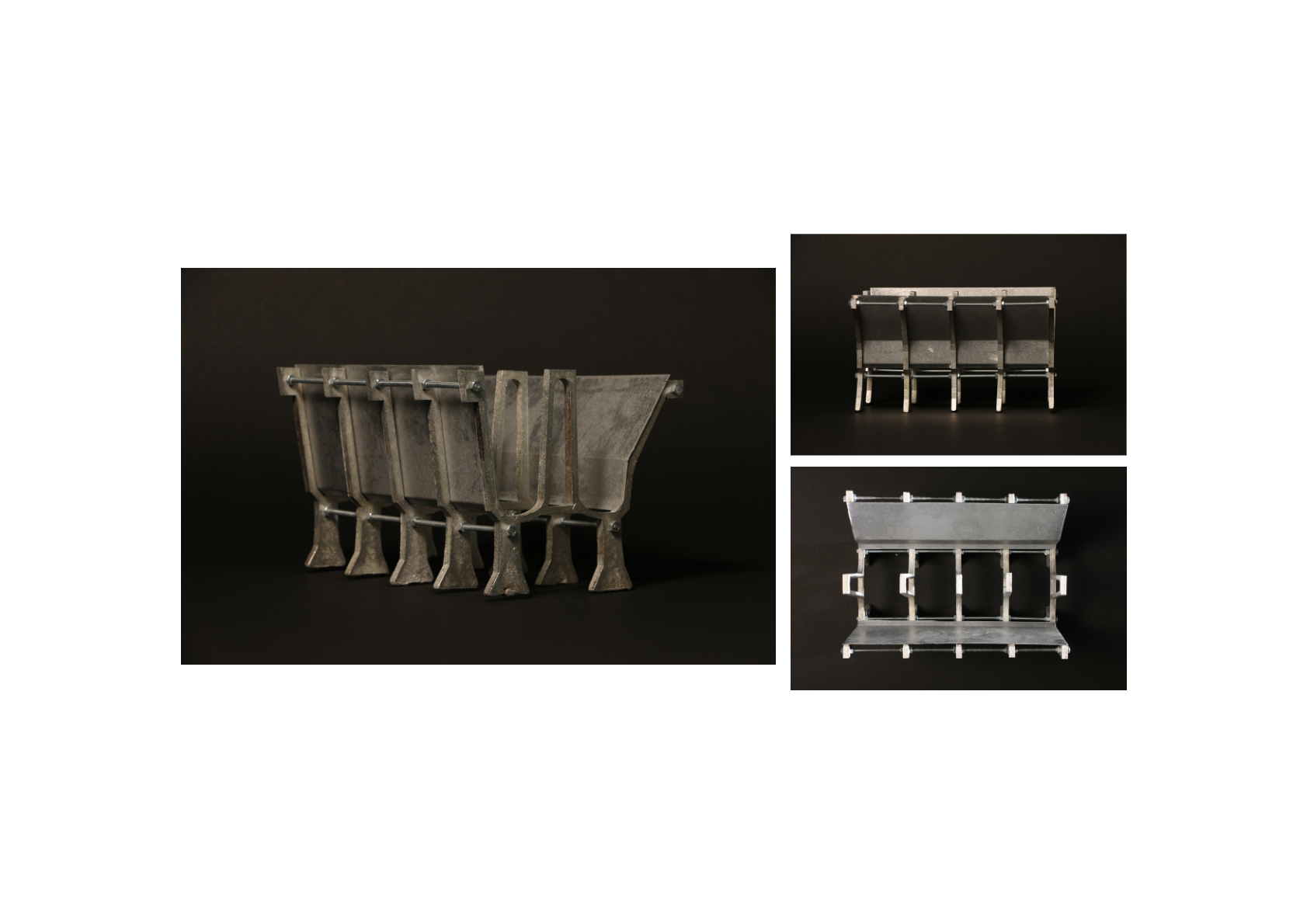
Casted model
Solid pewter casted model joined together with threaded rods, bolts and CNC cut metal sheets.
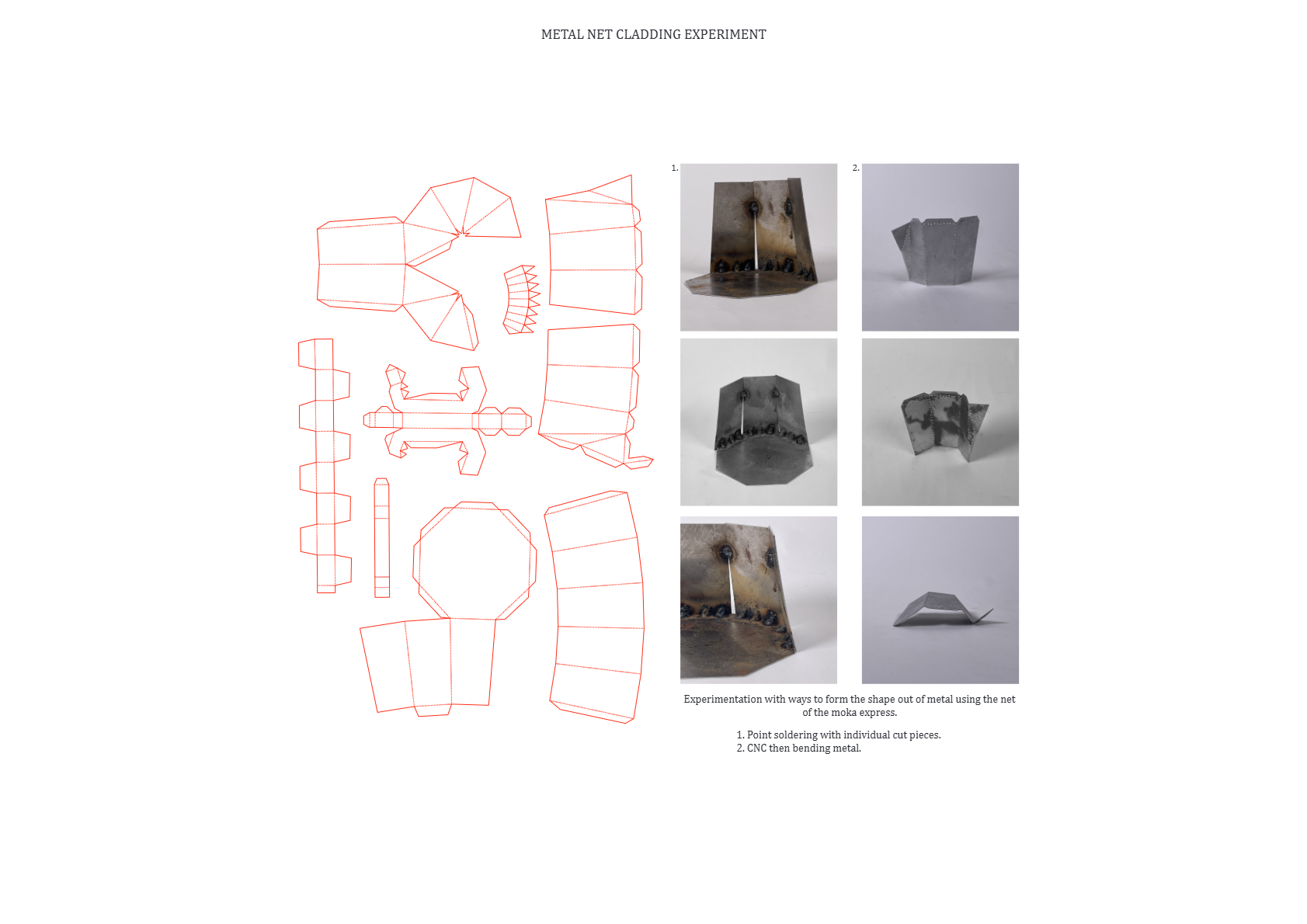
Cladding experiments
This is the flattened net of the Bialetti Moka Express, created to better understand how each component fits together, their individual forms, and the overall geometry when disassembled. I tried point soldering with individual cut pieces. Then, I tried CNC cut metal panels and bending the metal to the desired height and angle.
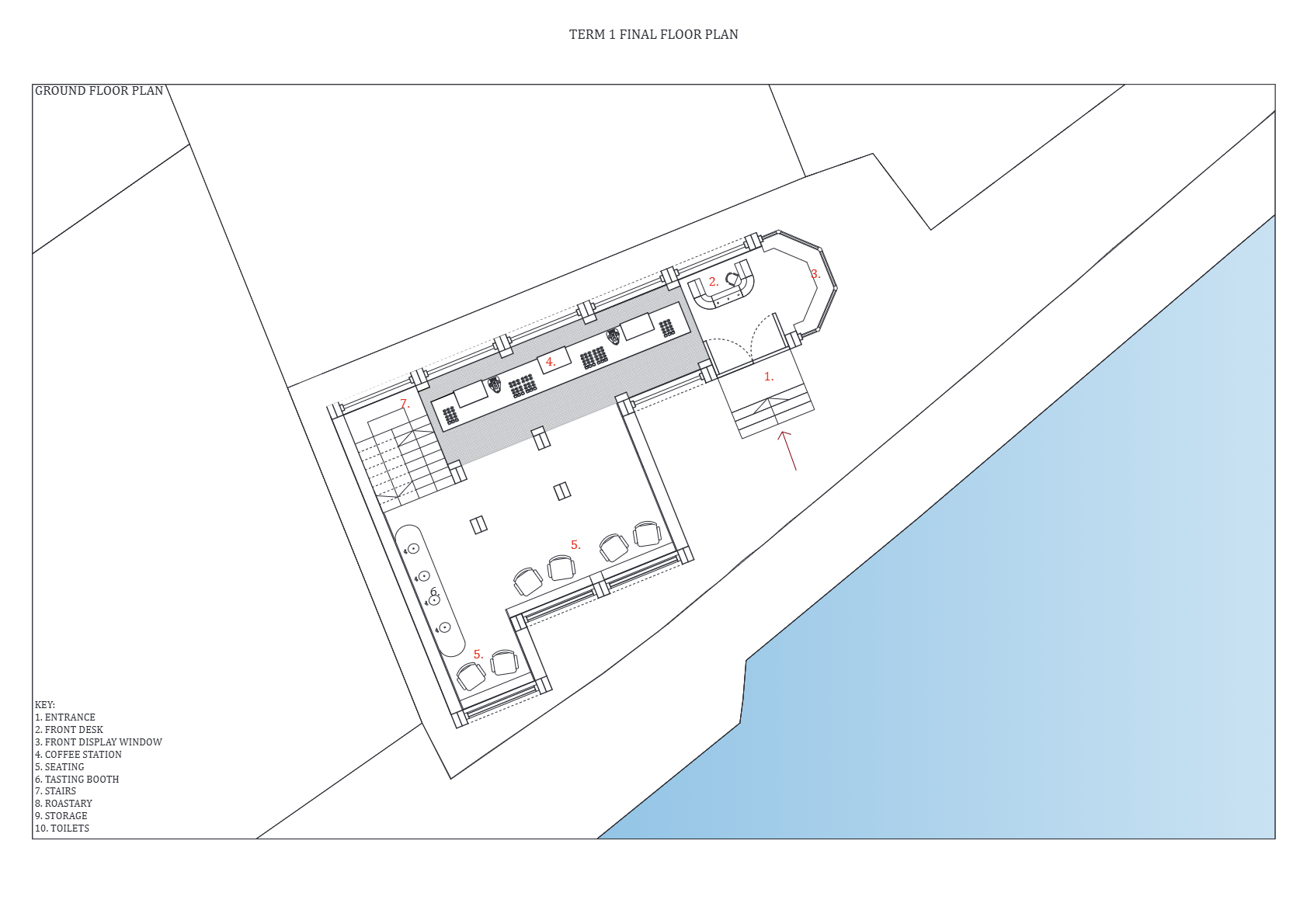
Term 1 ground floor plan
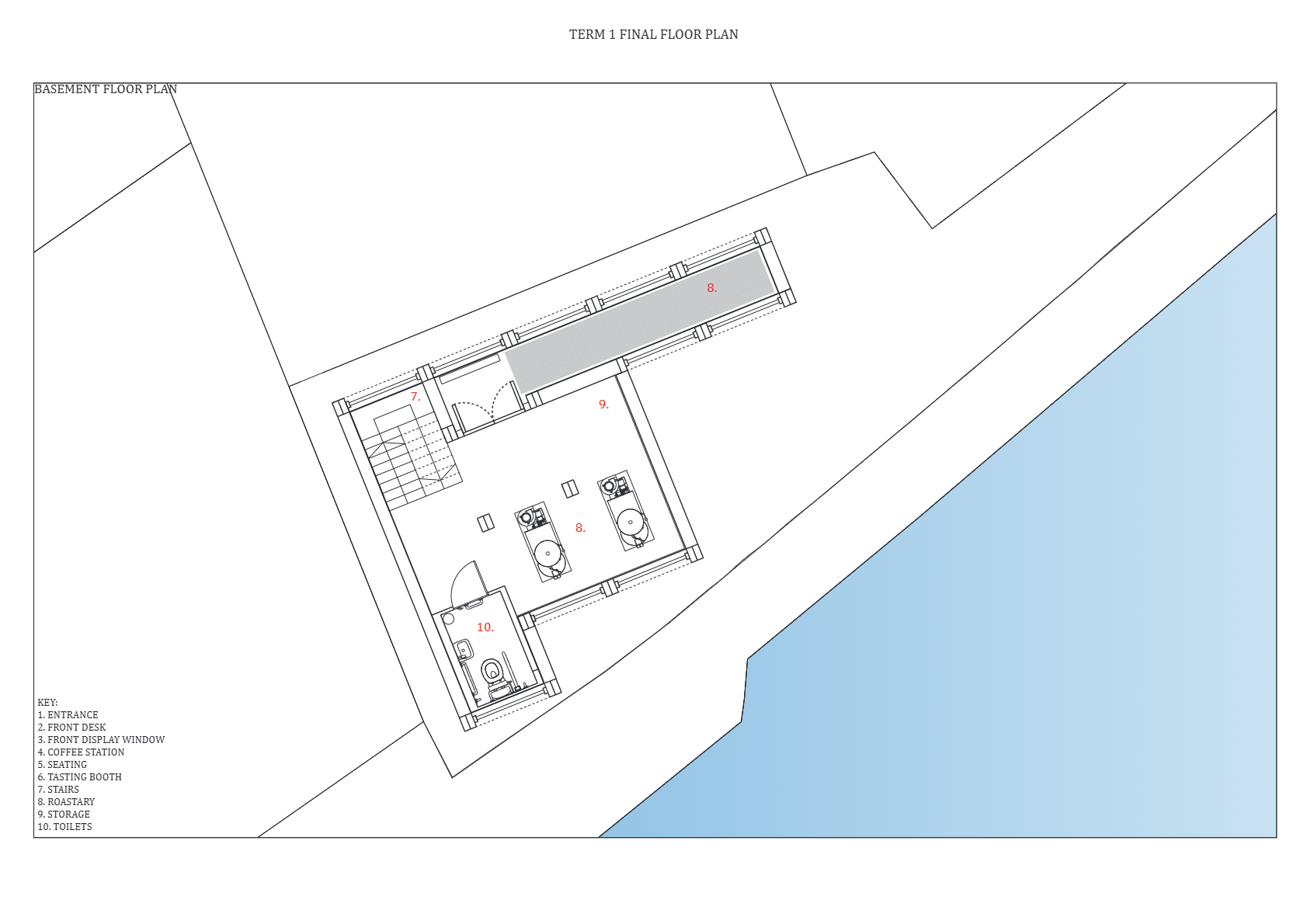
Term 1 basement plan
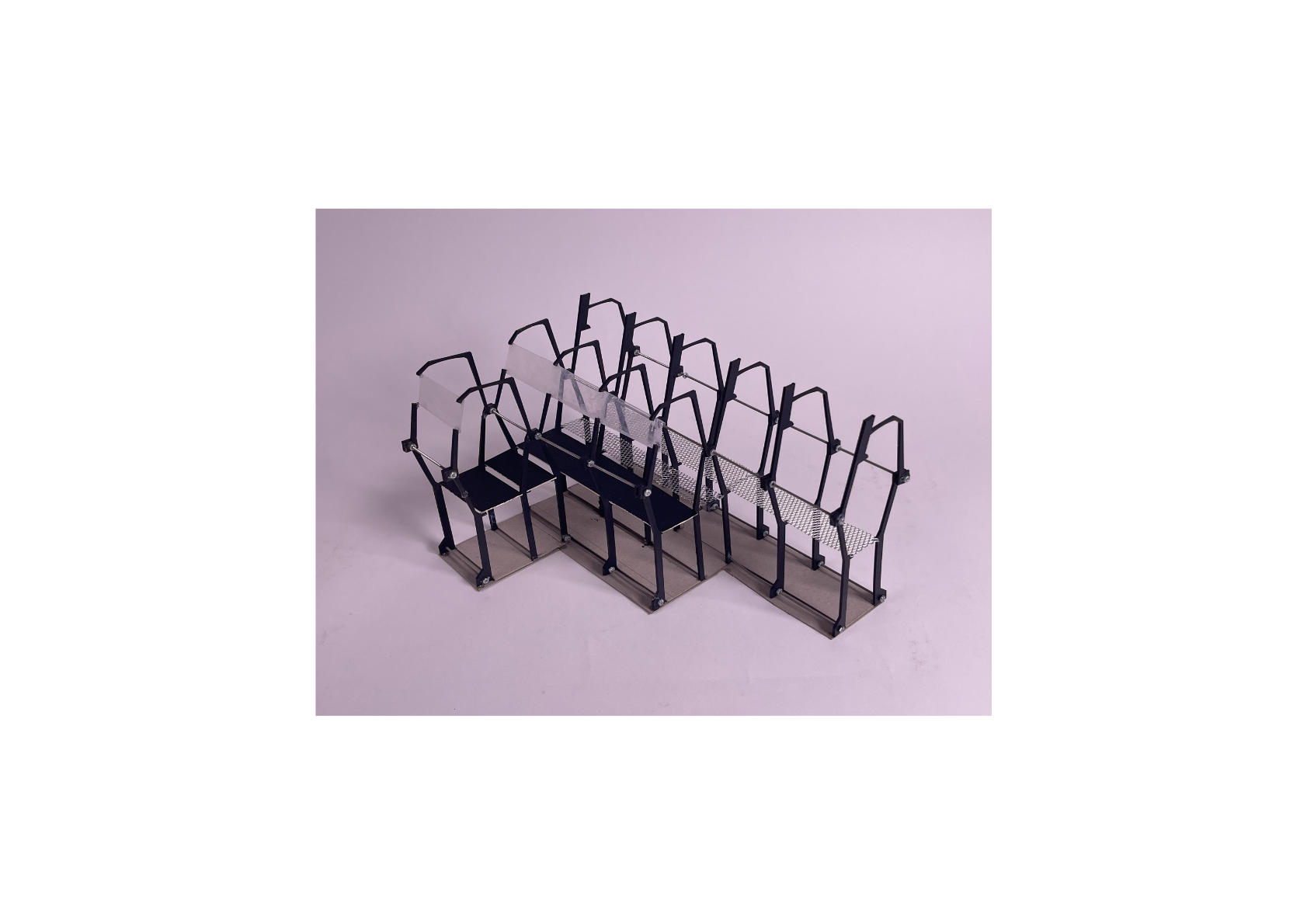
Term 1 model
Pewter casted 1:50 model of my term 1 proposed building.
Term 2 (Final drawings)
Using term 1 and term 2, I was able to create a set of final plans and sections and some models for the brief of "manuals".
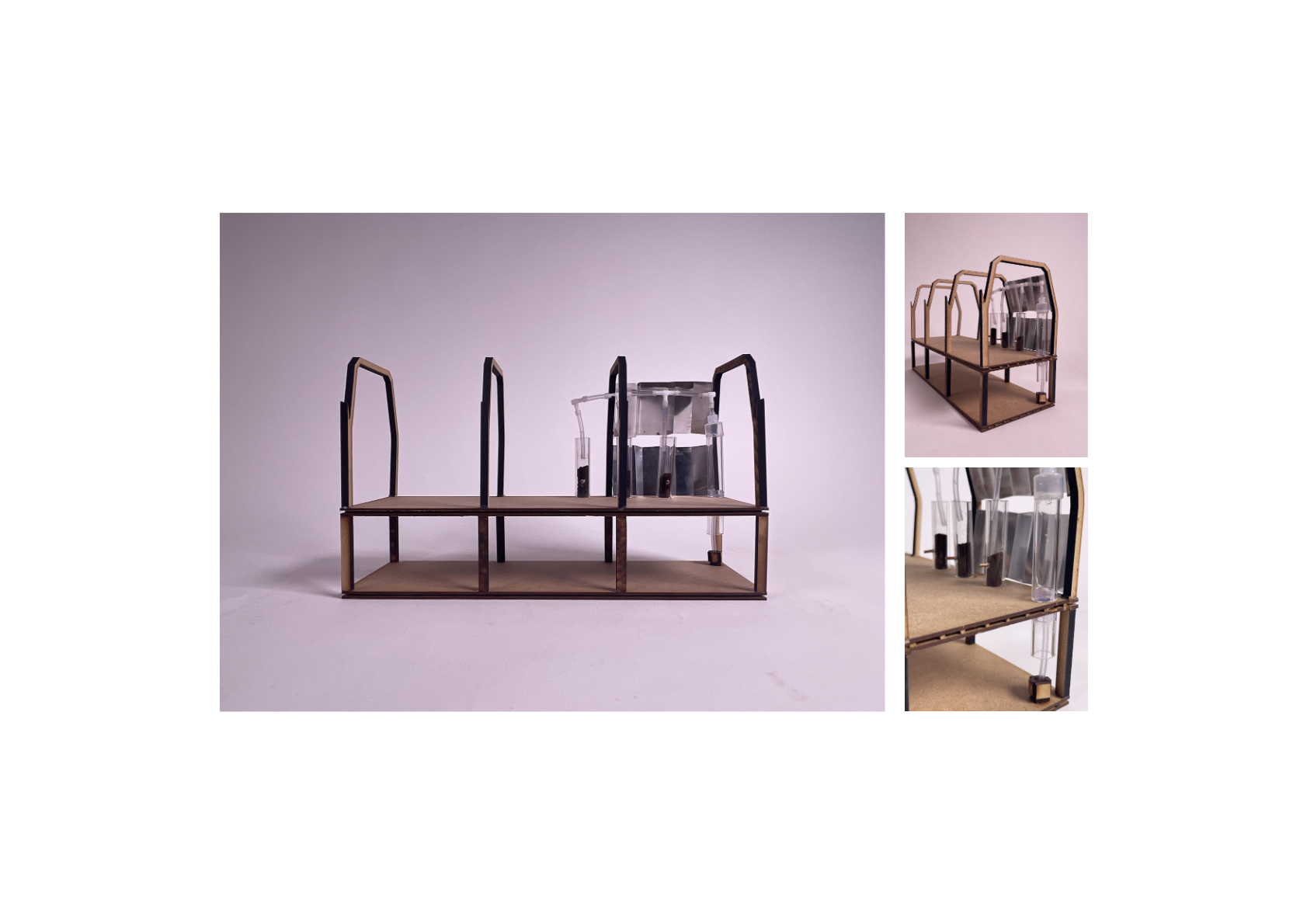
Coffee movement system experiment, modelling how coffee grounds would move from the basement, where it is roasted in house to then travelling upstairs to the ground floor, where it is served to consumers via the café and workshop space.
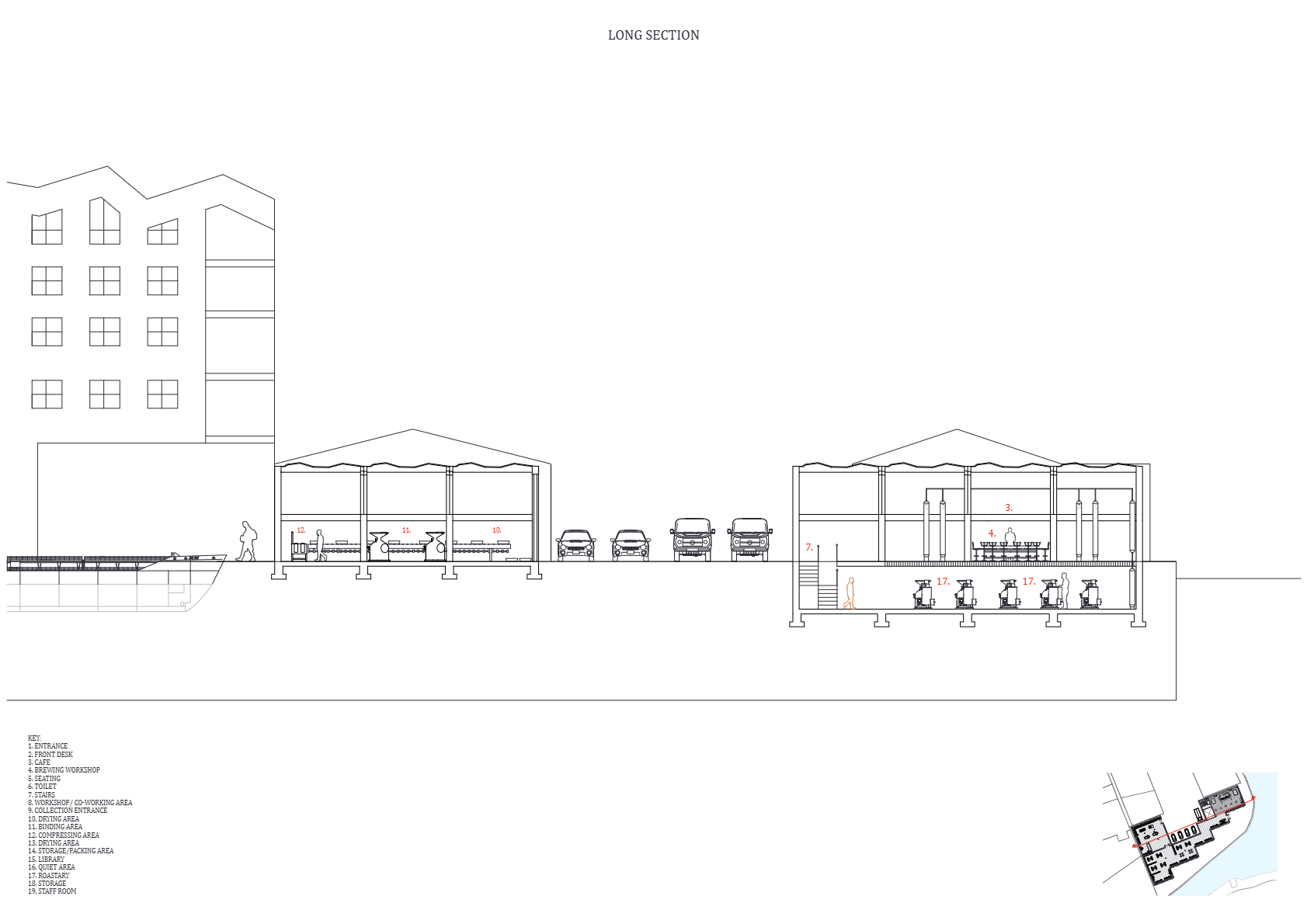
Final term 2 long section of my Moka Roastery design.
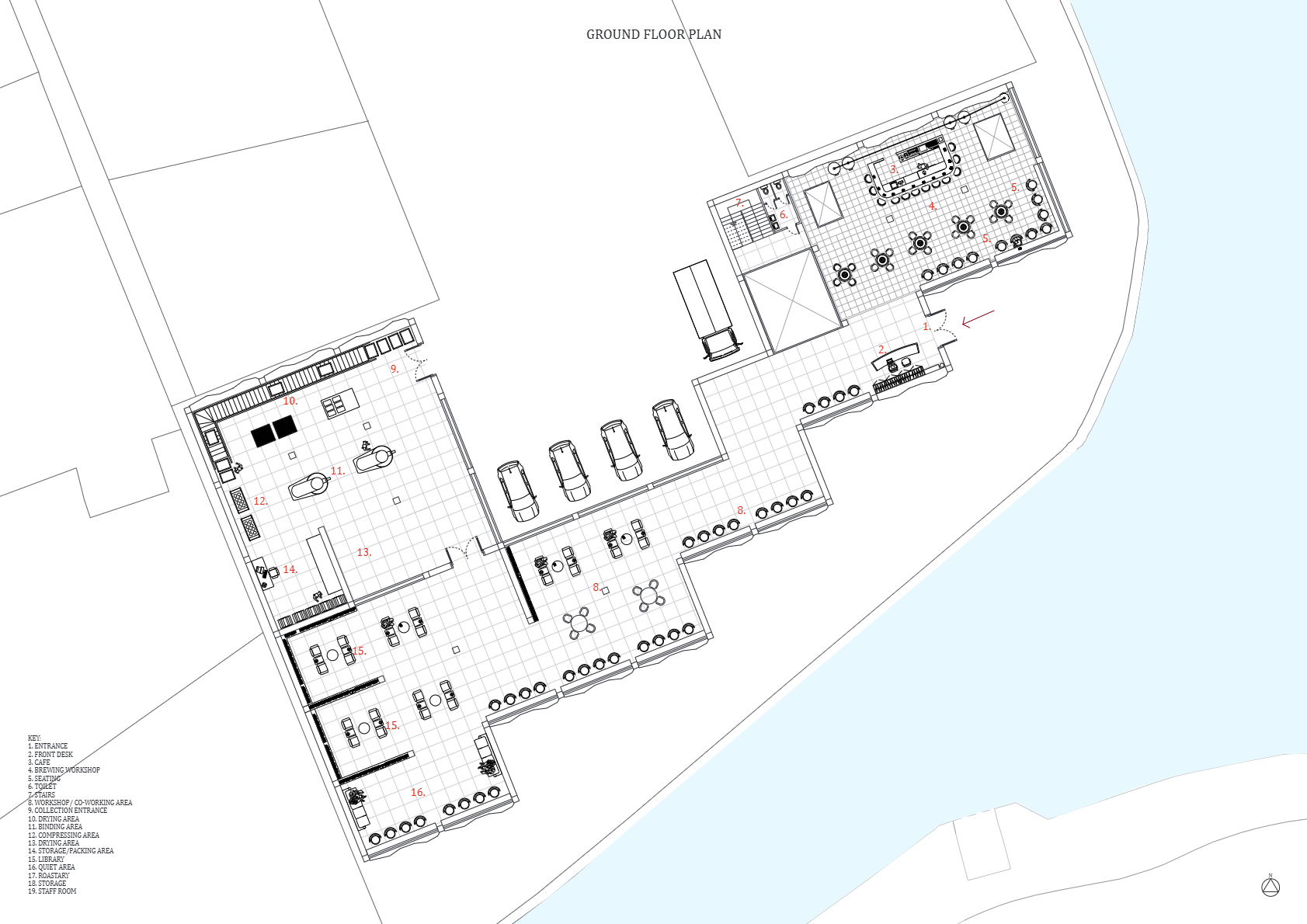
Final ground floor plan, holding a brewery café space, workshop area (to teach locals about the process of coffee roasting, brewing and recycling), co working space, library and coffee ground recycling station.
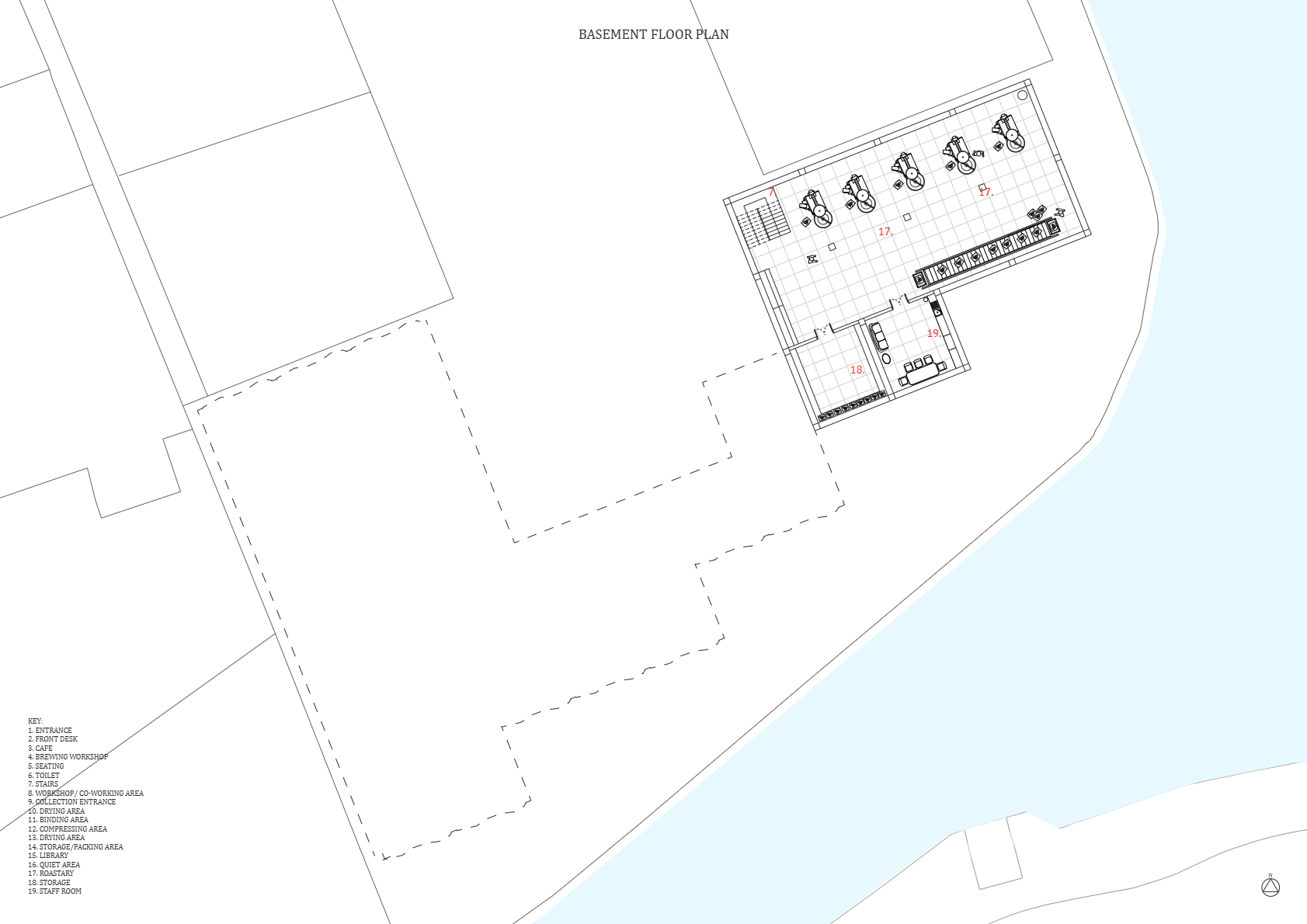
Final basement plan, holding a coffee roastery which roasts and transports coffee beans and aromas to the floor above.

BUSHRA SARWAYA
More by BUSHRA SARWAYA
View profile Arch Hive