Back
The Resilient Grid: Redesigning San Francisco's Waterfront
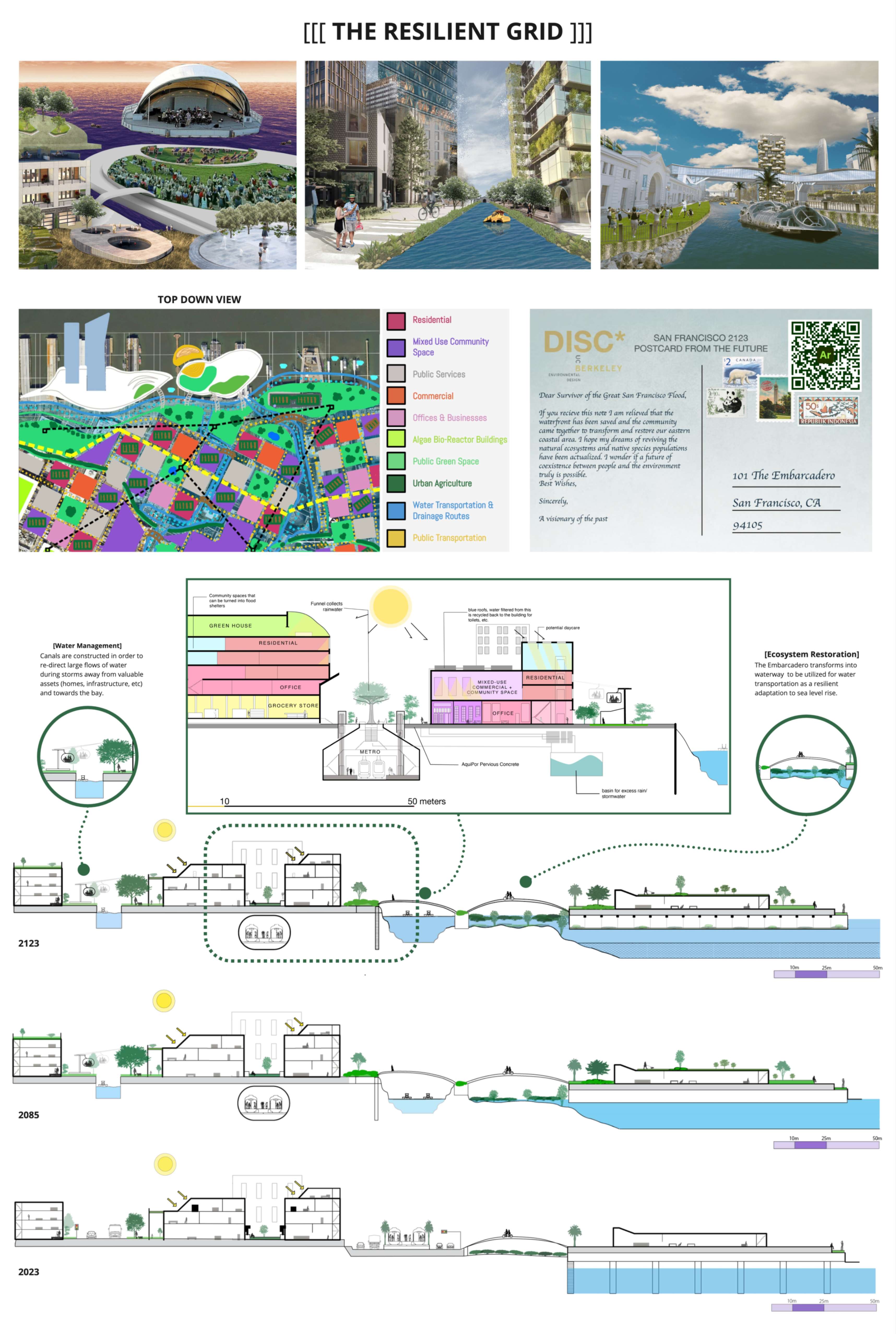
The Resilient Grid: Renderings, Top Down, and Cross sections
Theoretical Design Proposal by ARMEINO ATANA, SAKURA AZZOPARDI, ALICE NGUYEN, TIANY ANG ZHANG, students of Design & Innovation for Sustainable Cities Summer program through UC Berkeley's College of Environmental Design.
The proposed redesign of the San Francisco Waterfront is centralized around accommodating sea level rise and creating an equitable destination for the Embarcadero and the greater San Francisco community. Additionally, a primary priority in
the design was bridging the gaps and disconnection between the water, Embarcadero Street, as well as the Financial District, and the community beyond. The inland proposition is characterized by a walkable grid design consisting of spaces for residential, public service, commercial mixed-use, community, and office–all of which are centered around a green space. Rezoning and retrofitting existing buildings in the surrounding area rather than rebuilding would be significantly more economical while decreasing dependence on vehicular transportation.
To protect the San Francisco waterfront from the predicted 7-foot sea level rise by 2090, the rendered proposal combines water management and control, structural accommodation, and wetland ecosystem implementation. To do so, retrofitting the bottom floor (approximately 10 feet or 3 meters) of all buildings with water-resistant infrastructure would protect historic buildings and the surrounding community built upon bay fill. In respecting the water and seeing it as a resource rather than resisting, a more naturally shaped shoreline would be constructed–decreasing erosion. A series of reservoirs connected to canals running perpendicular to the waterfront would allow both groundwater and rainwater to flow back into the bay while creating a space for flood water to accumulate rather than damage the city. The original Embarcadero street after being flooded would be converted to a “water highway” for personal boat traffic as well as public electric water taxi transportation. Paralleling the “water highway”, restoration projects would take place to implement wetlands, creating native plant and animal habitats while acting like a sponge absorbing excess flood water. Pedestrian bridges would stretch across the “water highway” to maintain access to the waterfront’s piers, floating parks, and community event spaces including a floating stage. Increased regional transportation is additionally proposed, with a magnetic repulsion carbon-neutral light rail, connecting San Francisco’s waterfront to Marin County.
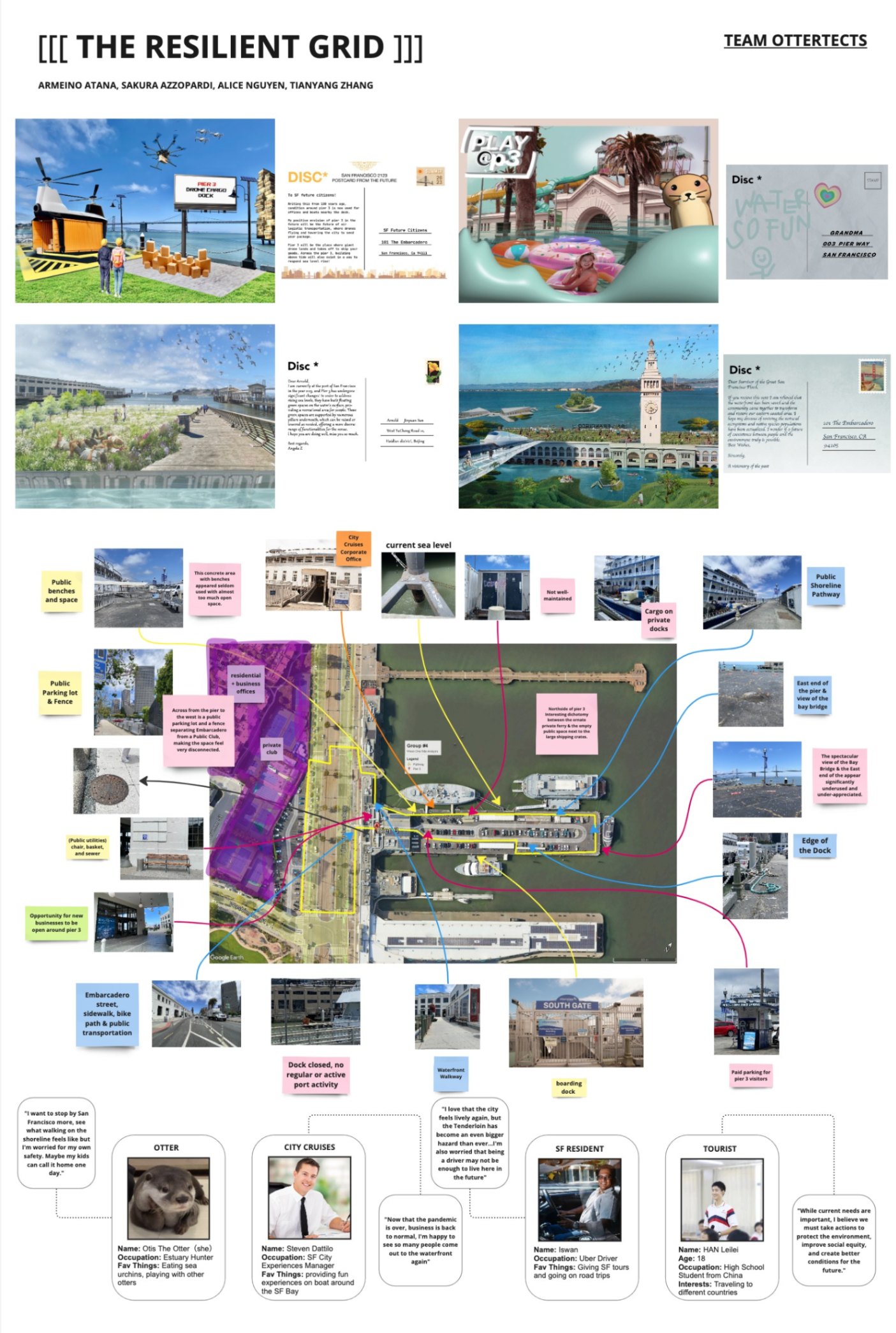
The Resilient Grid: Postcards to the Future, SWAT analysis, and Stakeholders
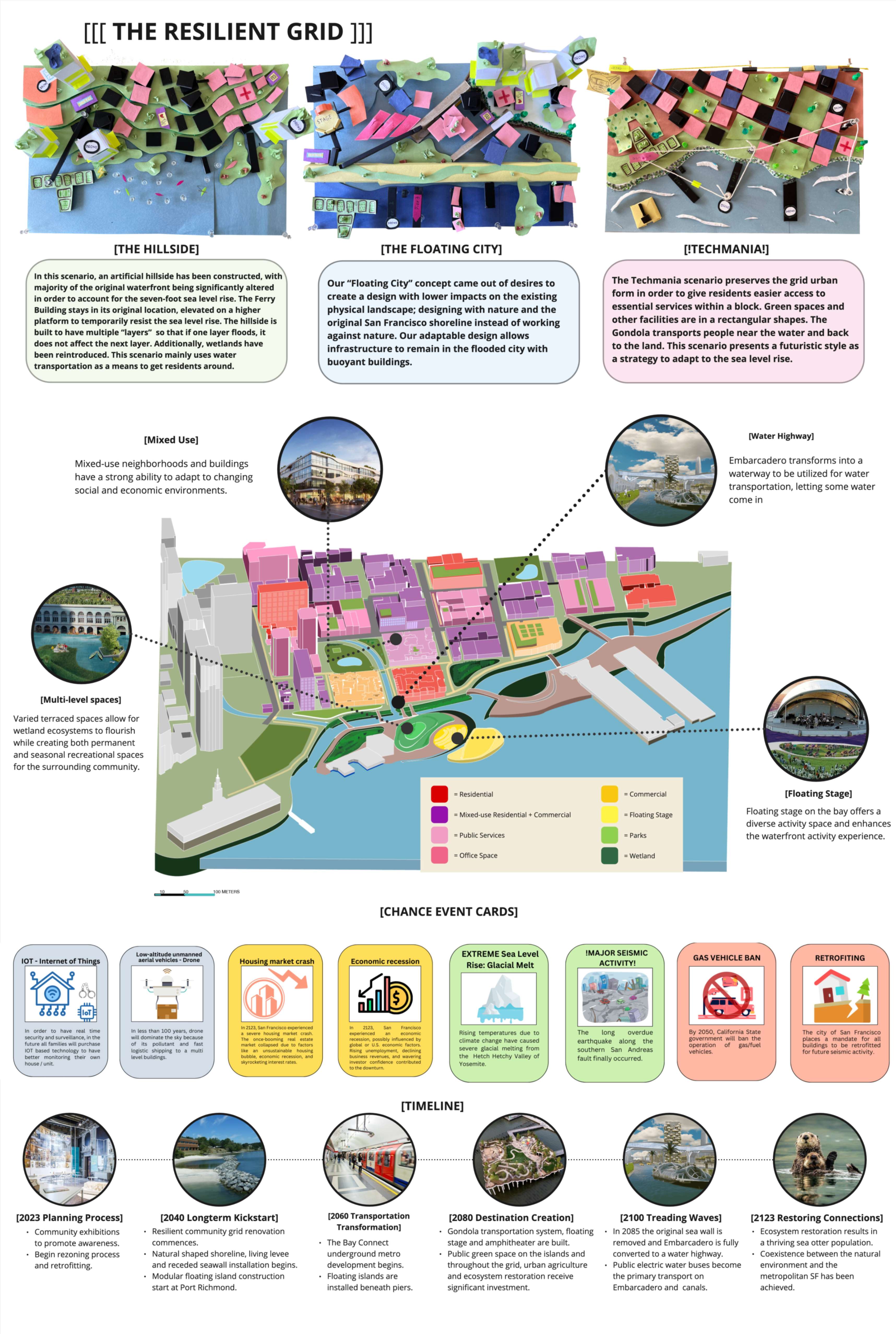
The Resilient Grid: Physical Models, Axonometric Model, & Timeline


Sakura Azzopardi
More by Sakura Azzopardi
View profile Arch Hive