Back
KuNdali- A Marriage Garden
Year: 2024
Category: Cultural Architecture
Skills: Revit, Lumion
A marriage garden concept created to cater to requirements of a typical Indian wedding. Kundali is an astrological instrument referred to predict a person's life events by looking at the planetary positions. Since marriage marks an important event of one's life, it becomes advisable to refer to these for gauging compatibility of the couple in marriage.
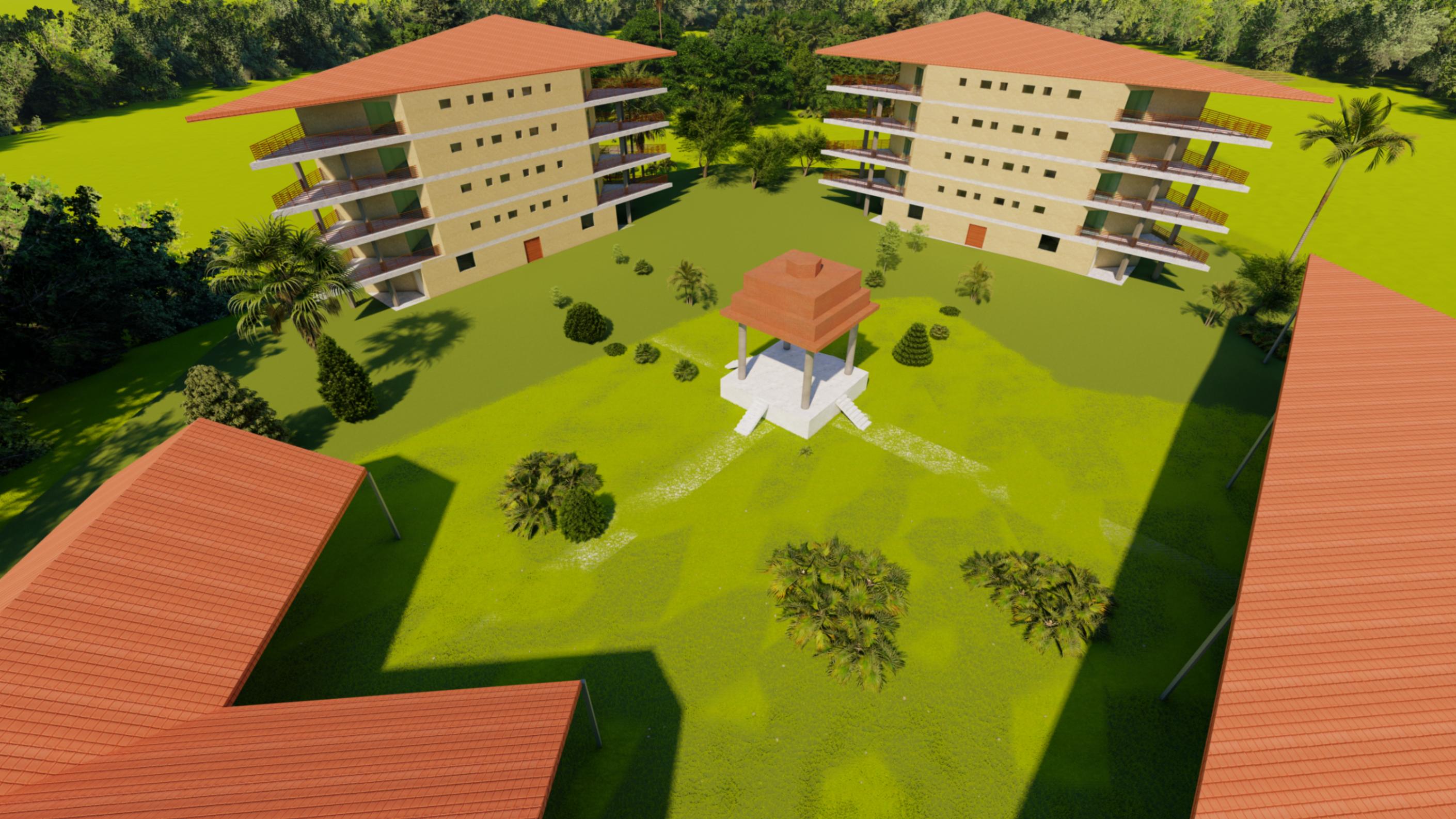
The Landscape-1
Marriage garden is designed with five structures to function for different purposes. Two residential buildings with contemporary outlook will house bride and groom side guests. Shed structure will serve as catering area. A modern style building at one corner is a big reception hall and most important is the traditional style Mandapam for holding marriage ceremony which is the heart of marriage. This bird’s-eye view showcases the marriage garden’s balanced composition, centered around the traditional Mandapam, the symbolic heart of the wedding ceremony. Two contemporary hotel blocks, positioned symmetrically, accommodate guests from the bride’s and groom’s families. Their sweeping balconies, deep overhangs, and open corridors provide comfort while maintaining visual connection to the central lawn. The reception hall and catering pavilion define the garden’s edges, creating a functional yet cohesive event environment.
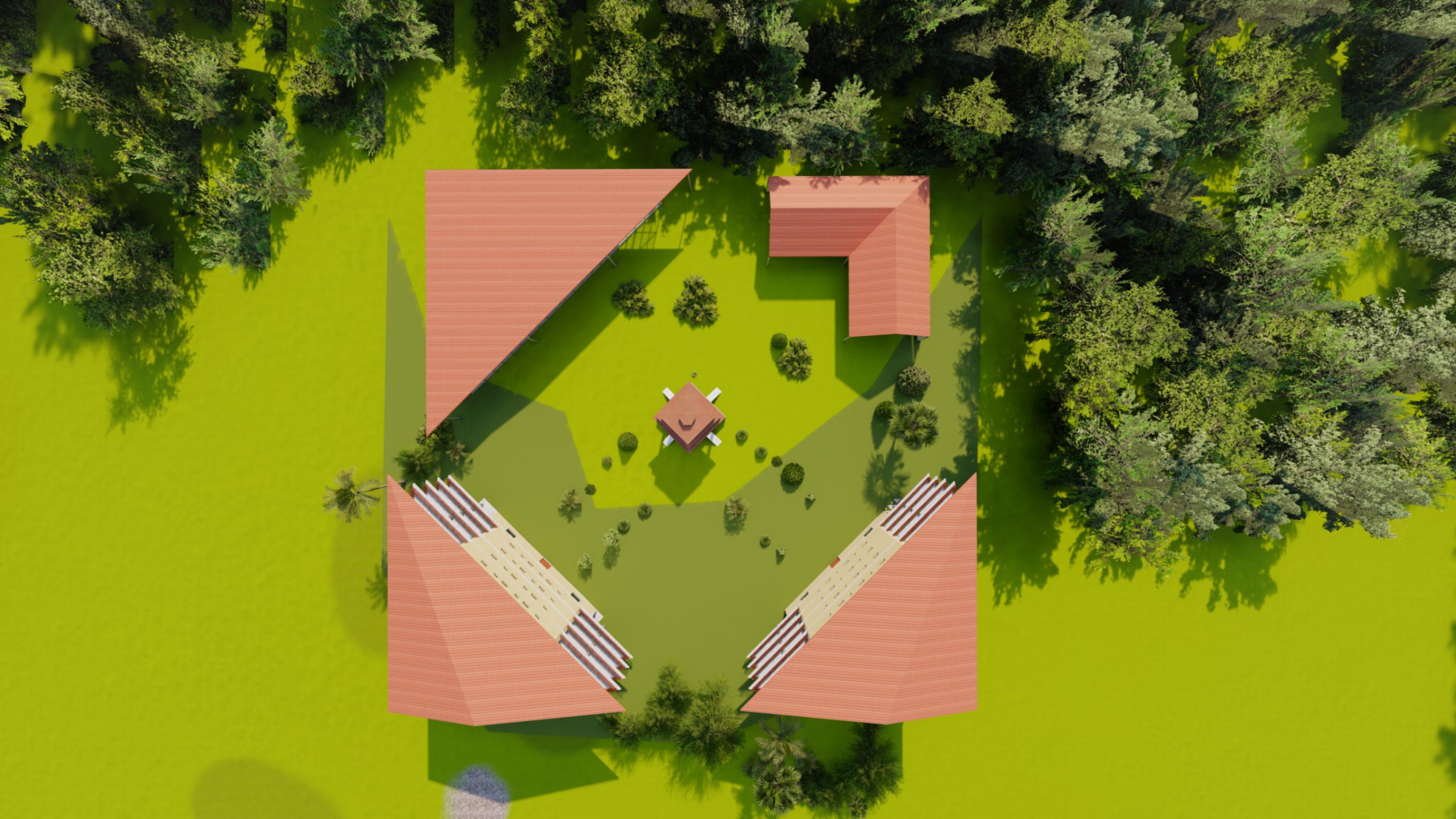
The Concept
The diagram of compatibility forms the very framework and form of the buildings serving in this marriage garden. Three bulk and one light structure at four corners with Mandapam in center, all connected by diagonal pathways can be seen to form the layout of a kundali.
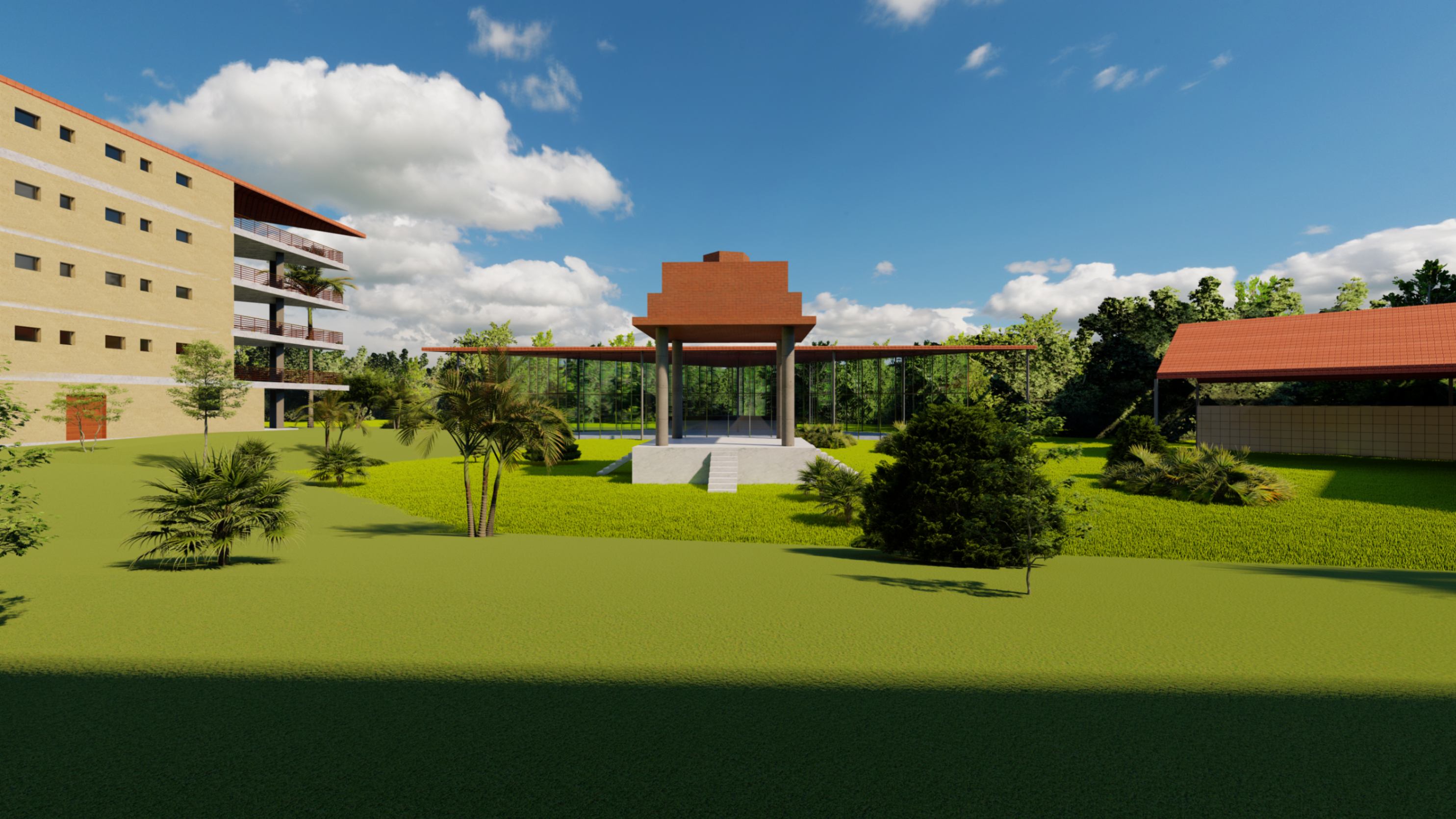
The Landscape-2
Rendered space displays the architectural hierarchy of the marriage garden, with the traditional Mandapam positioned at the center as the ceremonial focal point. Elevated on a plinth and crowned by a stepped roof form, it establishes a strong visual identity within the landscape. To the left, the groom’s guest hotel adopts a contemporary language characterized by open balconies, horizontal bands, and deep overhangs. Behind the Mandapam, the reception hall combines transparency and openness through an extensive glass façade, fostering a seamless connection with the gardens. The catering pavilion on the right completes the ensemble, while lush landscaping unifies the diverse architectural elements into a cohesive wedding function.
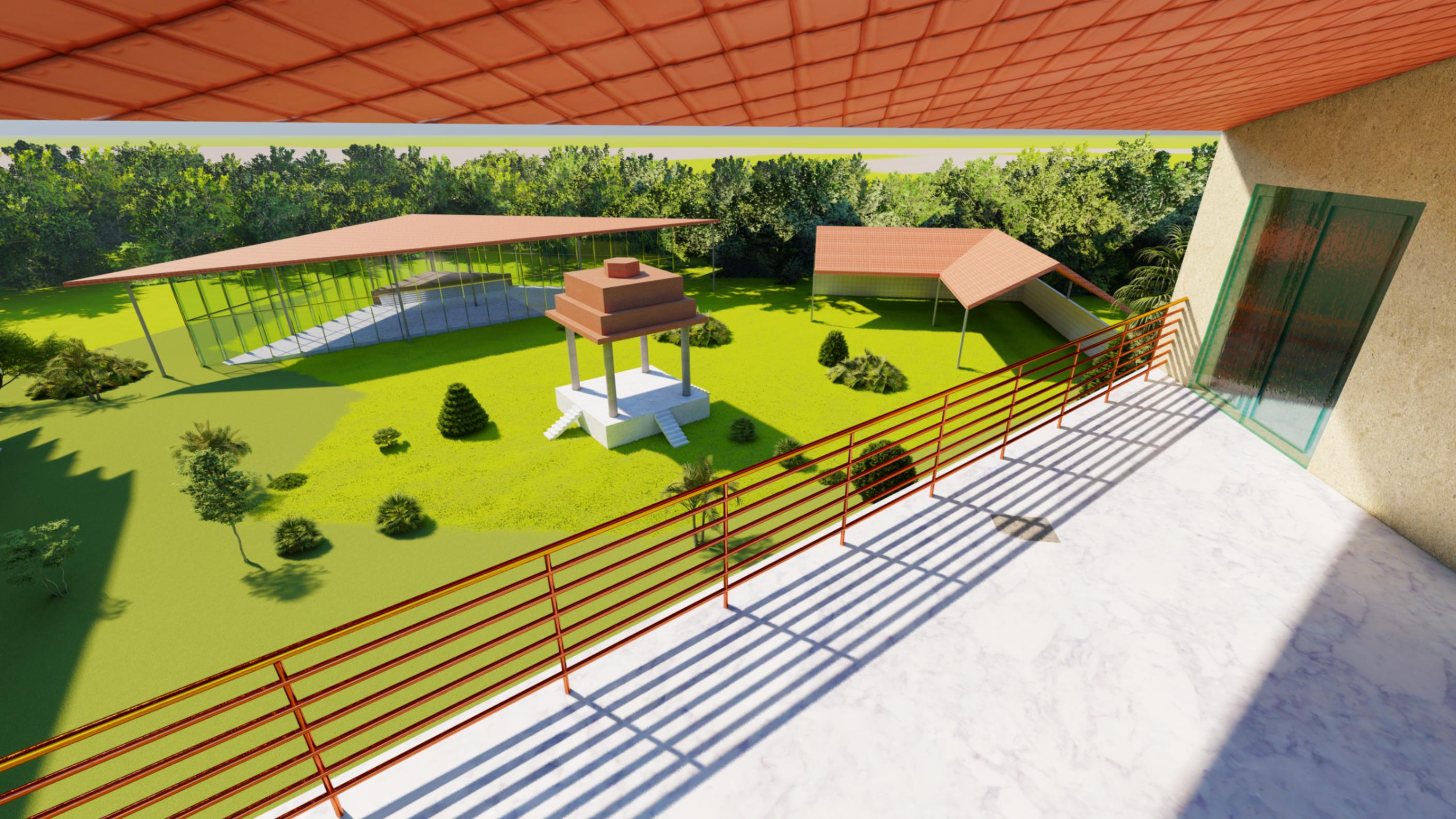
The Balcony view
This rendering presents a guest’s perspective from the balcony of the bride’s hotel, overlooking the marriage garden and its carefully organized architectural ensemble. The elevated viewpoint emphasizes the central Mandapam, whose traditional stepped roof form establishes it as the ceremonial heart of the venue. Beyond it, the reception hall is expressed through a lightweight glass façade and expansive roof canopy, creating a transparent and welcoming gathering space. To the right, the catering pavilion occupies a discreet yet accessible position. The balcony’s linear railings frame the view, while the landscaped lawns, ornamental shrubs, and surrounding greenery unify the structures, creating a serene and visually connected setting for wedding celebrations.
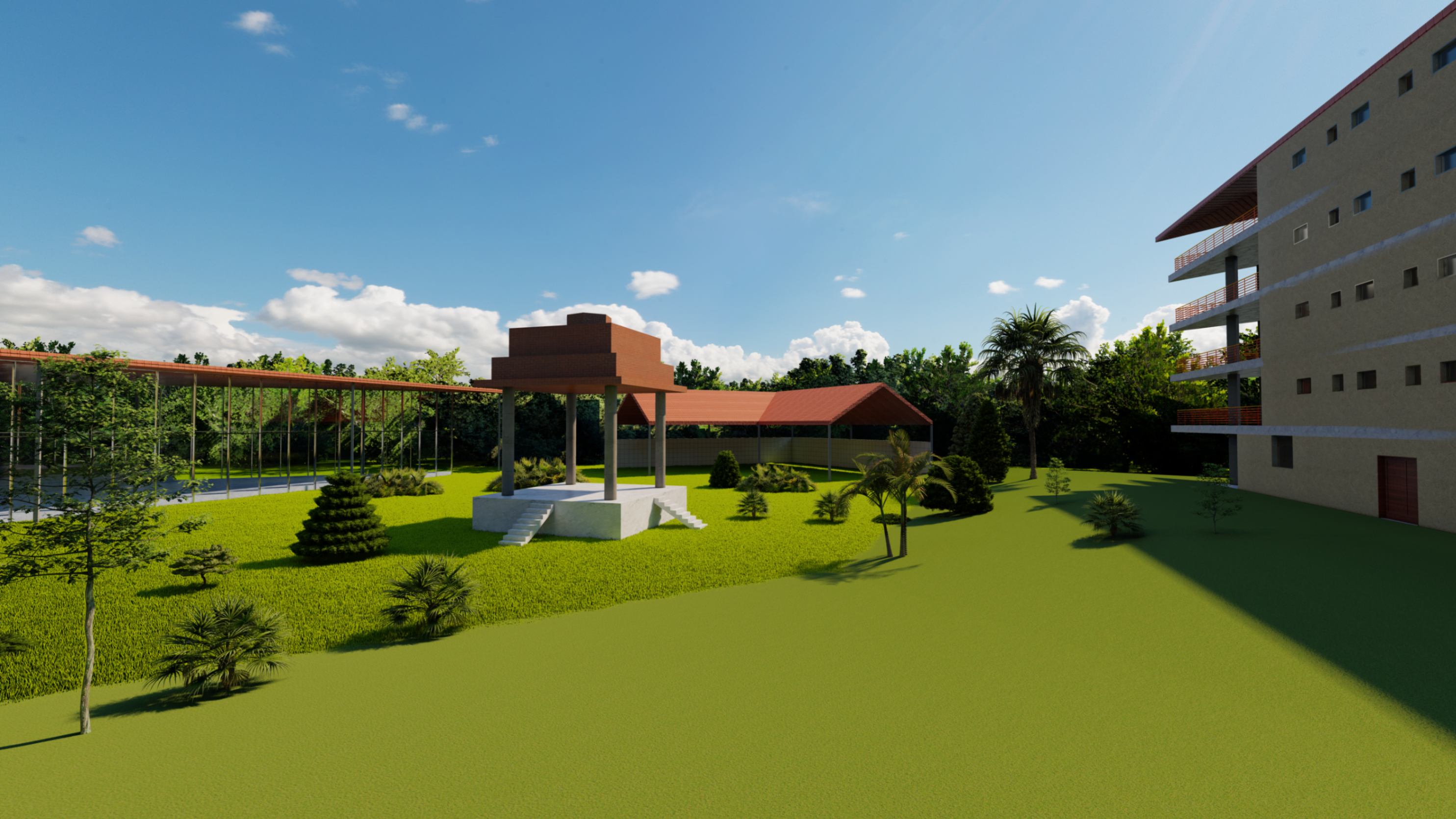
The Landscape-3
Rendered portion of the venue here shows another architectural hierarchy of the marriage garden, with the traditional Mandapam positioned at the center as the ceremonial focal point. To the right, flanks the contemporary styled bride’s guest hotel with similar open balconies and deep overhangs. The symmetry in both hotel designs evokes the synergy of both parties which will bond through auspicious occasion. Behind the Mandapam, the modern glass reception hall fosters a seamless connection with the garden. The shrubs and bushes enriches the garden space marking the bellowing greenery of overall landscape.

Saikat Sen
More by Saikat Sen
View profile Arch Hive