Back
Market’s Antidote: Designing Food Waste to be integrated as byproduct for Market
Year: 2023
Category: Commercial & Offices
Skills: AutoCAD, Enscape, SketchUp, Photoshop, Lightroom, Illustrator
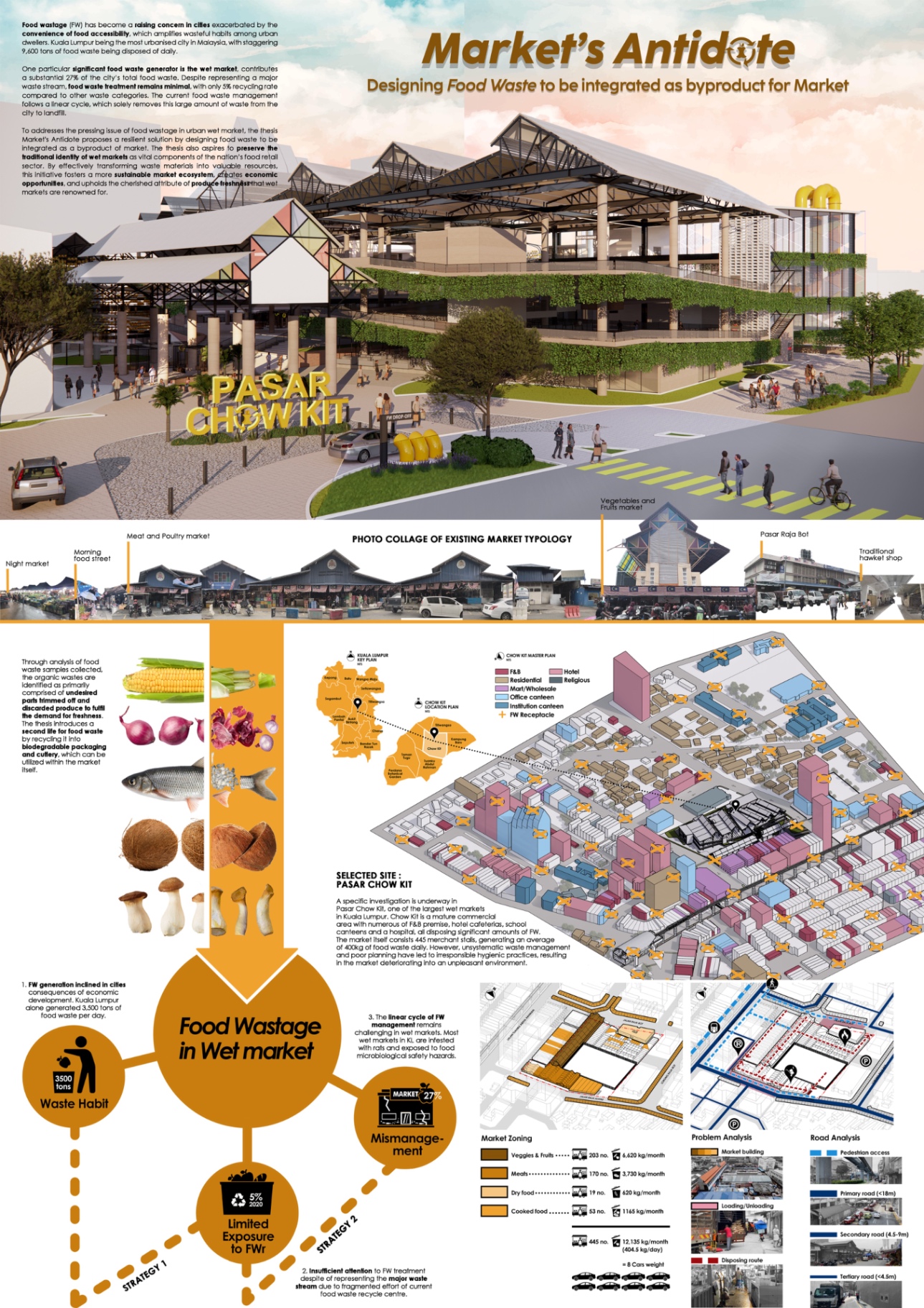
Food wastage has become a raising concern in cities exacerbated by the convenience of food accessibility, which amplifies wasteful habits among urban dwellers. Kuala Lumpur being the most urbanised city in Malaysia, with staggering 9,600 tons of food waste being disposed of daily. One particular significant food waste generator is the wet market, contributes a substantial 27% of the city’s total food waste. Despite representing a major waste stream, food waste treatment remains minimal, with only 5% recycling rate compared to other waste categories. The current food waste management follows a linear cycle, which solely removes this large amount of waste from the city to landfill. To addresses the pressing issue of food wastage in urban wet market, the thesis Market’s Antidote proposes a resilient solution by designing food waste to be integrated as a byproduct for market. A specific investigation is underway in Pasar Chow Kit, one of the largest wet markets in Kuala Lumpur. Chow Kit is a mature commercial area with numerous of F&B premise, hotel cafeterias, school canteens and a hospital, all disposing significant amounts of food waste. The market itself consists 445 merchant stalls, generating an average of 400kg of food waste daily. However, unsystematic waste management and poor planning have led to irresponsible hygienic practices, resulting in the market deteriorating into an unpleasant environment.
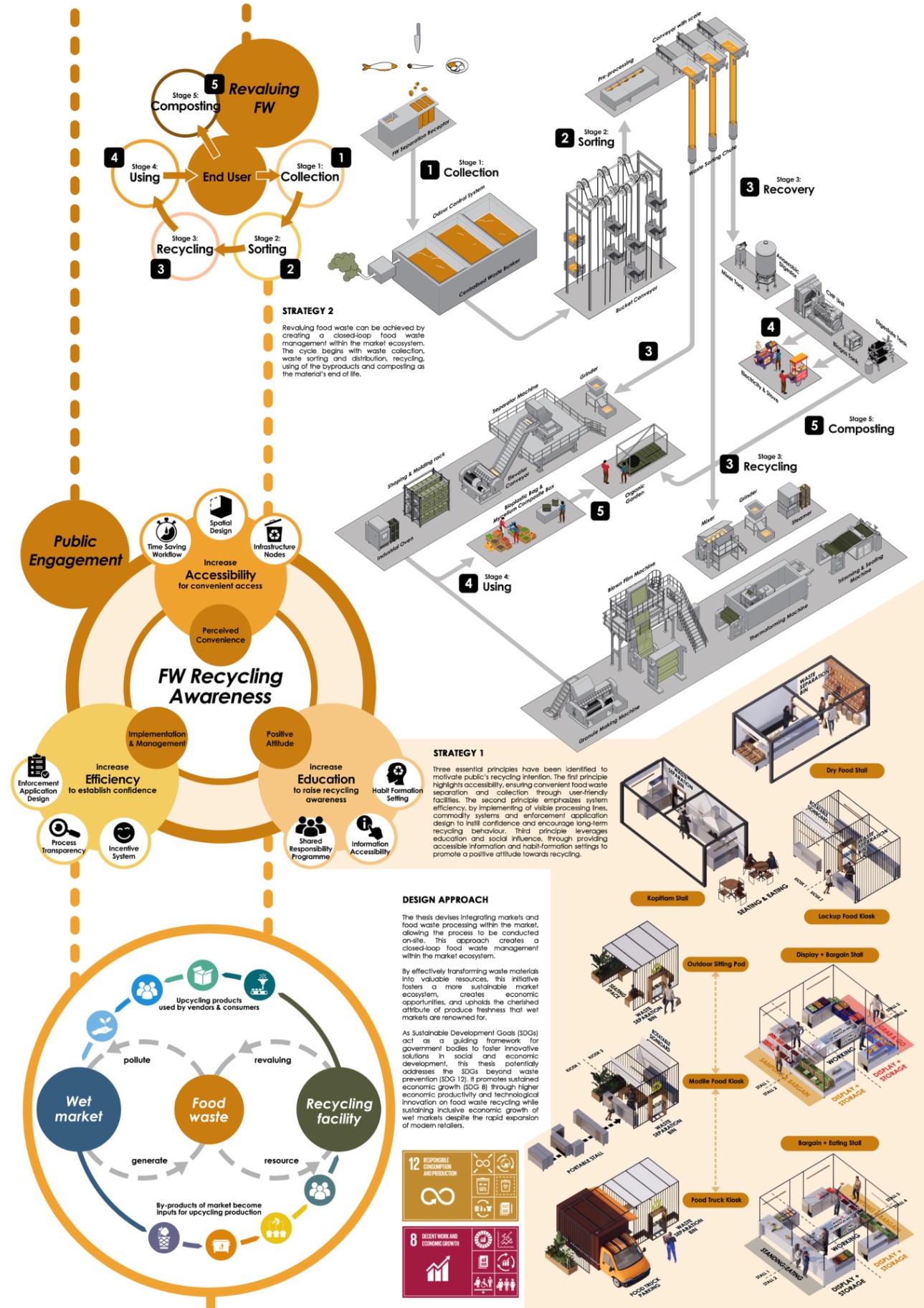
Proposed close-loop food waste management in urban wet market
Through analysis of food waste samples collected from Pasar Chow Kit, the organic wastes are identified as primarily comprised of undesired parts trimmed off and discarded produce to fulfil the demand for freshness. The thesis introduces a second life for food waste by recycling it into biodegradable packaging and cutlery, which can be utilized within the market itself. To achieve this goal, the thesis devises integrating markets and food waste processing within the market, allowing the process to be conducted on-site. This approach creates a closed-loop food waste management within the market ecosystem. Three essential principles have been identified to motivate public’s recycling intention. The first principle highlights accessibility, ensuring convenient food waste separation and collection through user-friendly facilities. The second principle emphasizes system efficiency, by implementing of visible processing lines, commodity systems and enforcement application design to instill confidence and encourage long-term recycling behaviour. Third principle leverages education and social influence, through providing accessible information and habit-formation settings to promote a positive attitude towards recycling.
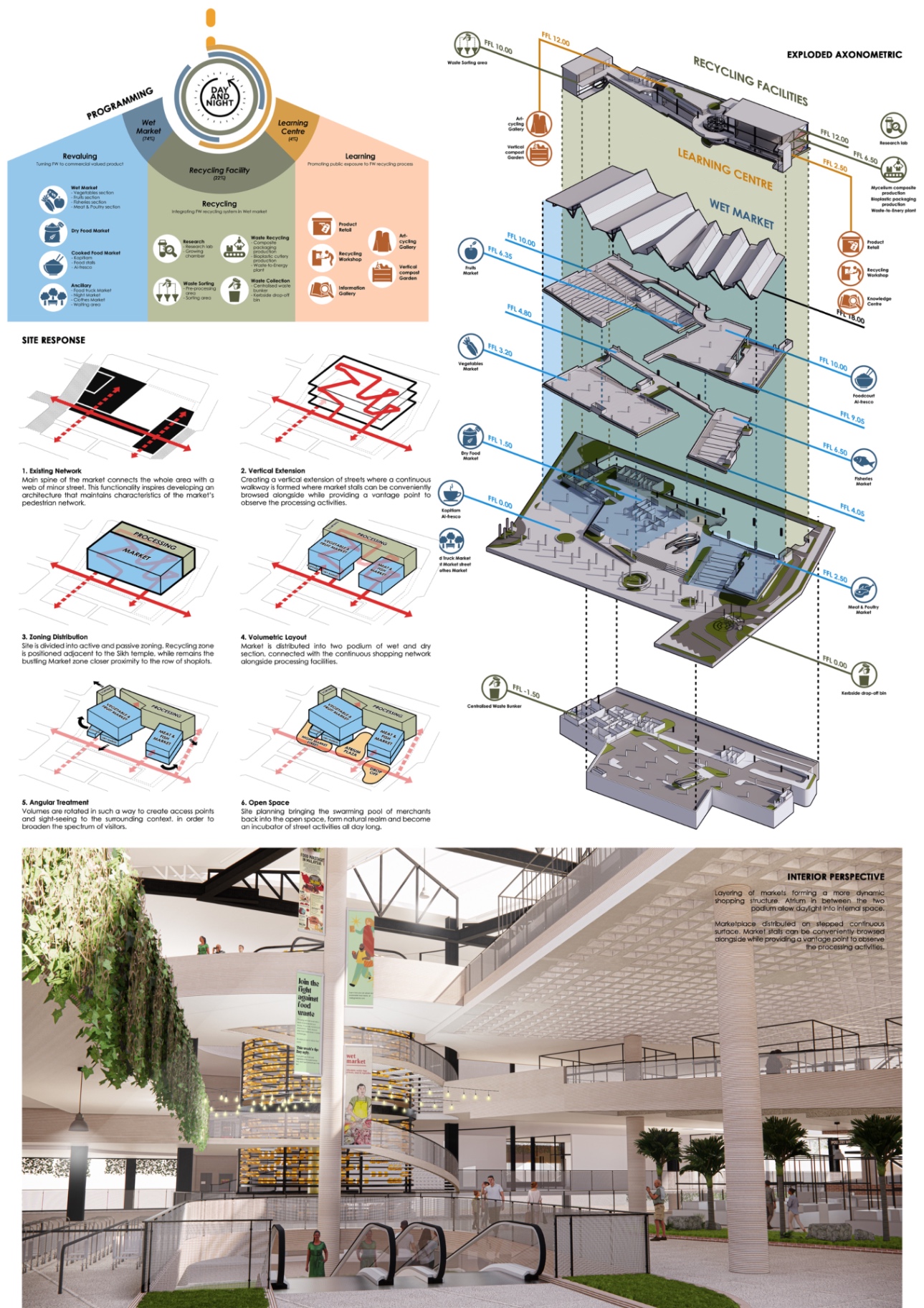
Revaluing, recycling and learning program
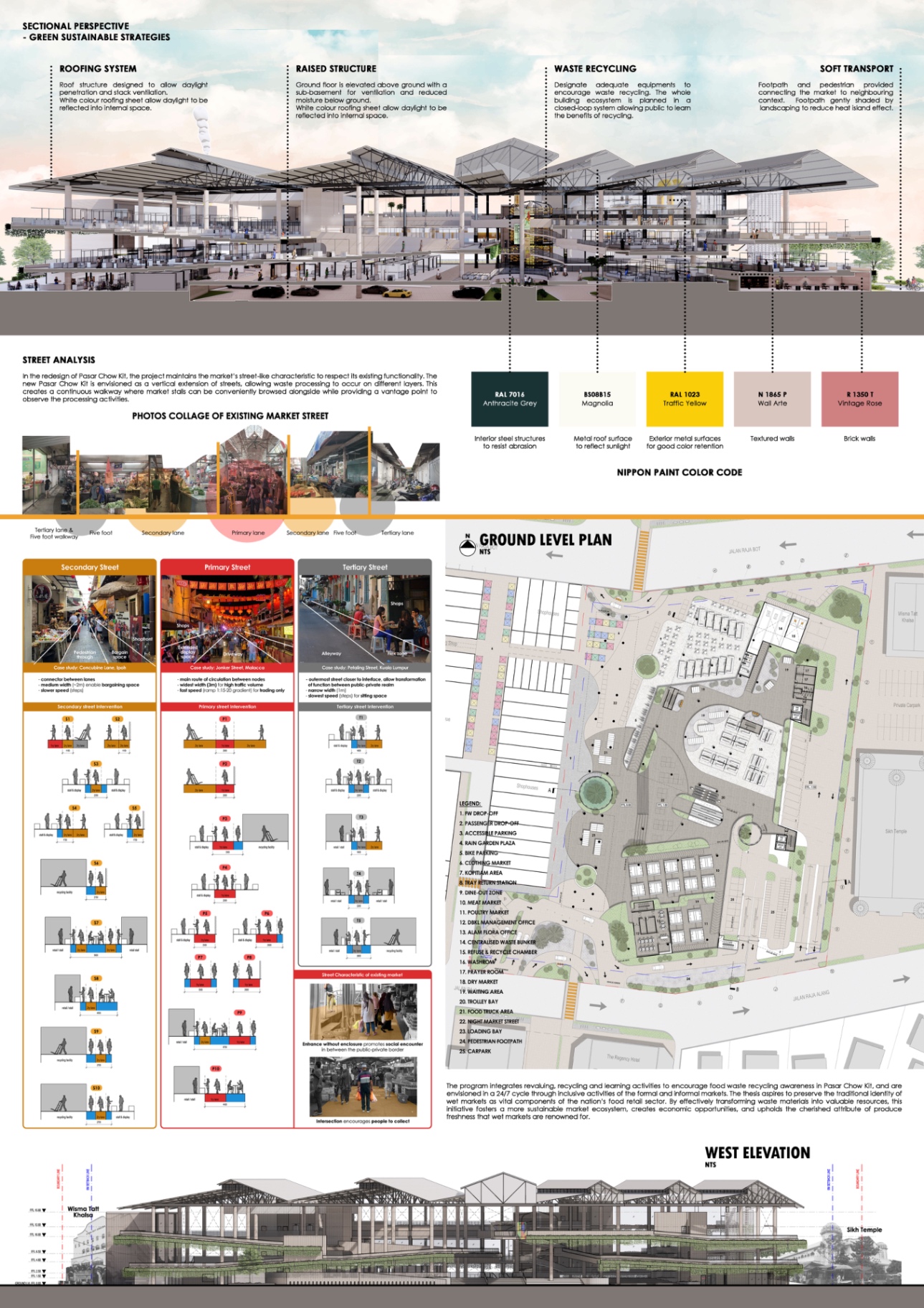
Vertical extension of market’s streets
In the redesign of Pasar Chow Kit, the project maintains the market’s street-like characteristic to respect its existing functionality. The new Pasar Chow Kit is envisioned as a vertical extension of streets, allowing waste processing to occur on different layers. This creates a continuous walkway where market stalls can be conveniently browsed alongside while providing a vantage point to observe the processing activities. Overall, the program integrates revaluing, recycling and learning activities to encourage food waste recycling awareness in Pasar Chow Kit. The proposed system encompasses various components, including waste collection, sorting and distribution, wastewater treatment, production lines, waste-to-energy plants, and vertical gardening. Furthermore, the thesis aspires to preserve the traditional identity of wet markets as vital components of the nation’s food retail sector. By effectively transforming waste materials into valuable resources, this initiative fosters a more sustainable market ecosystem, creates economic opportunities, and upholds the cherished attribute of produce freshness that wet markets are renowned for.

Joeey Lee
More by Joeey Lee
View profile Arch Hive