Back
La Máquina de Hábitats
Year: 2023
Category: Cultural Architecture
Skills: Rhino, Grasshopper, Photoshop, Illustrator, InDesign
This project finds its objective in the change of paradigm that this new stage of space exploration will entail when the International Space Station will have its functions finished. The main objective of the new stage main objective will no longer be solely the investigation of the environment. It will focus on human habitation, towards the first migrations: it will encourage unusual relationships between the human being and this context. This process demands from architecture a profound reflection on the relationship between human beings and their tangible and intangible environment. From theories of habitation and construction techniques, it is investigated and proposed that space exploration continues to the next stage based on what has allowed human beings their evolution and subsistence: the Earth. Under the concept of “worlding”, it is proposed that space architecture should take ecosystems as its main basis, instead of their isolation. La Maquina de Habitats proposes questioning the view of architecture as a refuge from the ecosystem and taking it as the axis of design in order to use its cycles as a source of production and renewal of the resources necessary for human survival in space.
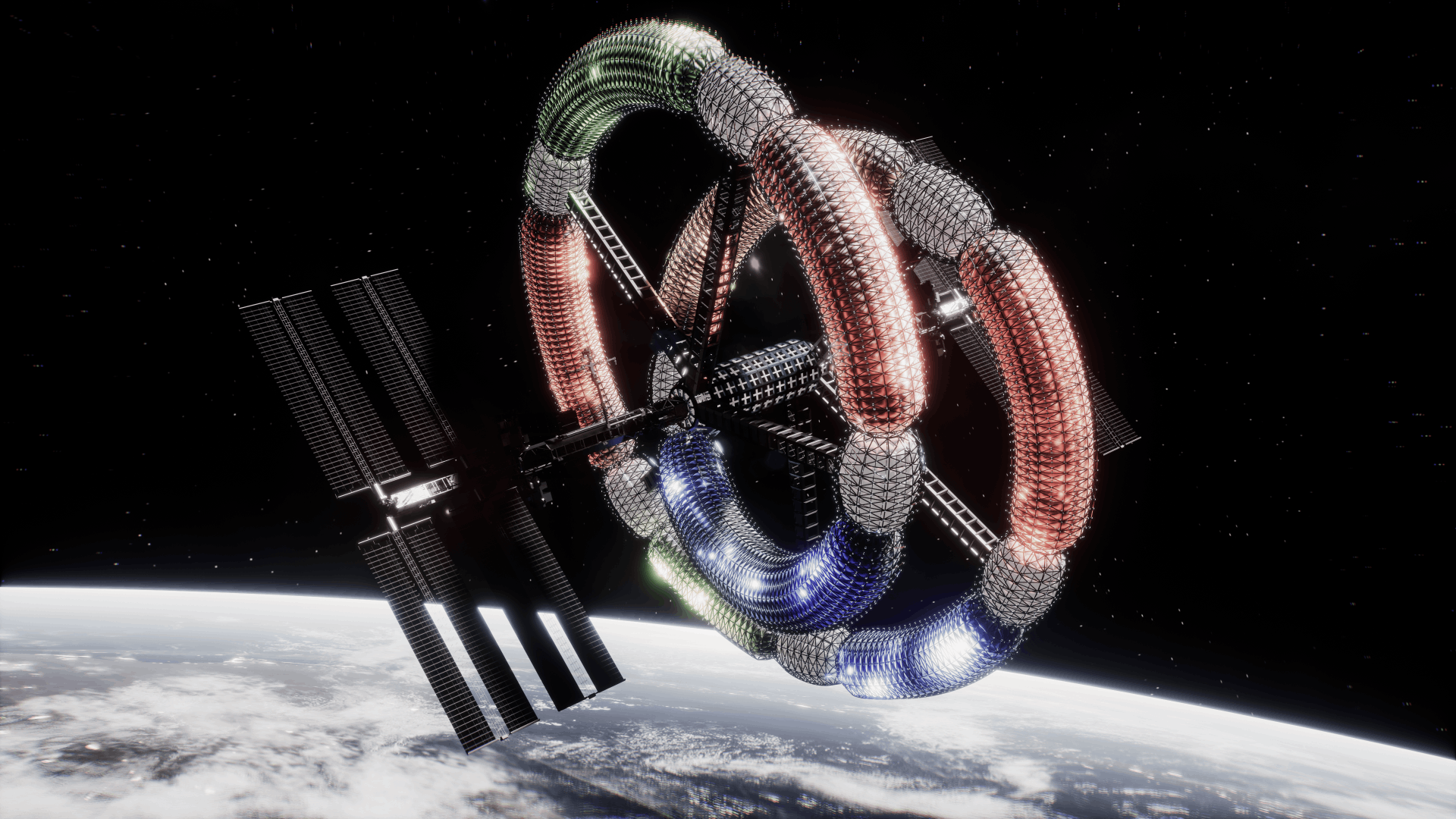
La Máquina de Hábitats in Low Earth Orbit
The construction technology based on pressurized and modular folding membranes allows the existence of ecosystems in low Earth orbit. The existence of sectors with different colors is visualized according to the photosynthetic efficiency of the ecosystems and their resource production needs.
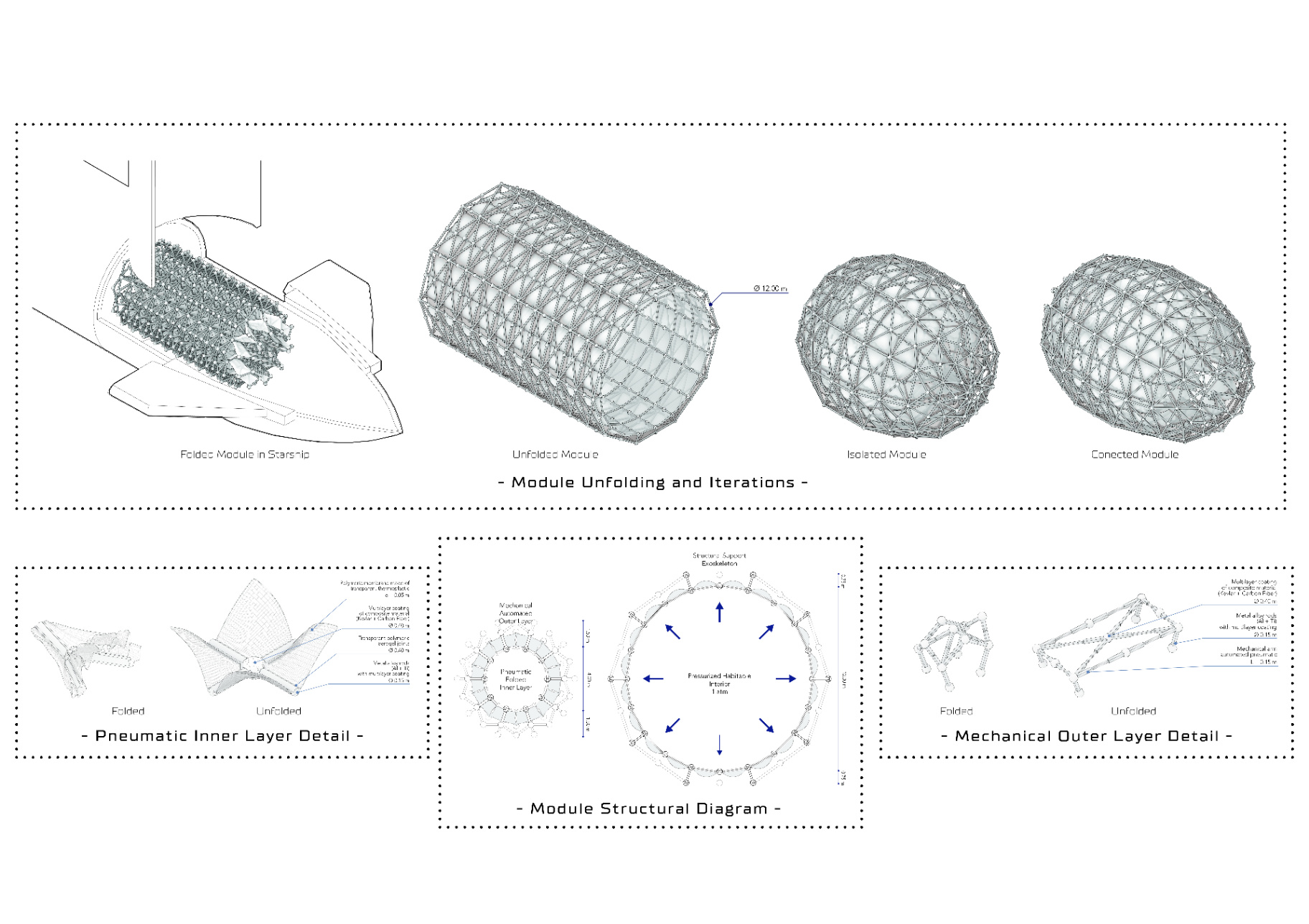
Module Design
The modules are designed on the basis of two layers: one automated and mechanical and the other foldable and pneumatic. Both have the purpose of generating a pressurized interior to isolate the ecosystems from the hostile exterior.
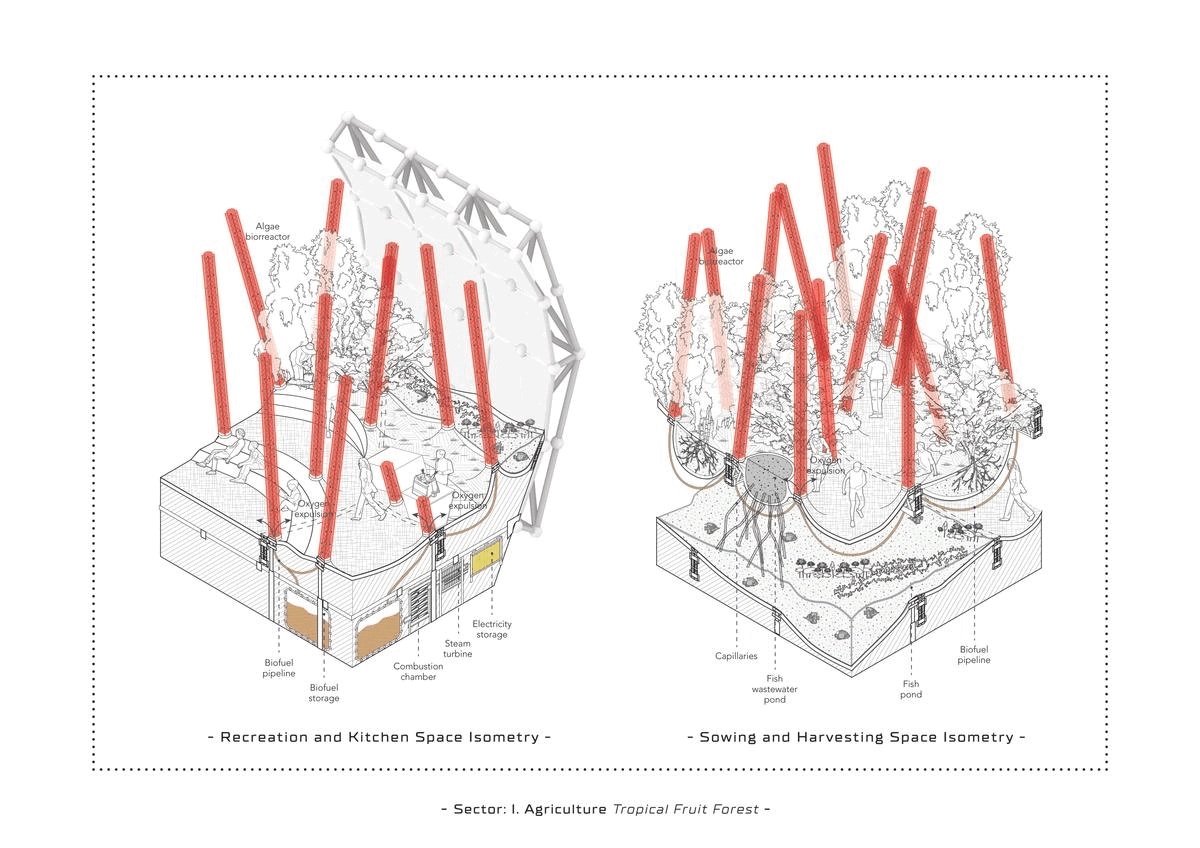
Exploration pieces
The pieces explored relate the activities of contemporary human beings with the proposed ecosystemic cycles. Three artificial ecosystem technologies are involved: aquaponics, algae bioremediation and plant bioelectricity production.
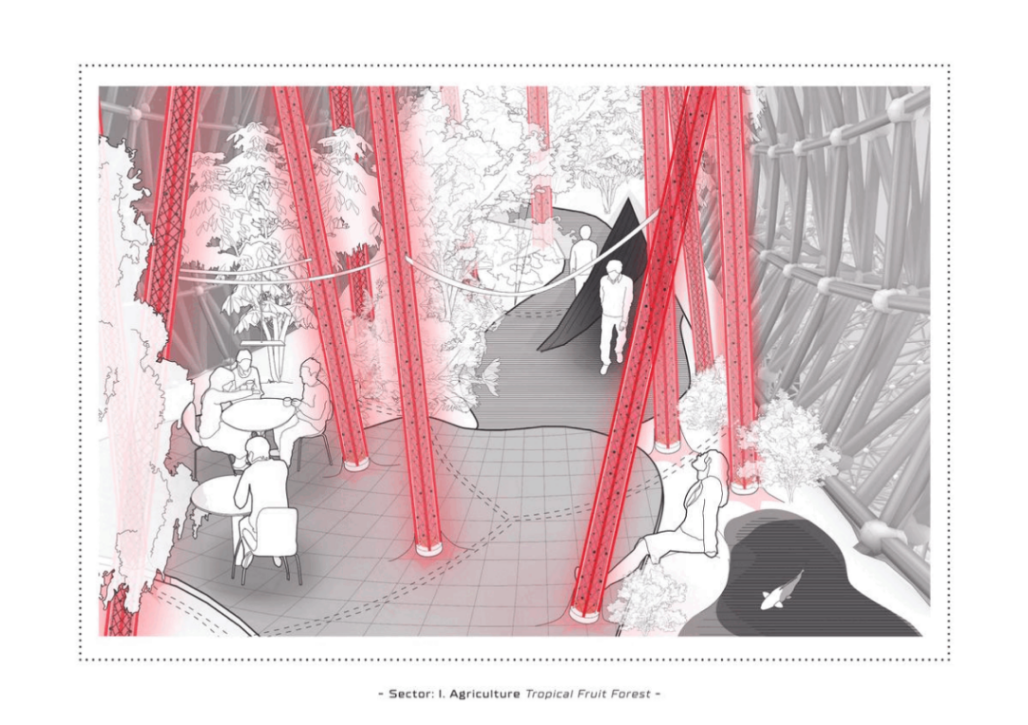
Interior Views
It is proposed to use the elements designed for the maintenance of the ecosystemic cycles as part of the architectural space. In this way, biotic and abiotic beings define and support human needs and activities.
Finally, the project not only proposes a way of arranging the existence of ecosystemic cycles outside the terrestrial biosphere. It concludes in the compatibilization of the activities and needs of the contemporary human being with the artificial ecosystemic cycles generated.

Cesar Requejo
More by Cesar Requejo
View profile Arch Hive