Back
Prosthetic Enhancement
Year: 2022
Category: Industrial & Infrastructure
Skills: Rhino, AutoCAD, Photoshop
PROSTHETIC ENHANCEMENT is a case study project that deals with the development of a specific plot in a site, Dreispitz, ripe for heavy transformation. Understanding and accepting the political and economic pressures that plan to raise the effective surface of the plot by 120%, the project looks to minimize its impact on the existing logistics building and preserve with respect the industrial tradition that defined the identity of the site. A light roof is suspended above the building by a new steel structure touching the ground in only 15 points along the front façade. Following a strong structural precept to minimise the intervention and preserve the integrity of the hall, the intervention limits itself to the addition of a new façade and a new roof. Balancing forces as a mean of design in equilibrium, the two structural surfaces are expanded into double-layer elements revealing a space for air circulation working as a regulating medium of comfort for the spaces it envelops. Together, they form an extension that will host rentable spaces for laboratories and artists’ ateliers on top of the existing hall.
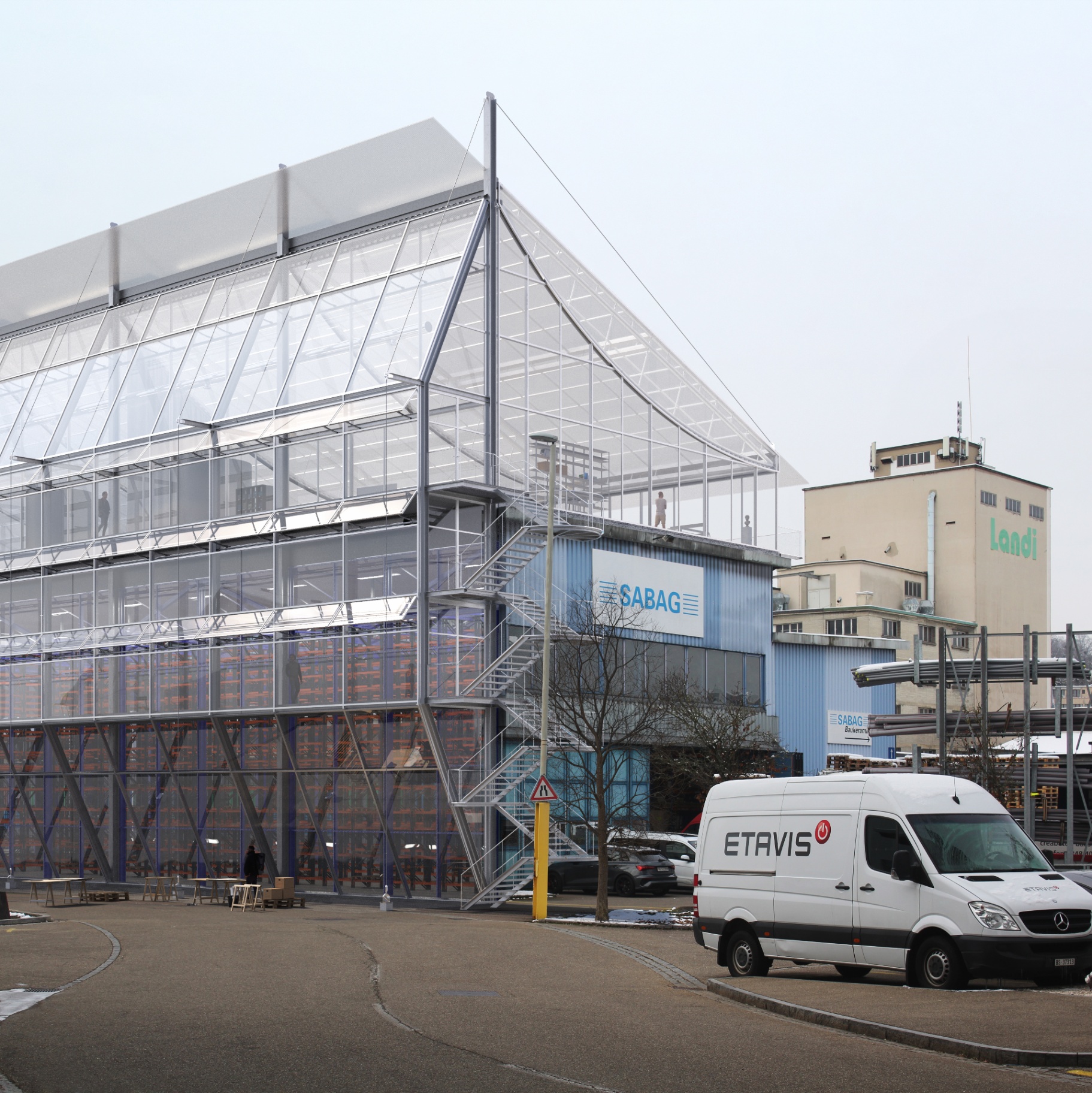
Visualisation from main axis
The extension is a tool for survival, in its design the survival is enhancing: First, the new façade brings a strong focus to the pedestrian street in front, defining a focal axis within the repeated street pattern of a site that is as of now without hierarchy for development. Secondly, the public quality of the exterior space is invited and prolonged inside in a greenhouse-like elevated garden, offering a space to rest, meet, exchange, contemplate at any time of the year. Finally, the relationship between the site's traditional logistic function and the public is revived through transparency. The unseen, hidden working world of Dreispitz becomes visible.
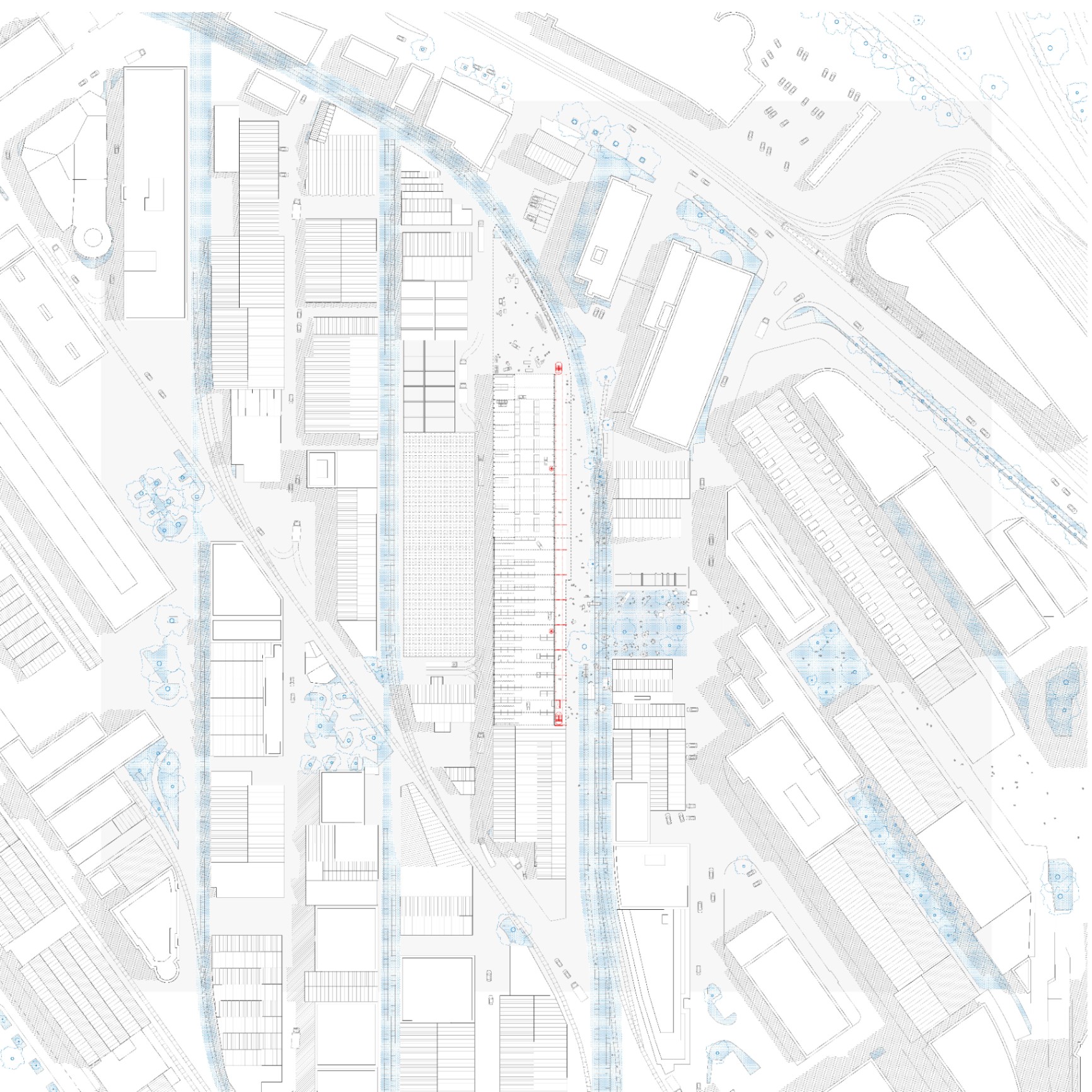
Mass plan
The old railtracks now not in use anymore are turnt into green axis to allow pedestrian and cycling mobility in opposition to the heavy traffic in the streets alimenting the back of the logistic buildings. Since the railtracks are the only space not sealed with asphalt, they easily allow vegetation to grow, quickly offering a strategy to fight the urban heat island effect caused by the sealed grounds. The small parking lots become parks and destinations for outdoor activities for the local community.
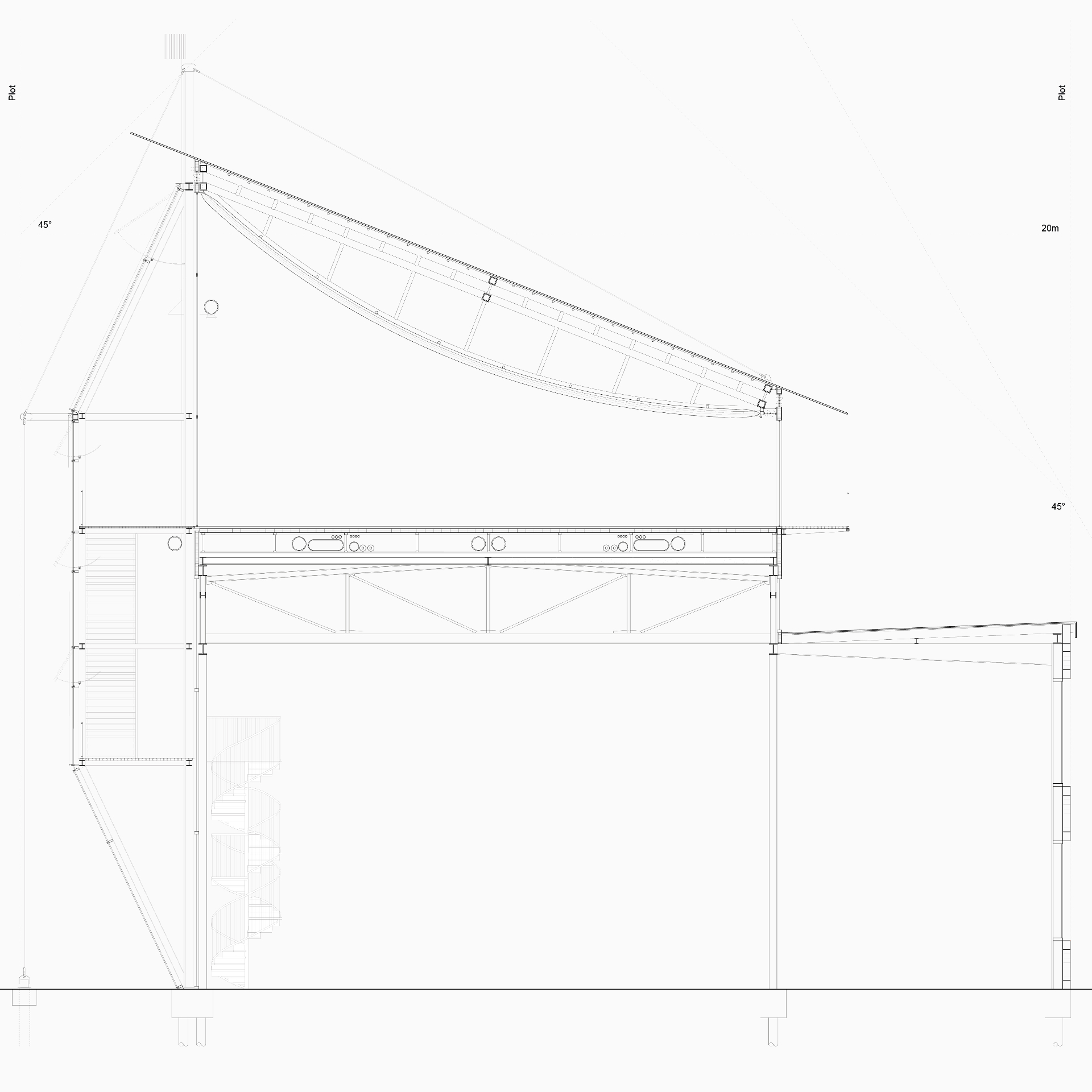
Cross section
Given the strict plot limits, the extension makes the most of its little available space. It is composed of three "buffer zones": The façade which hosts the circulation and access to the ateliers and labs and a public green-house garden, all spaces for accidental interactions. The floor which is raised to make room for the technical apparatus. The ceiling which is composed of two layers, a polycarbonate sheet on top and an ETFE cushion on the bottom that together form a buffer zone assuring a high thermal comfort for the indoor climate while filling the generous space below with light.
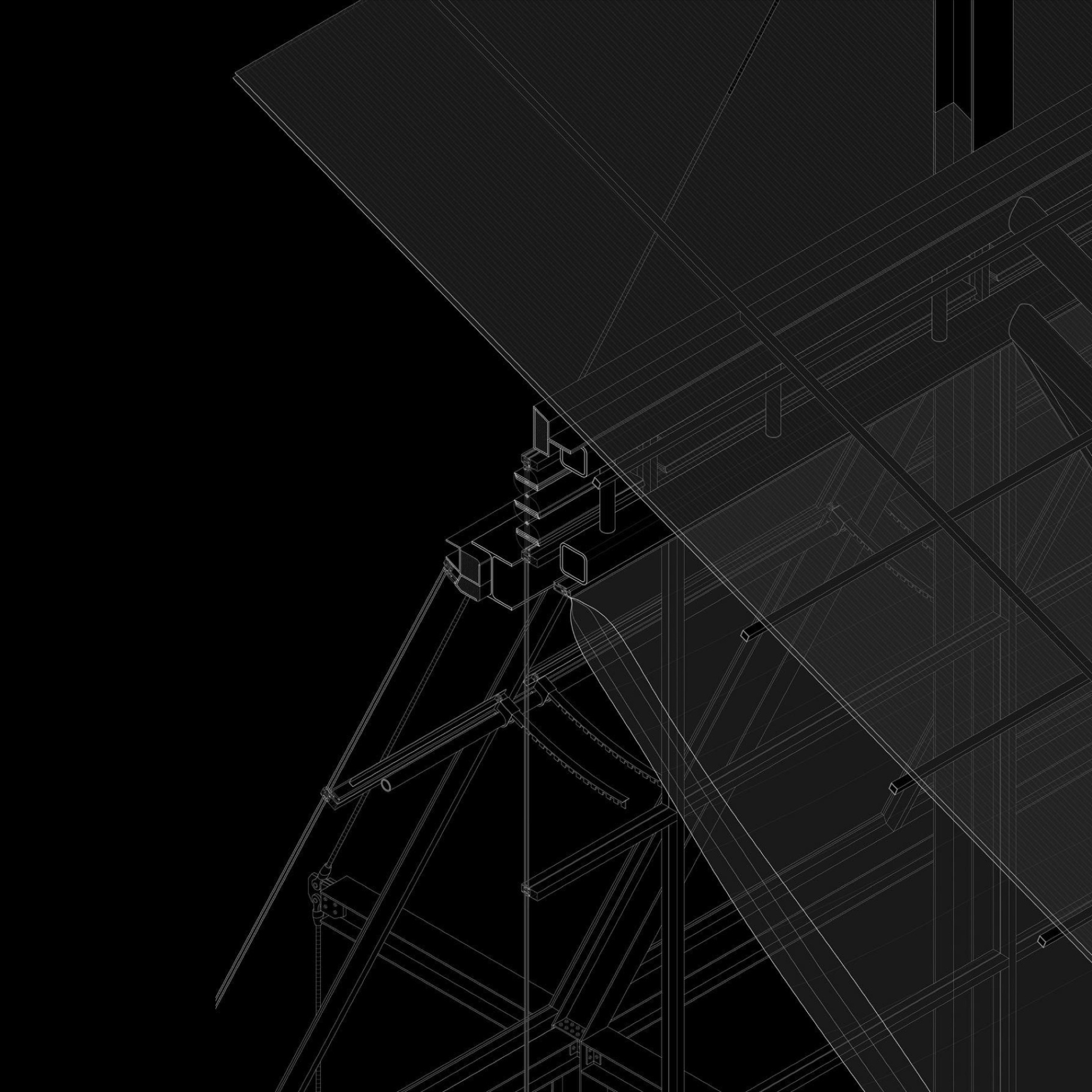
Choisy axonometric view
To remain as light as possible while providing adequate sunlight exposure for the labs and the ateliers, the roof is composed of two layers, on top a polycabronate roof working as a first layer of insulation, and underneath a an ETFE cushion. In between the two, the air is allowed to circulate through mechanical louvres, regulating the temperature inside the buffer space according to seasons. In winter, the buffer space is under negative pressure, the louvres are open sucking in outside air. This cold air then travels through the buffer and is heated up by radiation before being released inside the labs and ateliers. The circulation strip also offers an extra layer of insulation as it is warmed by radiation. In summer, the circulation strip is ventilated via mechanical windows inspired by greenhouses. For the roof, the louvers are open at both extremities, letting the air flow through it and following its upward motion creating a stack effect and cooling down the air in between the polycarbonate and the ETFE membrane.
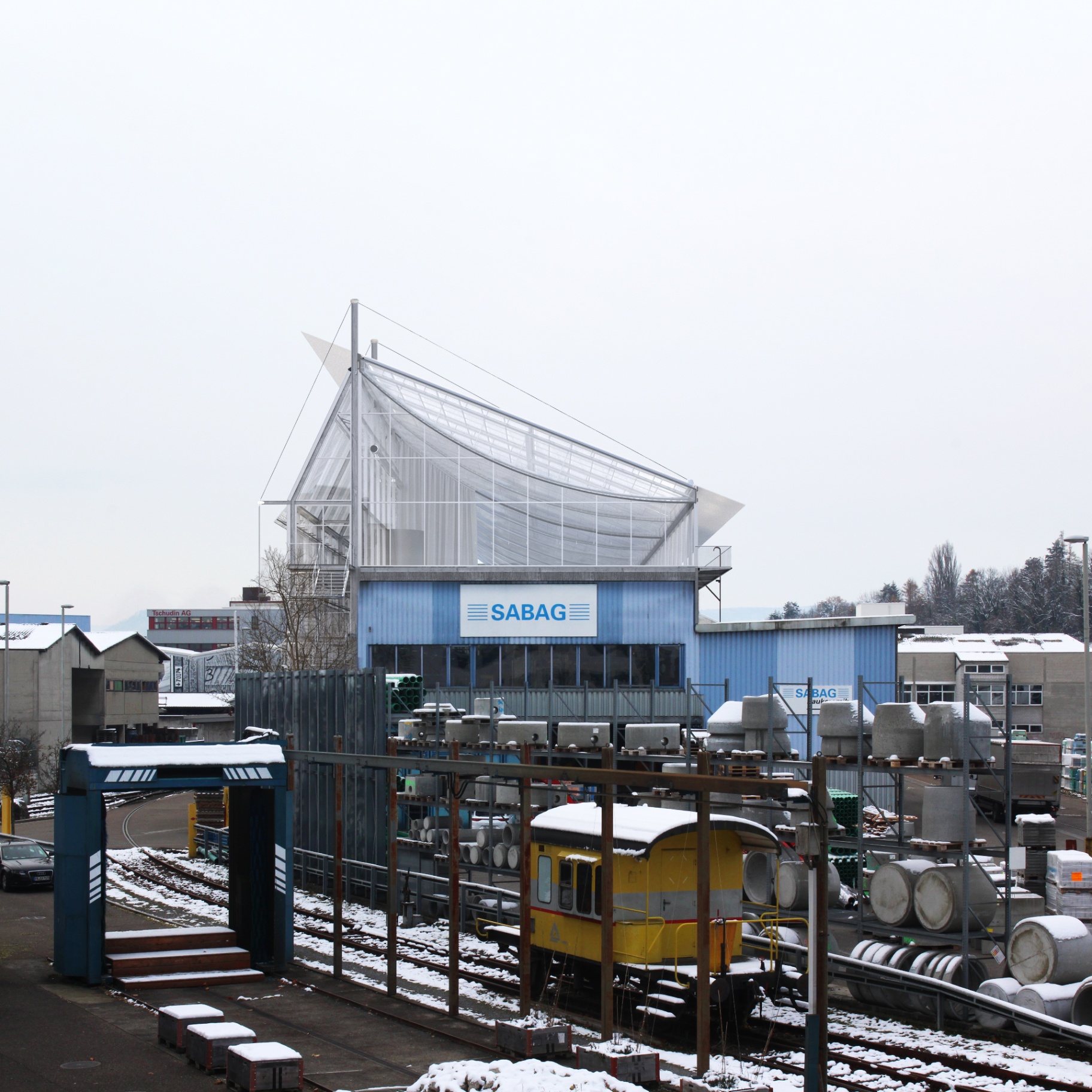
Visualisation
I the end, the intervention becomes a tool for survival, as this added-on value will financially support the companies present on the plot. As such, the project will effectively work both as an architectural and economical prosthesis to preserve and prolong the lifespan of the existing building and its actors while enhancing the spatial qualities of the plot and its relationship with the site.

Romain Iff
More by Romain Iff
View profile Arch Hive