Back
Space of Acknowledgment
Year: 2022
Category: Cultural Architecture
Skills: Rhino, 3d, Journey
The project focused on researching and discovering hidden narratives in history, practicing sensitivity in decision-making guided by the research and statements of the tribe, and acknowledging faults and injustices inflicted on the tribe. Through transparency in research and design, the student projects aimed to highlight the extent of loss suffered by the Nez Percé tribe. The process throughout the project involved intensive layering, where thoughts, emotions, stories, and maps provided organization to the students' understanding of land usage. Against this backdrop, students engaged in a 4-week beginning design studio project that sought to acknowledge the injustices faced by the Nez Percé, Nimiipuu Tribe in North Central Idaho. The project encouraged students to experiment with methods of designing that could serve as actions of acknowledgment. The studio project's aim was to sensitize the students to the loss of land and resources experienced by the tribe, as well as to foster empathy and grace in approaching the design process. (Lee, Robert, 2020) Quinn Anderson focuses on creating an environment that encourages learning, instills a feeling of peace, and promotes personal reflection. The design magnifies the division of land, prompting a direct confrontation with past wrongdoings. Anderson uses fire as the main element of the boundary engraved into the landscape. This project reflects upon the design thinking process of a student. Anderson mentions that a line drawn by an architect possesses the power to violently interrupt what is, to force the imaginative concoction of what could be, upon the unknowing. Rather than continuing the personification of an architect’s line, the amphitheater proposes to expand the conversation to consider the underlying egotistic nature of humans that shaped the Nez Percé’s destiny today.
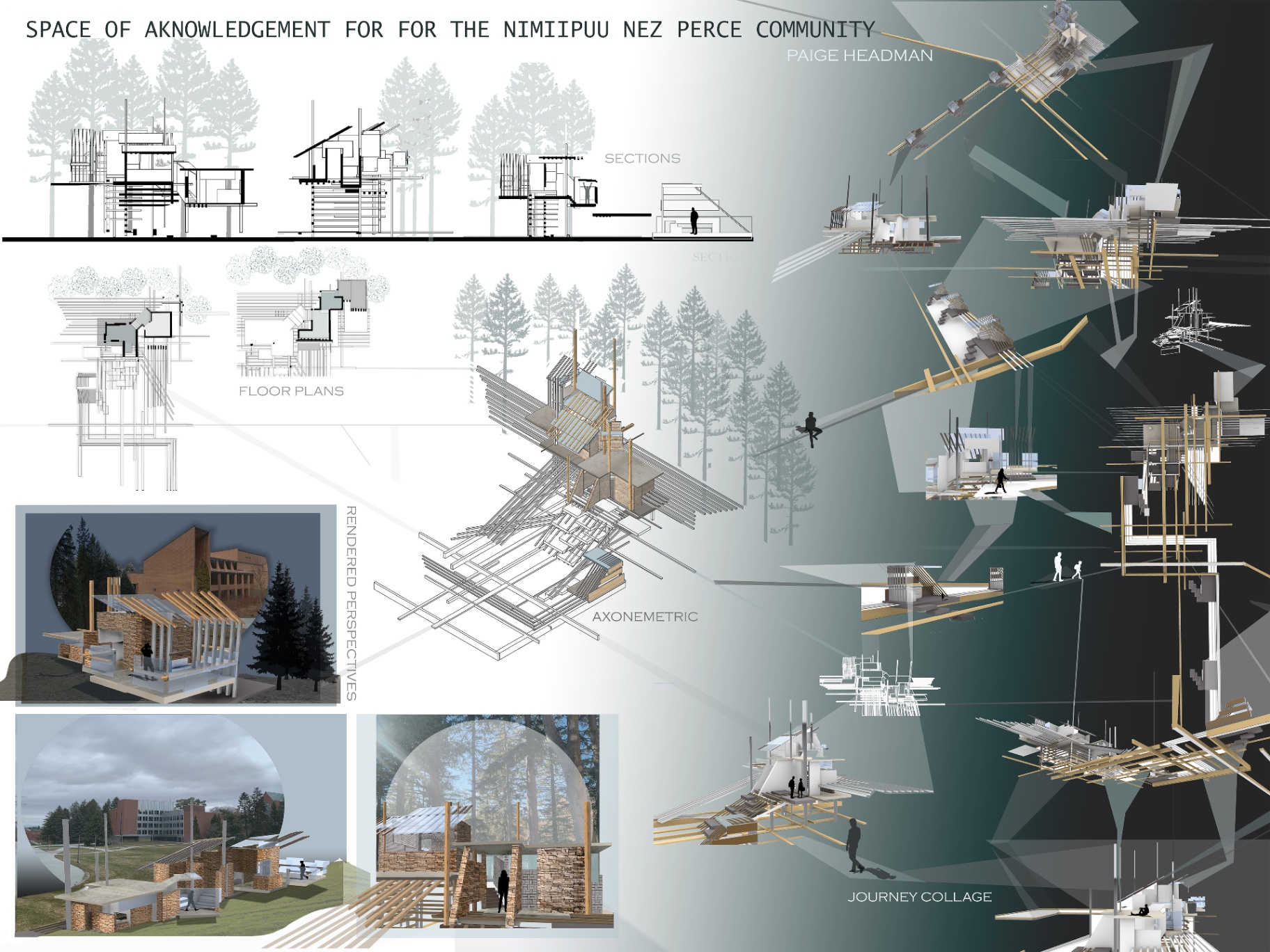
A Space of Acknowledgment for the Nez Perce
Project by Paige Headman: Paige Headman's project exemplifies the importance of respecting the wishes and needs of the tribal nations. As Headman points out, assuming we know what they want and need can be a major challenge. The Nez Percé tribe, like many other indigenous communities, have their own unique cultural heritage and values that must be acknowledged and respected. This is particularly important when it comes to the design of spaces that are intended to honor and celebrate their history and contributions. Headman's project serves as a reminder of the importance of listening to and respecting the wishes and needs of tribal nations when designing spaces that aim to honor and celebrate their cultural heritage. The project also showcases the significance of conscious material selection, community involvement, and thoughtful design in creating spaces that are not just aesthetically pleasing but also culturally meaningful and respectful. Project by Hoa Nguyen: The design by Hoa Nguyen focuses on the recognition phase of the reconciliation process by proposing an observation tower that offers extensive views of the Palouse region, which was once home to the tribe. The tower is located between the old arboretum and the University of Idaho library, with a pathway connecting the two to create a promenade leading to the tower from the core to the outside edge of campus. To honor the tribe's connection to water sources, the design incorporates a water pathway as an element. The decision to connect the tower to the library is symbolic, as the library serves as a repository of historical records that allows the tribe to recenter their story.
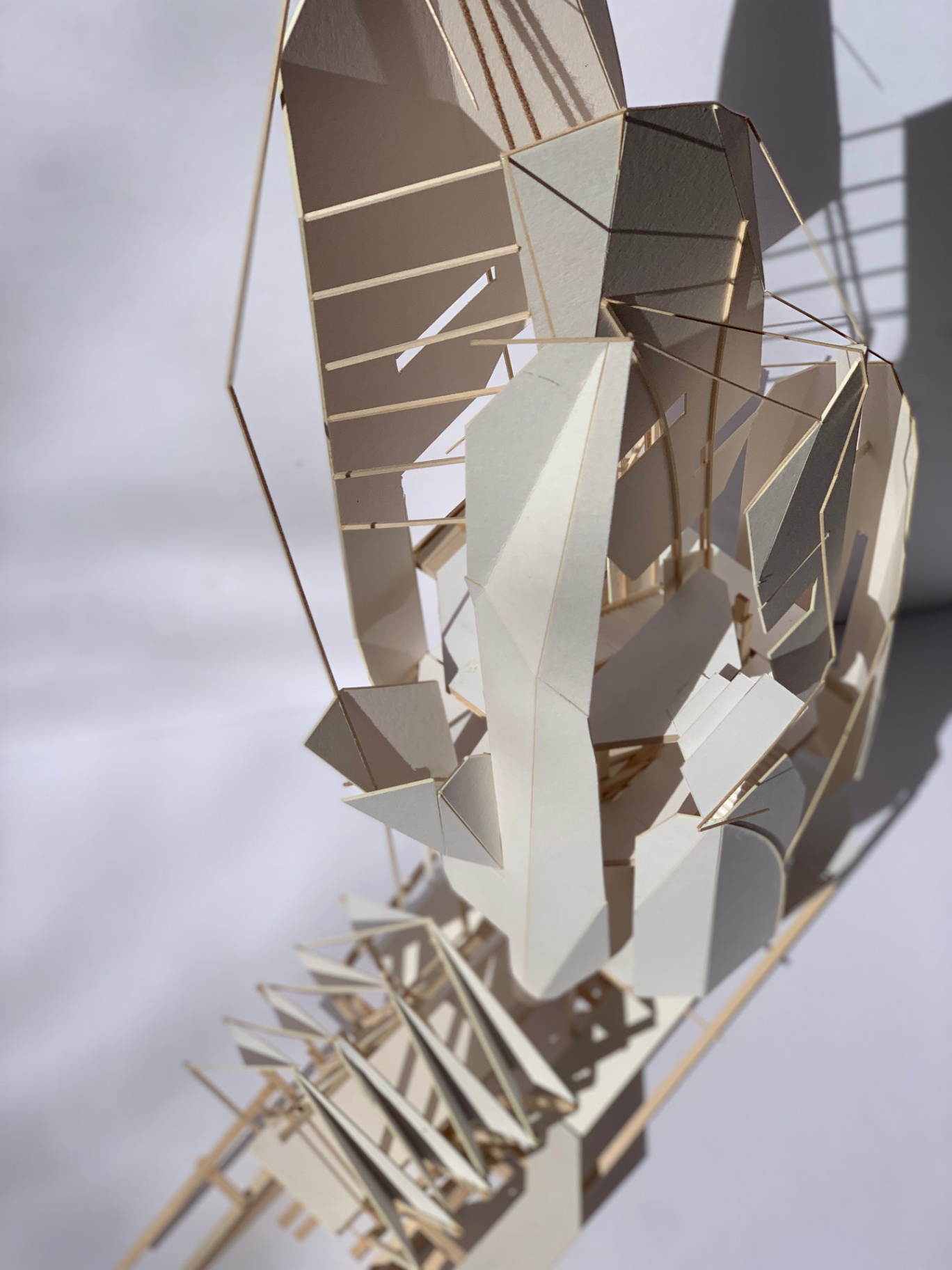
Tower of Acknowledgment
Nguyen, Hoa, 2022. Physical Model Tower, Space of Acknowledgment, University of Idaho
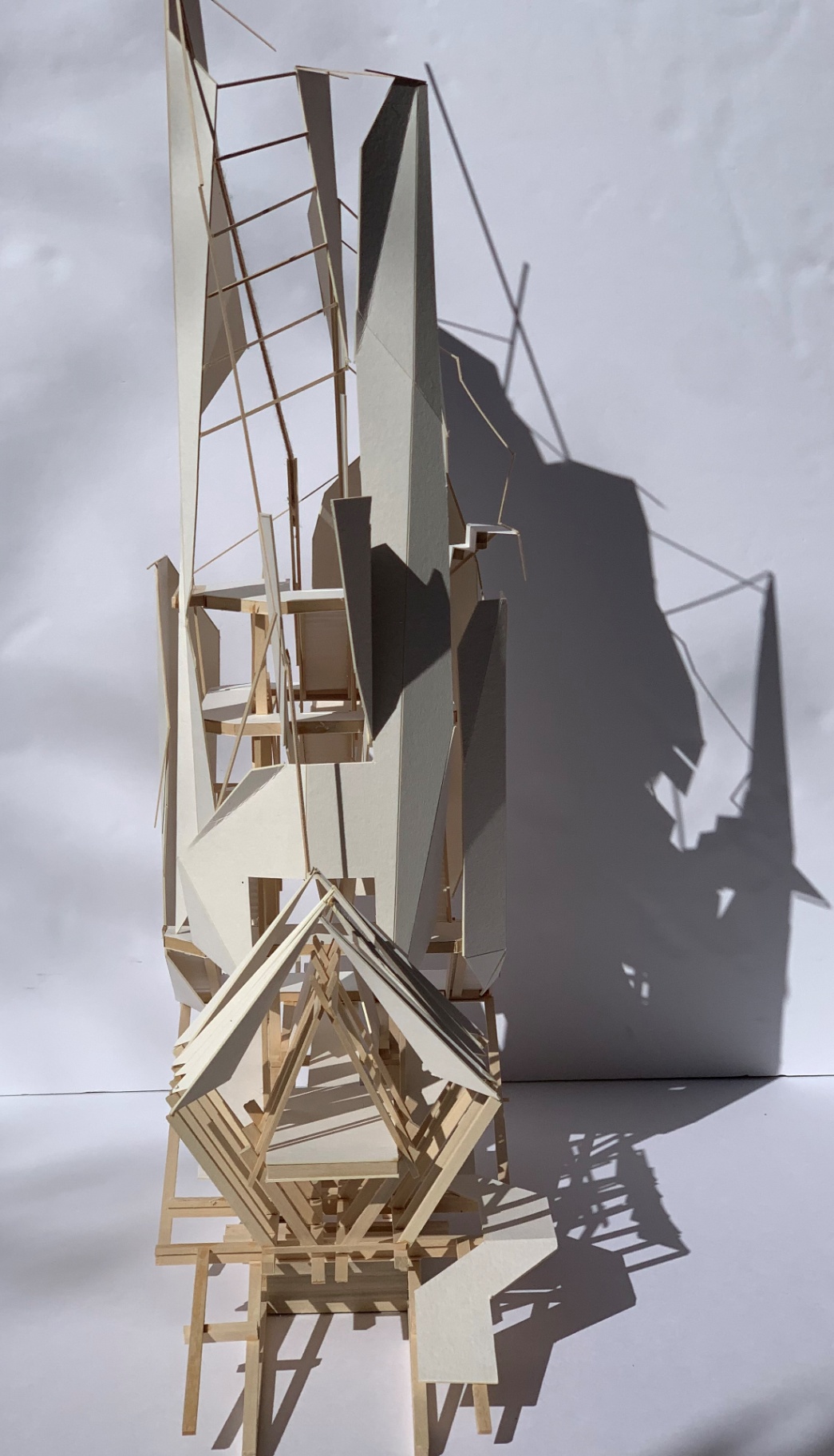
Tower of Acknowledgment
Nguyen, Hoa, 2022. Physical Model Tower, Space of Acknowledgment, University of Idaho
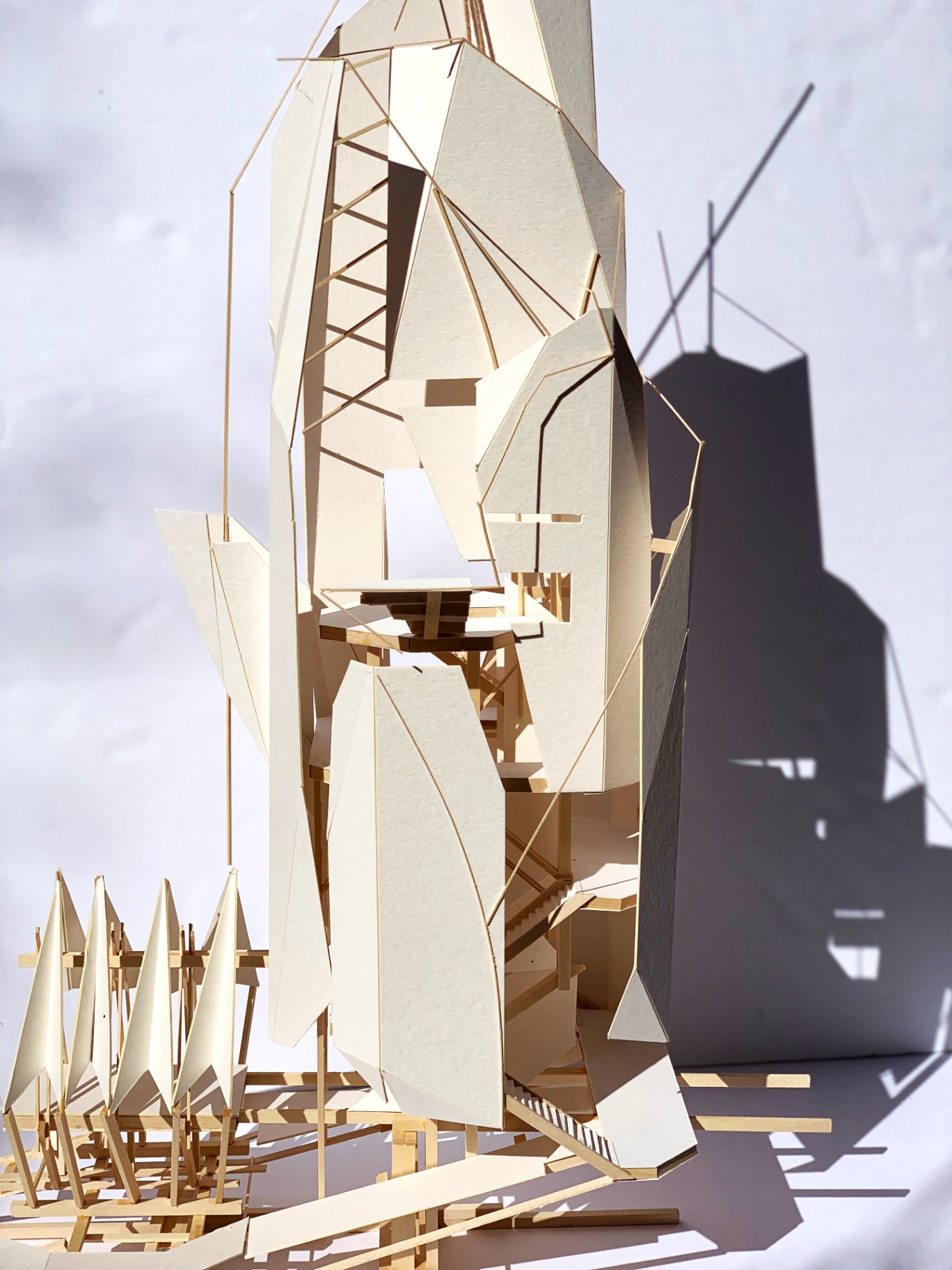
Tower of Acknowloeldgment
Nguyen, Hoa, 2022. Physical Model Tower, Space of Acknowledgment, University of Idaho
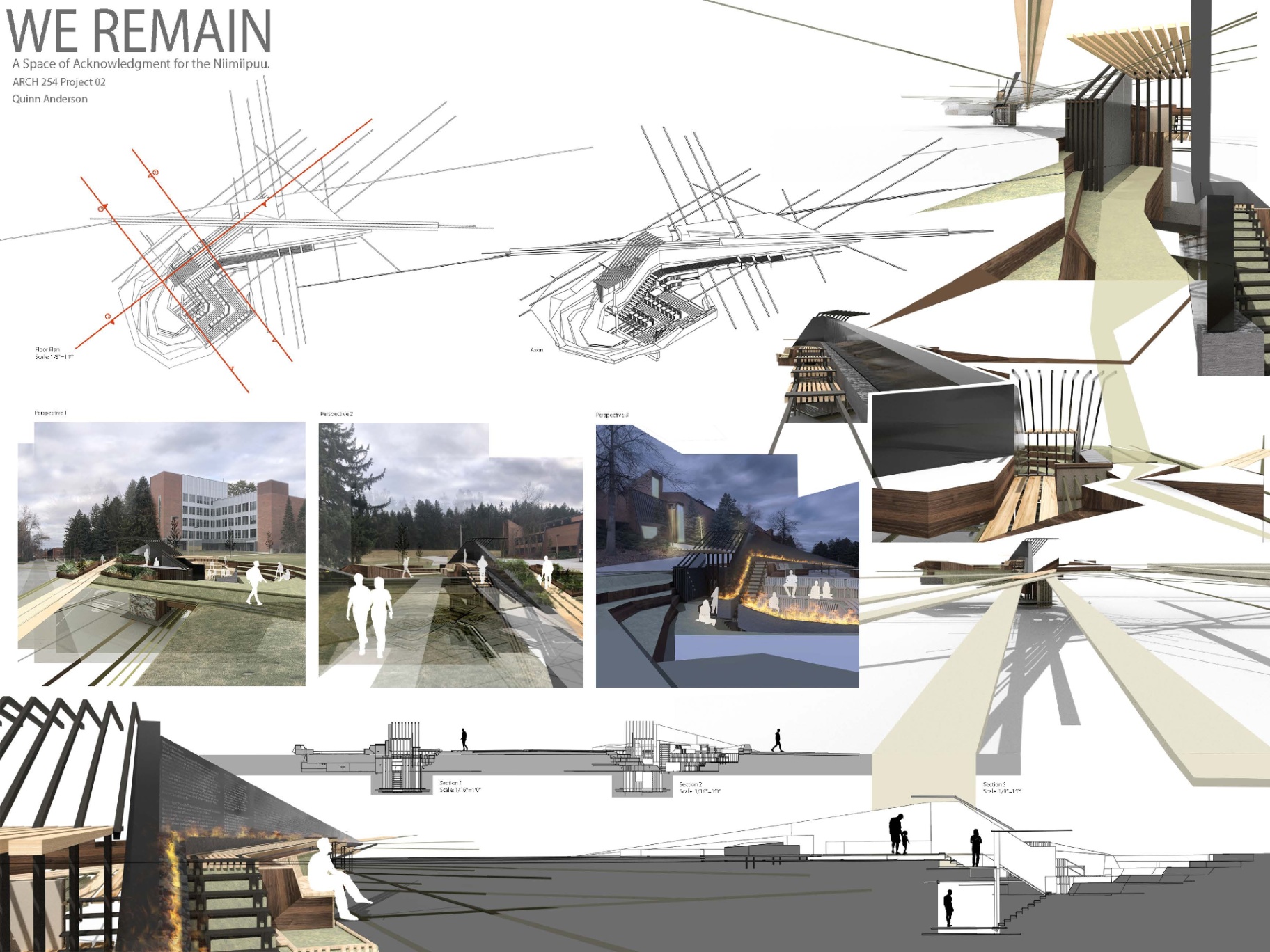
Anderson, Quinn 2022. Architecture project Drawings, Space of Acknowledgment, University of Idaho.
Quinn Anderson focuses on creating an environment that encourages learning, instills a feeling of peace, and promotes personal reflection. The design magnifies the division of land, prompting a direct confrontation with past wrongdoings. Anderson uses fire as the main element of the boundary engraved into the landscape. This project reflects upon the design thinking process of a student. Anderson mentions that a line drawn by an architect possesses the power to violently interrupt what is, to force the imaginative concoction of what could be, upon the unknowing. Rather than continuing the personification of an architect’s line, the amphitheater proposes to expand the conversation to consider the underlying egotistic nature of humans that shaped the Nez Percé’s destiny today.

Hala Barakat
More by Hala Barakat
View profile Arch Hive