

ACADEMIC PROJECT - Paul Neagu Museum, 3rd year project
The project is a museum of contemporary art with an architectural concept that explores the relationship between solid and void. The museum is located at the boundary between two contrasting environments: the park, a natural setting, and the city, a mineral environment. The architecture of the museum takes the form of an elegant arch, serving as a bridge between the two environments. The arch extends an invitation to visitors to explore and discover the connections between art and the surrounding environment. Inside the museum, solid and void spaces coexist harmoniously, allowing natural light to penetrate and create intriguing plays of shadows and lights. This interaction between solid and void creates a dynamic and captivating atmosphere for the exhibited contemporary art pieces.
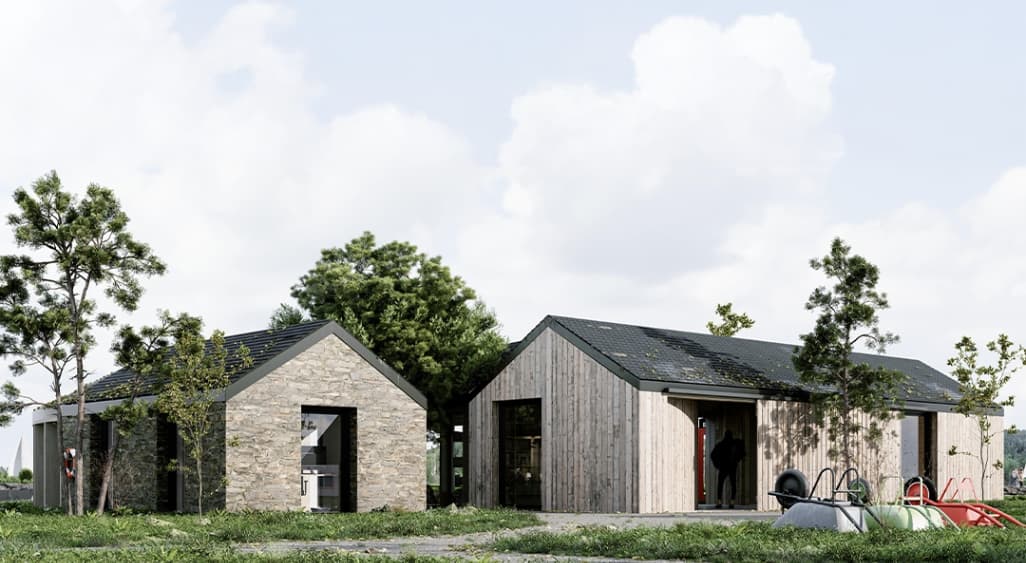
COMPETITION - Easdale Echo, Easdale Ferry Office - Honorable Mention
Easdale, a small island on Scotland’s west coast, is shaped by a strong relationship between industry, landscape and local identity. The project builds on this context by proposing an intervention that respects the existing ferry office while introducing a contemporary extension rooted in place. Inspired by the traditional slate-roofed houses of the island, the design uses local slate and timber to create continuity between old and new. The panoramic waiting space becomes the key element of the proposal, opening the building toward the sea and framing the surrounding landscape, while reinforcing the connection between local heritage and present-day use.

COMPETITION - Vertical Garden, Saint-Gobain 2024 - 4th Place
Vertical Garden rethinks student housing as a more open, social and nature-oriented living environment. The proposal starts from the transformation of the existing circulation system, replacing the typical long and closed corridor with a central atrium that brings daylight, visibility and interaction into the core of the building. Through the integration of biophilic design principles, green terraces and shared spaces, the project aims to improve everyday living conditions while creating a stronger relationship between architecture, community and the surrounding landscape. At the same time, the intervention combines renovation and new additions in a way that respects the existing context while giving the student residence a clearer identity and a more contemporary, sustainable character.

ACADEMIC PROJECT - O.M. Cafe - 4th year of study
OM Café (Orange Modular) is a café built from stacked and offset shipping containers, much like LEGO pieces. This modular approach not only maximizes the use of space, but also creates rooftop viewing terraces that offer spectacular views over the city. One of the most distinctive features of the structure is the vibrant orange metal spiral staircase that rises vertically between the modules, adding a modern and dynamic accent to the entire composition. The choice of orange was made not only to create a pleasant visual contrast, but also to attract the attention of visitors, turning OM Café into a landmark and a point of interest. The use of shipping containers represents an ecological solution, contributing to the reuse of existing materials and reducing the building’s carbon footprint. This approach is not only environmentally friendly, but also offers remarkable flexibility and adaptability. The café’s modular structure allows for easy modifications and extensions, so the space can be adjusted according to the needs of different events and the preferences of its visitors. In addition, the café can be opened or closed quickly, adapting to the flow of guests and to the requirements of different occasions. OM Café combines modern aesthetics with sustainability and functionality, offering a unique and versatile experience for everyone who enters. This innovative construction is a strong example of how intelligent and ecological design can transform an urban space into an attractive and welcoming place.

COMPETITION - Rural Housing - Cascina Losano
The project aims to integrate 8 basic principles, which will create quality long-term living, seeking to intertwine individual needs as well as those of common interaction, taking into account the specific typology of "cascina" constructions, the local context and the principles of sustainable development. From the current planimetric format, the buildings that define an "L" shape on the site, the former building intended for sheltering the horses and the structure behind the site, that will be used as a covered bicycle parking lot, will be kept. The new L-shaped configuration will be used for living and the old stable will be repurposed for common spaces. The 8 principles: Enclosure - protection from the outside / supervision of common activities Private / Common - contemporary common living is completed by the creation of a common space / the need for private space is taken over by the gardens open to the exterior of the site Boundaries - the enclosure will be created using partly the housing units and partly the existing and proposed natural boundaries, a dense local vegetation. Growth - the expansion of existing homes is one of the principles of "cascina" type developments Textures - for a good quality home, natural textures will be used Entrance – keeping clearly defined accesses. Residence / Common spaces - the residences will face the southern and eastern sides, while the common spaces are in the north-facing building. Sustainability - preservation of old buildings / new ones will be build using renewable material.
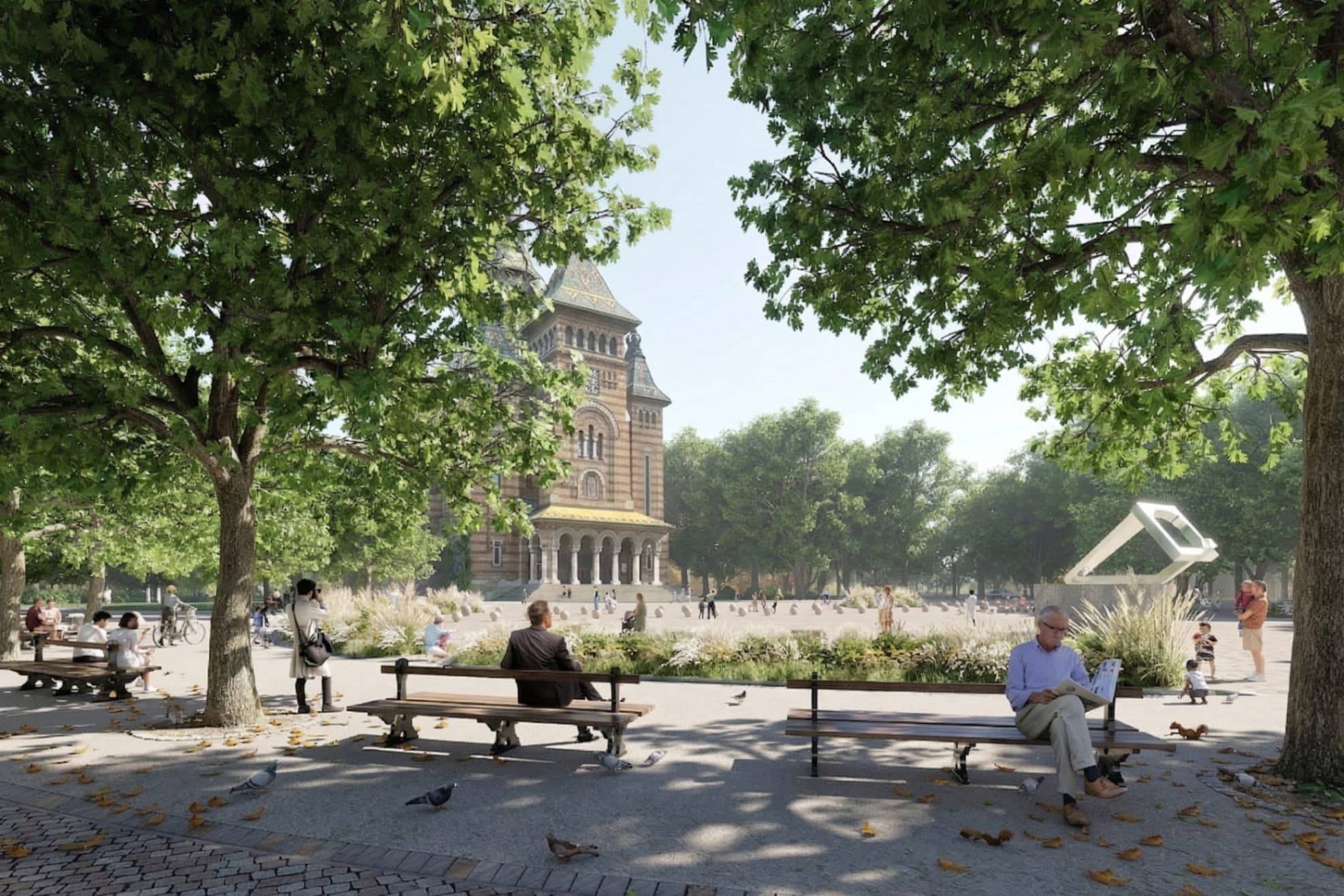
COMPETITION - Piața Victoriei, Timișoara, 2023 - 1st Place
Autor principal: arh. Radu GOLUMBA (STUDIO ARCA) + arh. Șerban STURDZA (PRODID) Coautori: arh. Mihaela RUSULEȚ, arh. Luminița PASCU, arh. Daniel URSU, arh. Alexandra STAN, arh. Lucian CĂRĂBAȘ, arh. Andrei SIMONESCU, arh. Ligia GHERMAN, arh. Cristian MOȚIU, arh. Doina STURDZA, arh. Dan CIOCLU, arh. Ioana CIOCLU, arh. Mika NILICH, arh. Ovidiu SERGHE, arh. Daria PETRAȘCU, arh. Mihnea TUDOR, arh. Ruxandra VASILE Colaboratori arhitectură: arh. Felix PANTALICI, arh. Florin GHERMAN, arh. Claudiu OPRIȚA, arh. Alex BARBU, stud. arh. Adela MUSTAȚĂ, stud. arh. Alexandru TUDOROIU Colaboratori specialități: peisag. Nicolas TRIBOI, peisag. Andrei CONDOROȘ, ing. Cornel FARCAȘ, ing. Sergiu TAMAȘ “Any reform of the city must be done with moderation, a virtue that is called upon to reconcile and harmonize the diverse interests and opinions of society, which are and will always remain varied, multifaceted, and complex, impossible to bring to a common denominator.” – In Praise of Moderation – A. Craiutu on E. Burke The known history of the place begins in 1307 when Charles Robert of Anjou decided to build the first stone fortification and a castle on the site of the current Huniade Castle. Since then, the citadel between the marsh lands has been periodically destroyed by earthquakes and sieges but always rebuilt and expanded. After the demolition of obsolete fortifications at the end of the 19th century, at the beginning of the 20th century, the esplanade in front of the Petrovaradin Gate became the most important area for extra-mural development, partly due to the existence of the Theater building (Opera – Palace of Culture). Between 1910 and 1913, all the buildings of the western flank (Corso) and the Löffler Palace on the eastern side (Surogat) of what would become Franz Josef Boulevard were constructed. The space was immediately adopted as the new “center” of the city. Between 1936 and 1941, the Metropolitan Cathedral was built, closing the boulevard on the south side and defining the current space of Victory Square, which today is part of Timisoara’s pedestrian system, oriented North-South, traversing a wide variety of urban structures and functions. The square has two distinct components: Opera Square and Corso.

ACADEMIC PROJECT - Garden House - 3rd year project
GardenHouse explores the integration of nature as an essential part of everyday living. The project brings greenery into the building through vertical gardens, interior planted areas and open terraces, creating a healthier and more pleasant environment. At the same time, natural light is maximised through generous openings, improving comfort and reducing the need for artificial lighting. By strengthening the connection between interior space and the surrounding landscape, the proposal aims to offer a more balanced and harmonious living experience.

COMPETITION - International VELUX Award for Students of Architecture 2024
The concept of the project starts from a different perspective on the way light is perceived. Saint Gregory Palamas (1296 - 1359), one of the greatest theologians of the Christian Church, who sought to understand and experience the divine through prayer and meditation, spoke of three kinds of light: 1. Sensible light, the light that reveals the objects of our senses; 2. The light of intelligence, divine inspiration; 3. Uncreated light, the light that is neither material, nor spiritual or sensible, nor intelligible or intellectual. This light is divine and uncreated, and it is the sign of the living and personal presence of the Divinity. The competition team was made up of: arch. student Tudoroiu Alexandru, arch. student Mustață Adela, arch. student Gyorgy Szabolcs, arch. student Dulfu Alexandru.
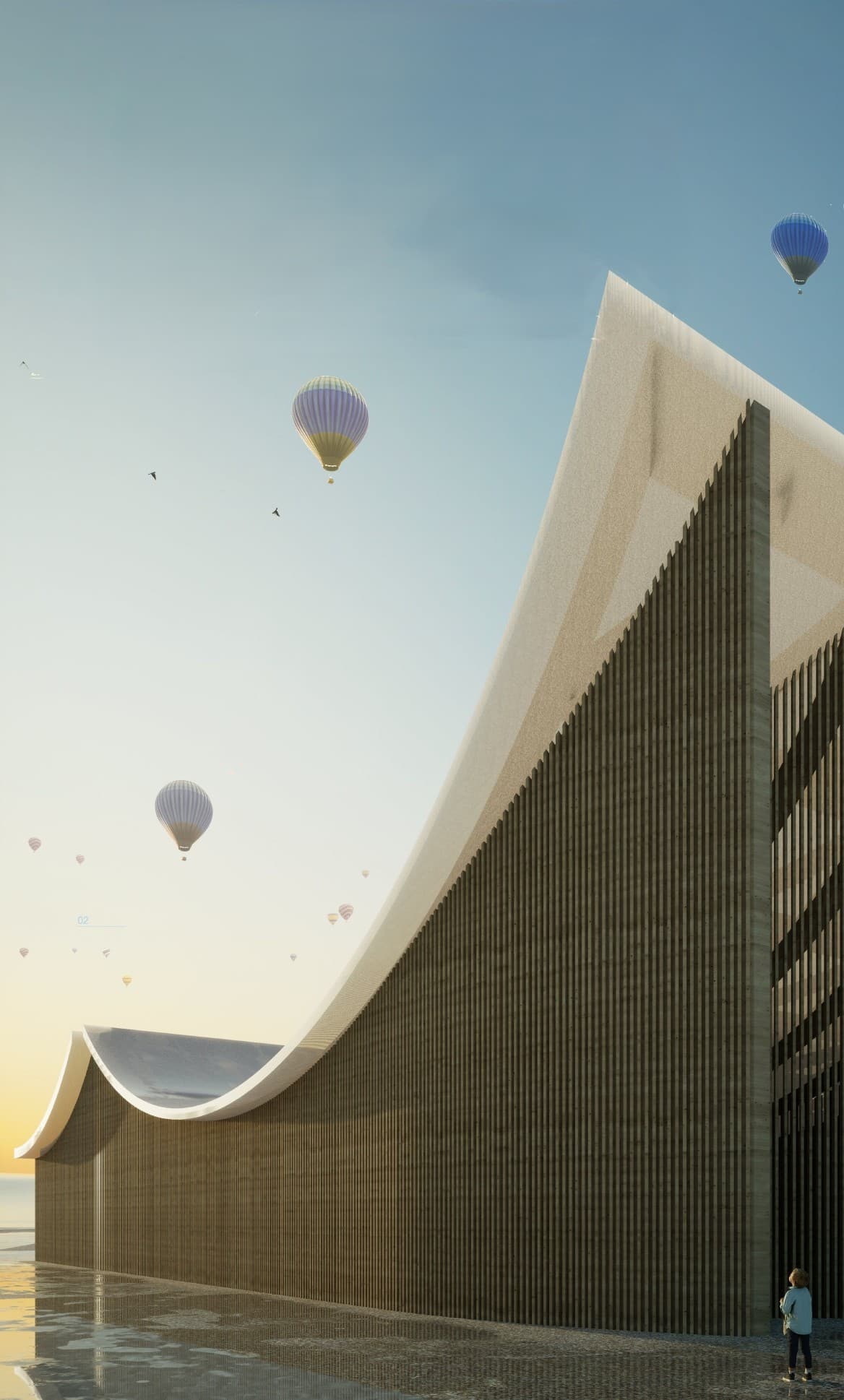
COMPETITION - Expo 2025 Osaka, Kansai, Japan
Developed as a third-year academic review project at the Faculty of Architecture and Urbanism in Timișoara,the Romanian Pavilion at Expo Osaka 2025 is inspired by the traditions and unique architecture of the Maramureș region. Reinterpreting traditional elements, the pavilion celebrates the distinctive characteristics of Maramureș. The Pavilion illustrates how the architecture and culture of Maramureș churches blend with technological innovations and sustainable solutions to create a durable and balanced society. It highlights how the traditional values of the Maramureș community, such as solidarity, respect for nature, and authenticity, can be integrated into the design of a future society. By combining traditional elements and technological innovations within the pavilion, Romania aims to contribute to co-creating a fair society where each individual can live in harmony with their personal values and aspirations. The exhibition can serve as a space for dialogue and the exchange of ideas among the international community, inspiring collaboration and addressing the social and technological challenges of the future. As you walk through the pavilion's courtyard, you will be greeted by an imposing structure with fluid and elegant forms, inviting you to explore its inner beauty. The Pavilion aims to provide a captivating and interactive experience, allowing visitors to explore the richness and diversity of Maramureș architecture. Inside, interactive technology seamlessly integrates with natural materials such as wood and stone, creating an authentic and sophisticated environment. Through multimedia projections and touch screens, you can delve into the history and culture of Maramureș churches, learning about traditional construction techniques and specific symbols.

COMPETITION - Performance Spaces, OAR Iași
This project explores how festival stages can become multifunctional and durable systems rather than structures used only once a year. Instead of being stored or abandoned after events, the proposal gives them a second life by transforming them into versatile elements such as benches, exhibition structures or waste collection points, promoting a more circular use of materials. The concept is based on a modular system that can be connected both vertically and horizontally, allowing quick adaptation to different needs. In this way, the stage becomes not only a performance platform, but also a flexible support structure for logistics, temporary uses and artistic interventions throughout the festival.

ACADEMIC PROJECT - Marconi Riverbank - Erasmus 5th year exchange

 Arch Hive